Get in touch with Victorystar

China Coconut Water Production Line: Coconut Processing

Contents
show
The drinkable industry has skyrocketed in the health industry to make coconut water the highly demanded good – any human would naturally take good hydration and nourishment over fitness drink. The Chinese coconut water lines from the top contributor are not too far behind and faring well with this consumer demand, delving into the use of wonderful technology with applicable well all around the world. This comprehensive guide presents an elaborate synopsis of the coconut processing methods executed within these factories, aiming at those steps right from the initial handling of raw coconut to the final product packed on shelves.
Coconut Water Production Overview
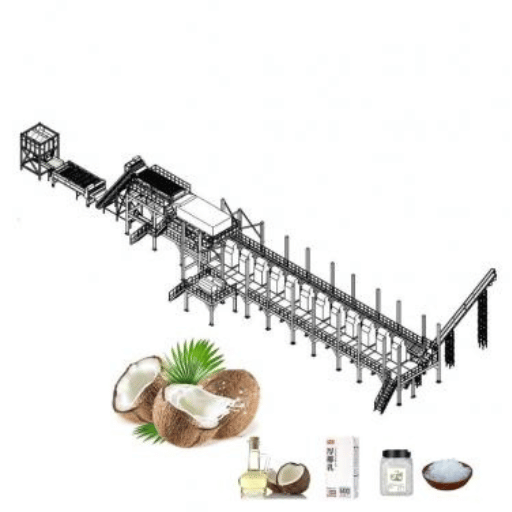
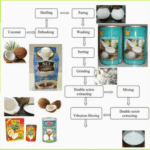
The production process of coconut water has to pass through a very clean and healthy avenue to maintain its natural freshness and quality starting with the picking of fresh, mature coconuts. The fresh, mature coconuts are washed clean upon arrival at the plant, if not already cleaned, before getting hot water washed and properly dehusked and cracked, which eventually ends up releasing coconut water, extracted using a sterile method so that no contamination can happen while having the liquid passed through a fine filter to separate any fine solute or foreign particle found into the basin. The coconut water is then mildly pasteurized for a longer shelf life while retaining the natural flavor and nutritional value. The water is finally packed in sterilized packaging; this increases the safety of the product and allows it to be shelfed and consumed altogether.
Understanding Coconut Water
Coconut water is a clear liquid chock-full of nutrients found inside young and green coconuts; it is produced through a rigorous process that results from high-quality and safety standards. The mineral ion electrolyte found in coconut water—it contains substantial amounts of potassium, sodium, and magnesium—has many benefits for human hydration as an approach to a healthy alternative to sugared drinks.
Key Benefits of Coconut Water
- ✓ Rich in essential electrolytes (potassium, sodium, magnesium)
- ✓ Natural hydration source for optimal body function
- ✓ Healthy alternative to sugared drinks
- ✓ Long shelf life when properly pasteurized and packaged
Importance of Coconut Water Processing
Processing of coconut water plays a significant role in preserving its nutritional and functional qualities while complying with food safety standards. For instance, the highest-grade processing assures a minimum residue of microbial and contaminants through highly specific sterilization techniques such as thermal pasteurization or high-pressure processing (HPP). Eventually, nutrient denaturation and undesirable taste and smell can be hampered by incorrect processing.
⚠️ Critical Processing Factors
- Sterilization: Thermal pasteurization and high-pressure processing (HPP) minimize microbial residue
- Packaging: Aseptic cartons protect against light and oxygen exposure
- Quality Control: Prevents nutrient denaturation and maintains taste integrity
- Compliance: Meets regulatory policies and consumer expectations
Trends in Coconut Water Production
Coconut water industry presently showcases a series of trends developed so as to satisfy consumer craze for healthy and environmentally sustainable products. One significant trend is the delivery of coconut water products infused with cold pressing or high-pressure processing (HPP) to preserve their nutritional integrity and the flavor of pure coconut, without the use of heat pasteurization.
🌱 Organic & Sustainable
Increasing demand for transparency and environmental protection drives sustainability-certified resources
📦 Eco-Friendly Packaging
Biodegradable materials and recyclable packaging have become standard practice
🍹 Flavored Products
Enriched with electrolytes, vitamins, or botanicals for wider market segmentation
❄️ Cold Processing
HPP technology preserves nutritional integrity without heat pasteurization
Technology Behind Coconut Water Processing Lines
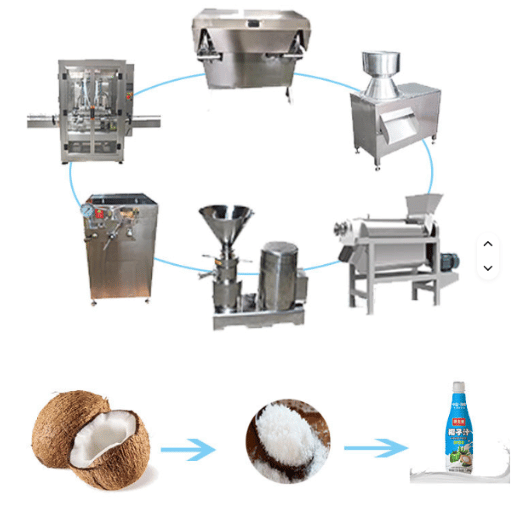
Coconut water processing systems are made with modern technology to maintain the product quality in an efficient and safe manner. These systems include automated extraction systems delicately extracting liquid without causing contamination and filtration systems that remove solid residues, as well as pasteurization units distributing uniform heat to kill detrimental microorganisms.
| Technology Component | Function | Benefits |
|---|---|---|
| Automated Extraction Systems | Delicately extracts liquid without contamination | Maintains purity and prevents impurities |
| Filtration Systems | Removes solid residues and particles | Ensures clarity and quality |
| Pasteurization Units | Distributes uniform heat to kill microorganisms | Extended shelf life with safety |
| Aseptic Packaging Units | Creates sterile environment before sealing | No preservatives needed, longer shelf life |
Extraction Techniques in Coconut Water Production
Coconut water extraction is mainly performed by automated equipment so as to maintain sanitation and accuracy in the process. Initially, dehusking machines are used for removing the outer layer of the coconut, and then comes shell-cutting systems for these dehusked nuts, i.e., they allow for precise openings on the shell without contaminating the liquid inside.
🔬 Advanced Extraction Process
- Dehusking Phase: Automated machines remove the tough outer layer of coconuts
- Shell-Cutting Systems: Precise openings created without liquid contamination
- Vacuum Technology: Minimizes air contact to prevent oxidation and preserve nutrients
- Sterile Extraction: Advanced mechanisms maintain near-sterility throughout the process
Processing Machines Used in Coconut Water Production
Coconut water production involves using some key equipment: coconut de-husking, shelling machines, and water extraction systems designed with sterilization. The coconut de-husking machines help to get rid of the tough exterior bits of the coconuts, making them suitable for processing through succeeding concession points.
Essential Production Equipment
- De-husking Machines
Remove tough exterior coconut layers for further processing - Shell-Breaking Equipment
Opens shells to expose inner kernel cavity without damage - Water Extraction Systems
Aseptic systems with vacuum technology ensure hygienic extraction - Filtration Systems
Pretreatment phase removing particles and impurities - Pasteurization Equipment
Ensures safety standards through controlled heat treatment - Bottling Systems
Final validation adhering to processing regulations
Filling Machines and Bottling Technologies
The production of coconut water necessitates the creation of filling procedures and technologies in order to assure that the whole job runs correctly. The production system or mechanisms have been designed so that they have the elongated time scheduled for production but the reduced chance of contamination. The technologically laden motors with volumetric filling, which is supported by systems of sensors auto-adjusting alterations, will allow for the presence of PLCs (programmable logic controllers) to be an untouchable advantage of accuracy and monitoring.
🏭 Bottling Technology Features
Volumetric Filling Systems
Precision filling with sensor-supported auto-adjustments
PLC Controllers
Programmable logic for enhanced accuracy and monitoring
Container Sterilization
Ensures complete safety before product filling
Tamper-Proof Sealing
Complete sealing with locked tamper-proof mechanisms
Sustainability Practices in Coconut Processing

Ecological balance in coconut processing is all about reducing the environmental impact with utmost possible efficiency from resources. Companies are looking at how they power manufacturing units using renewable sources, like solar power and biomass. Furthermore, waste products like husk and shells from processing are upcycled into coir, active carbon, or biofuel.
♻️ Sustainable Processing Practices
Environmental Impact of Coconut Processing
The environmental impact in the coconut processing could very well be tempered if one follows sustainable and efficient techniques. Proper waste disposal that involves the utilization of by-products like husks and shells reduces landfill usage and provides value-added products. Closed-loop water systems effectively reduce water consumption and prevent harmful runoff. Additionally, ethical sourcing and compliance with sustainability certifications further help preserve biodiversity while promoting equal treatment for farmers.
Sustainable Sourcing and Production Methods
💡 Resource Efficiency
- Minimum wastage through complete coconut utilization
- Energy-efficient technologies adoption
- Multiple by-products from single source
🌍 Environmental Conservation
- Crop rotation and intercropping practices
- Reduced chemical input dependence
- Soil health preservation
🤝 Social Responsibility
- Equitable pay for farmers and laborers
- Improved working conditions
- Community support and development
Regulatory Compliance and Sustainability Standards
Following organic USDA, Fair Trade, and Rainforest Alliance standards are the main issues to put into practice for regulatory compliance considering the norms of the coconut production. These sets acknowledge the sustainable farming practices remotely, traceability all the way to the processing level and good protection of environment.
📋 Key Certification Standards
USDA Organic
Ensures organic farming practices without synthetic chemicals
Fair Trade
Guarantees equitable pay and ethical labor practices
Rainforest Alliance
Promotes environmental conservation and biodiversity protection
Compliance Requirements:
- Complete traceability from farm to processing
- Carbon footprint monitoring and reduction
- Waste management protocols
- Water consumption tracking
- Regular verification and certification audits
Future Trends in Coconut Water Industry

The coconut water industry is currently witnessing an upswing on account of the growing consumer demand for natural and health-oriented beverages. These key trends might include the development of coconuts with function-specific ingredients such as vitamins, mineral salts, and antioxidants to meet the needs of health-savvy customers. New markets, especially those in regions with strong disposal incomes, are expected to provide increased international reach.
🚀 Emerging Industry Trends
🧪 Functional Ingredients
Enhanced with vitamins, mineral salts, and antioxidants for health-conscious consumers
🌐 Market Expansion
Targeting regions with strong disposable incomes for international growth
♻️ Sustainable Packaging
Biodegradable materials and recyclable options becoming industry standard
🔬 Advanced Processing
Improved preservation techniques maintaining nutritional quality and flavor
Consumer Demand Fluctuations
Several factors interact to drive the demand fluctuations experienced by consumers, from economic conditions to evolving health trends and shifts in consumer behavior towards sustainable and ethical products. Macroeconomic variables in terms of inflation rates and disposable income determine purchasing behaviors, going on to encourage conscious eco-friendly and green methods because of environmental and social issues.
📊 Key Demand Drivers
Innovations Driving the Coconut Water Market
The coconut water markets have undergone significant growth due to various innovations, such as catering to consumer preferences and ensuring operational efficiencies. Advanced processing technologies, including high-pressure processing (HPP), play a crucial role in maintaining the natural flavors and nutrients of coconut water while ensuring a long shelf life.
💡 Market Innovation Highlights
⚡ High-Pressure Processing
- Maintains natural flavors and nutrients
- Ensures extended shelf life
- No heat-related degradation
🥤 Functional Products
- Enhanced with electrolytes
- Added vitamins and minerals
- Natural flavor infusions
📦 Eco-Packaging Solutions
- Compostable bottles
- Recyclable containers
- Enhanced brand perception
🔍 Supply Chain Tech
- Traceability systems
- Product authenticity verification
- Transparency for consumers
💼 Market Impact: These innovations collectively fuel marketplace expansion while aligning with contemporary consumer demands for quality, functionality, and sustainability.
The Role of Technology in Future Production Lines
Technology will reconfigure manufacturing plants of the future through heightened capacity, accuracy, and adaptability. Robots and automation will perform routine operations, leading to a pared-down labor force and fewer mistakes. Artificial intelligence and machine learning would facilitate predictive maintenance and streamline the workflow, while an incorporation of IoT would improve real-time monitoring and control of the processes.
🤖 Future Production Technologies
Key Technology Integration
- Robotics and Automation – Routine operations with reduced labor and minimized errors
- Artificial Intelligence – Predictive maintenance and streamlined workflow optimization
- Machine Learning – Adaptive systems that improve over time through data analysis
- IoT Integration – Real-time monitoring and process control capabilities
- 3D Printing – Rapid prototyping to meet customer preferences
Future Outlook: These advancements set the stage for more intelligent and adaptive production environments that can meet market changes with new speed and quality demands efficiently.
Reference Sources
📈 Mordor Intelligence
Insights about market trends and forecasts pertaining to coconut water are offered.
📊 Grand View Research
The study contains data about the size and growth of the coconut water industry, which is growing very fast.
🌍 IMARC Group
The GCC market overview on coconut water and what is trending in it; also flavored variant diversification.
📉 Data Bridge Market Research
This report takes note of the growth prospects and the pitfalls of the global market for coconut water and milk.
📋 DataIntelo
Market data and research report on coconut water processing equipment, sizes, and market trends.
Frequently Asked Questions (FAQs)
What are the details of technical equipment in the coconut water processing line?
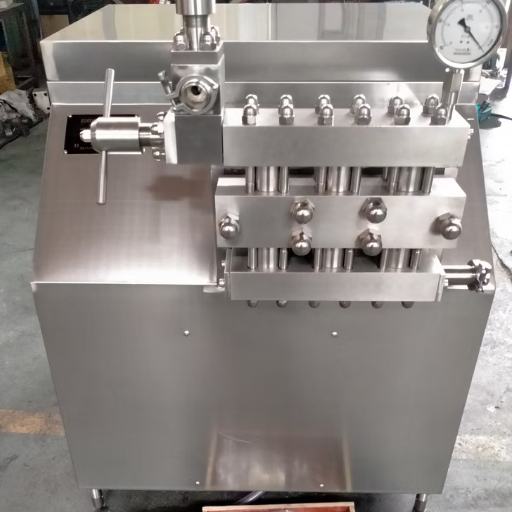
A de-husker, a coconut water extractor, filtration system, pasteurizer, homogenizer, and packaging machinery represent the general equipment in a processing line.
Can the processing line cater to other coconut-based products?
Yes, as many processing lines can handle other products with a slight alteration, such as coconut milk, cream, oil, and so forth.
What kind of certifications are needed for a coconut water processing line?
In this matter, ISO, CE, FDA or others need to be supported with material quality for constant checkups and safety dictated by the international food authorities.
What are the maintenance requirements?
Under maintenance scheduling, cleaning, oiling or greasing of all parts, including periodic checkups, will definitely have to be carried out to maintain its highest performance level and aid in maintaining a lasting span of work.
Which are the emerging technology trends in coconut water processing?
Industries are developing towards automated systems, ensuring energy efficiency and enhanced exploitation as aseptic processing systems, referring themselves as guaranteed ecological mother nature-friendly constructions.
🥥 Conclusion
China’s coconut water production lines represent a convergence of advanced technology, sustainable practices, and quality-focused processing methods. From innovative extraction techniques to eco-friendly packaging solutions, the industry continues to evolve in response to global consumer demands for healthy, natural, and environmentally responsible beverages. With ongoing advancements in automation, artificial intelligence, and sustainable sourcing, the future of coconut water production promises enhanced efficiency, superior product quality, and reduced environmental impact.

Candy
Articles: 37
Trending now