Get in touch with Victorystar

Orange Juice Processing Line for Sale
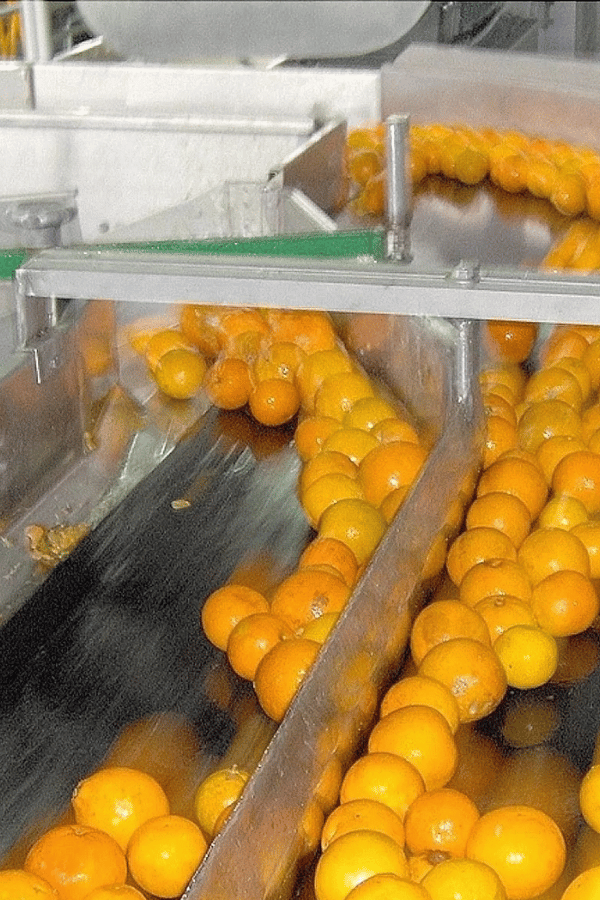
Looking for a complete orange juice processing line? Our large capacity, cutting edge system handles everything from fruit intake to bottling for efficient, continuous production of quality juice.
The production line can handle fruits possessing similar attributes to those of tangerines, lemons, and oranges.
The processed products retain their original nutritional value and taste, thereby ensuring an excellent end product.
An enzymatic clarification and separation system is applied to maintain product quality and maximize yield.
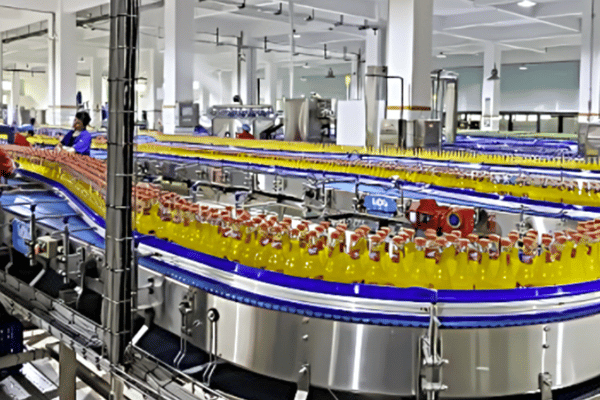
Critical machines can be selected among the imports or domestically made, depending on the clients’ needs.
The production process allows human-machine interface options that make it easy to control and operate; moreover, the whole production is highly automated to lower labor costs.
Automatic cleaning is provided in the production line to assure efficient maintenance and hygiene.
Solving Your Juice Production Challenges
Challenges inherent in the orange juice industry directly impact your bottom line and product quality.
Up to 20% of the precious juice goes wasted with old traditional extraction methods, and this affects profits obviously.
✓ Our Solution: An advanced peeling and extraction technology that helps to secure ≥90% juice yield and allow you to earn big from the raw materials.
The oils extracted from peels, pesticide residues on fruit surface, or biocontamination may affect product safety and shelf life.
✓ Our Solution: Multi-stage washing along with filtration and pasteurization systems make sure that the product conforms to HACCP and ISO 22000 standards.
Variations in fruit size and bitterness level affect taste, leading to customer complaints.
✓ Our Solution: Automated sizing, debittering equipment, and accurate sugar-acid ratio control (13:1 to 15:1) guarantee constant top quality.
Energy-consuming processes, potentially squander water, and labor requirements gulp away one’s profits.
✓ Our Solution: Recovery systems recover $230 daily, y automated, CIP reduces labor and further reduces the consumption of water.
Lost opportunities to monetize by-products such as essential oils and peel.
✓ Our Solution: An integrated set of equipment for both essential oil extraction and peel processing opens up just a few more revenue streams from every orange.
Downtime and cleaning cause production to cease and reduce efficiency.
✓ Our Solution: Maximum uptime realization with food-grade 304 stainless steel construction, automated CIP system, and scheduled and predictive maintenance.
Detailed Technical Parameters
| Category | Details |
|---|---|
| Raw Material | Fresh oranges, mandarins, lemons |
| Products | Concentrated juice, clear juice, mixed beverages |
| Production Capacity | 60 T/day - 1500 T/day |
| Juice Yield | 45% |
| Solid Content | 7~12 Brix |
| Product Packaging | Aseptic big bag, glass bottle, PET bottle |
| Output | Customized according to customer needs |
Important Performance Indicators
Orange Juice Processing Line: KPIs include the production efficiency, juice yield, quality control, and equipment performance. These determine the overall effectiveness of the processing operations.
99.9%
Microbial Reduction
30%
Energy Cost Savings
95%
Essential Oil Recovery
<0.1ppm
Limonin (Bitterness)
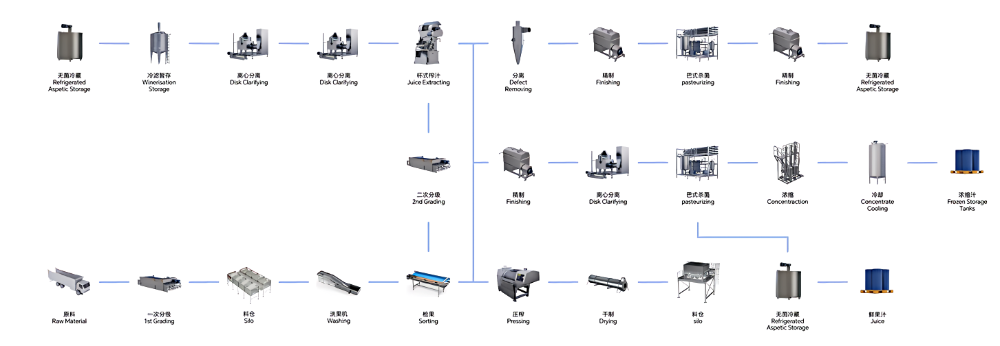
Orange Juice Processing Flow Chart
Follow through this detailed flow chart and know the step-by-step process of orange juice production, right from fruit selection and all the way to packaging.
Diverse Applications of Orange Juice Processing Line
Check the versatility of orange juice processing lines from concentrate & NFC juice to their by-products in essential oils, citrus pulp, and dried peel for various industries.
01
Beverage Manufacturing
02
Foodservice Industry
03
Agricultural Cooperatives
04
Retail Private Label
05
Export Markets
06
Nutraceutical Ingredients
07
Cosmetics & Fragrance
08
Animal Nutrition
09
Aseptic Concentrate
Specific Use Cases
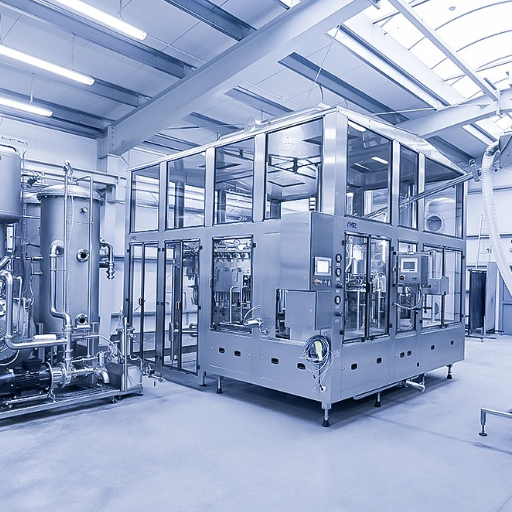
The Ultimate Used Beverage Equipment: Buying Guide for Beginners
Acquiring secondhand beverage equipment provides businesses with a cost-efficient solution to launch operations or increase their existing activities. The process…
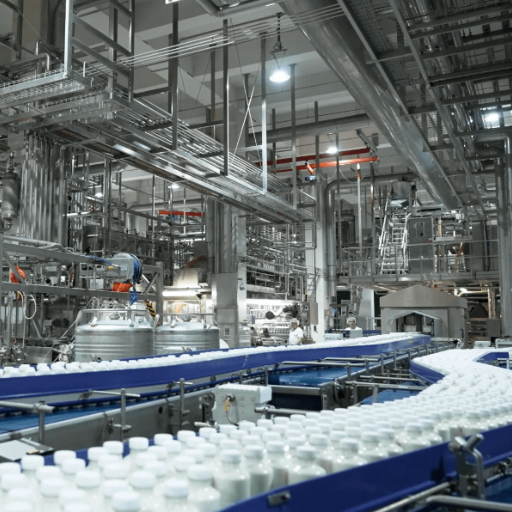
Predictive Maintenance in Beverage Manufacturing: A Game-Changer for Productivity
Predictive maintenance systems are changing how beverage producers manage their equipment performance and their production efficiency. This unique method uses…
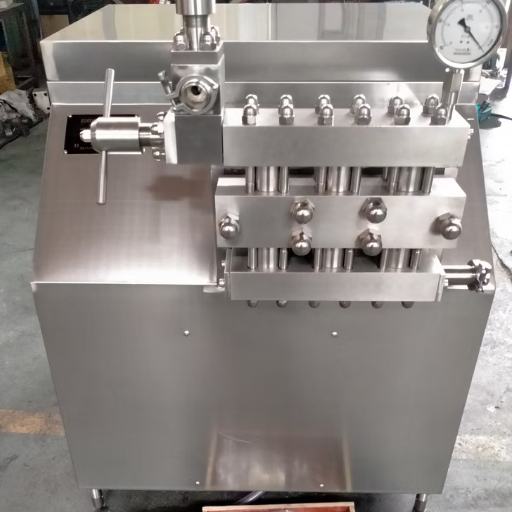
Homogenizer Selection for Beverage Production: Key Factors to Ensure Quality and Efficiency
The right homogenizer is a vital element in the success of the beverages produced by beverage manufacturers because if the…
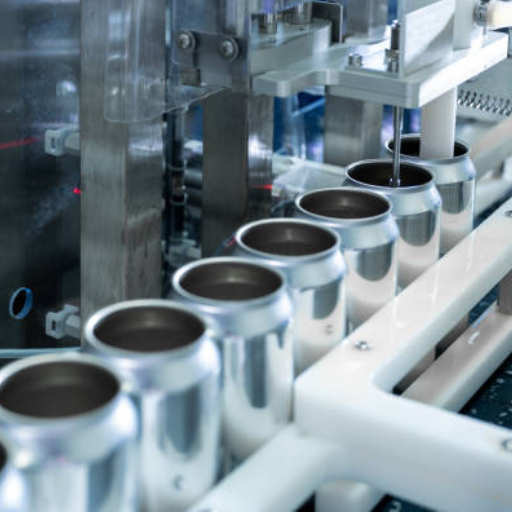
Beverage Can Filling Line Complete Guide: Ensuring Quality and Productivity
The Drinks Industry is a lot of action packed, effectively managed field. Efficiency and Quality are essential for every business…
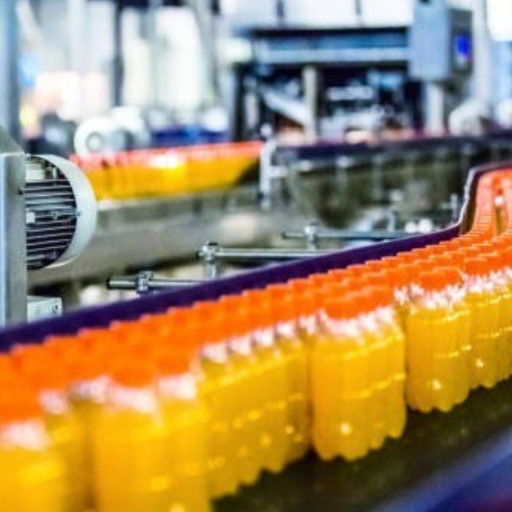
Energy Drink Production Line Setup: Ensuring Quality and Operational Excellence
The appropriate operational framework enables your business to achieve optimal productivity while creating products that fulfill customer needs for your…
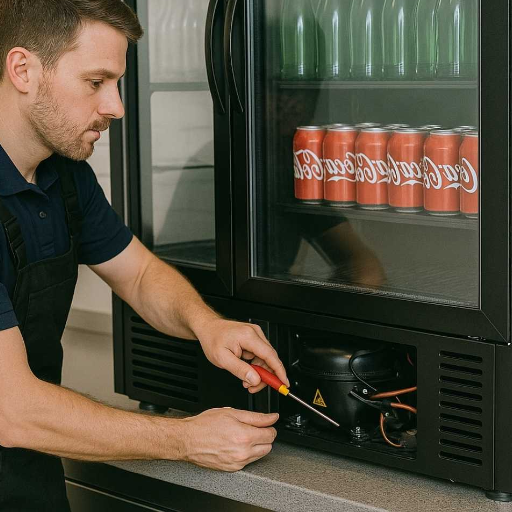
Preventive Maintenance for Beverage Equipment: Ensuring Longevity and Optimal Performance
The coffee shop which operates at full capacity and the bar and the restaurant need their equipment to be maintained…
Expert Guides to Orange Juice Processing Line
How to Prepare Orange Juice Processing?
The preparation of orange juice involves the cleaning and sorting of the oranges, extraction of the juice, filtering, pasteurization, and packaging.
How Is Pulp Removed from Orange Juice?
The pulp is removed from the orange juice primarily by filtration which separates the liquid juice from the solid pulp components.
Juice Processing Machine
The juice processing machine is a machine specifically designed to extract, process, and produce juice from fruits or vegetables, ensuring safety, consistency, and balanced flavor.
Is Orange Juice Highly Processed?
Orange juice undergoes some processing, usually pasteurization or high-pressure treatment, though it is commonly treated as minimally processed.
What’s the Best Time to Drink Orange Juice?
The best time to drink orange juice is 1 or 2 hours after breakfast when the stomach is not too full and not too empty for maximum effect.


What Our Customers Say
Read the customer testimonials and reviews for our orange juice processing line. Learn how these businesses depended on our equipment for their production.
“With the complete installation of the processing line, the juice yield was increased from 72% to 93%. The investment cost was recovered in a mere eighteen months on account of efficiencies in operations and reduction in wastage. The automated control system has reduced labour costs by 45%.”

Roberto Silva
São Paulo Citrus Processing, Brazil
“The essential oil extractor has been an absolute godsend for us. Byproducts which we used to throw away are now being sold for $180,000 per year. The technical support team really helped us with installation and optimization.”

Jennifer Martinez
Florida Orange Growers Co-op, USA
“The quality consistency was our greatest challenge. Since the new line was installed, Brix levels remain within 0.3 degrees of target, while customer complaints have reduced by 87%. The HPP technology helps us to market a premium product retailing at 30% higher prices.”

Ahmed Hassan
Mediterranean Juice Industries, Egypt
Frequently Asked Questions (FAQs)
We make each line according to your requirements. Minimum investment starts at $400K for a very simple 3 tons/hour system. The lead time varies between 4 to 8 months, depending on the complexities pertaining to configuration, including design, manufacturing, shipping, installation, and commissioning!
Certainly! Our equipments handle all citrus varieties including lemons, limes, grapefruits, tangerines, and mandarins. The system adjusts itself to differentiate among fruit sizes and characteristics. Most of the customers share the line to run more than one citrus product.
All equipment carries CE and ISO 9001 certification and is designed for HACCP and ISO 22000 compliance. We supply a complete documentation package that includes materials certificates, validation protocols, testing reports, etc. Our systems meet FDA, EU, and international food safety standards.
It all depends on the capacity. Typically, a 5 tons/hour line would require between 1,500 and 2,000 square meters including processing area, storage, and packaging areas. We include detailed layout drawings during the design phase to help optimize your existing facility.
Daily CIP cleaning lasts for 45 minutes. Weekly inspections of critical components last 2-3 hours. Major prevention maintenance is quarterly (8 hours). Complete service is conducted annually. We provide detailed maintenance manuals, training, and spare parts packages.
Certainly! We offer modular upgrade packages for HPP systems, essential oil extraction, advanced filtration, and automation controls. Our engineers will assess your installation and pinpoint the most cost-effective improvements. A lot of clients buy the basic system first and then grow it over time.
Most customers achieve an ROI between 18 and 36 months, depending upon production volume and market conditions. Major savings from: yield increase (+11 to +18%), labor cost reduction (-45%), and energy cost (-35%) plus byproduct revenues. That said, we analyze your specific case for detailed financial modeling.
Yes. Full training lasts 2 weeks on-site starting installation: from operation, maintenance troubleshooting through to quality control. We train your staff on food safety protocol, CIP procedures, and emergency management. We also offer follow-up training and refresher courses.
Trending now