Get in touch with Victorystar

Yogurt Processing Line for sale
Expand or start yogurt production with our complete, automated processing line. Handles milk reception, pasteurization, fermentation, filling, and packaging for all yogurt types.
Siemens PLC-controlled system with flow, temperature, and conductivity monitoring for precision and consistency.
INOXPA CIP system with AISI 316 stainless steel ensures top hygiene and bacterial contamination control.
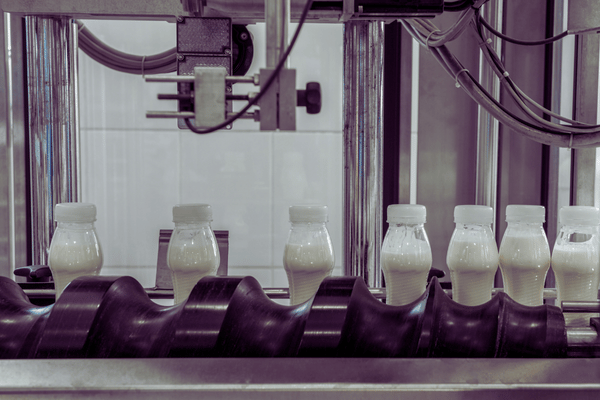
Customizable capacity from 10 to 25 m³/h for single or dual-line operations.
Cuts labor costs by 35% and reduces downtime with automated, energy-efficient processes.
Solving Your Yogurt Production Challenges
Find solutions to yogurt production problems you will face, and learn how they can be used to enhance your process for better results.
Due to manual temperature control and fermentation timing, the taste, texture, and nutritional value vary from batch to batch.
✓ Our Solution: An automated PLC control system maintains the fermentation temperature at 43°C ±1°C with an 8-hour cycle for consistency in quality every time.
Conventional methods require constant supervision, manual transfer of liquid from one tank to another, and cleaning that is generally inefficient and laborious.
✓ Our Solution: Fully auto process line with a CIP (Clean-In-Place) system that reduces labor by 70% and cleaning time from 4 hours to 45 minutes.
Open processing system and wash sorely due to bacterial contamination and product recalls.
✓ Our Solution: Food-grade SUS304/316L stainless steel construction with sealed systems and an 85-95°C pasteurization able to kill off 99.99% of pathogens.
Small-scale equipment is not able to handle increased demand on the market; hence, there are lost revenue opportunities.
✓ Our Solution: Scalable systems from 200L to 500T per day, so that one can get started with a smaller system, and add on to it as and when the business grows.
Inadequate heating and cooling systems produce higher operational costs, accounting for 40-60% of their entire production cost.
✓ Our Solution: The heat recovery system recovers 65% of the heat wasted and offers savings up to 45% in energy costs down the line, while still providing good heat and cooling for the process.
Lack of homogenization causes unattractive whey separation leading to unhappy customers and product returns.
✓ Our Solution: High pressure homogenizer at 25 MPa produces highly fine fat particle distributions that cannot separate, improving the mouthfeel to reach 90 days plus shelf life.
Yogurt Processing Machine Technical Specifications
| Specification | Details |
|---|---|
| Production Capacity Range | 1 Ton/Day to 500 Tons/Day (customizable) |
| Material Construction | Food-grade SUS304/316L stainless steel |
| Storage Tank Capacity | 150L, 200L, 300L, 500L, 1000L, 2000L, 5000L (customizable) |
| Pasteurization Temperature | 85°C (adjustable 80-95°C) |
| Fermentation Temperature | 42-43°C (precise ±0.5°C control) |
| Fermentation Time | 6-10 hours (adjustable based on product type) |
| Cooling Temperature | 3-6°C for storage, 10°C for filling |
| Homogenization Pressure | 20-25 MPa (adjustable) |
| Power Supply | 380V/50Hz or 220V/60Hz (customizable) |
| Total Power Consumption | 15-180 KW (depending on capacity) |
| Automation Level | Semi-automatic or Fully automatic with PLC/SCADA |
| Control System | Siemens/Mitsubishi PLC with touch screen HMI |
| CIP System | Fully automated 3-tank system (water-alkali-acid-water) |
| Filling Options | Cups (50ml-500ml), Bottles (100ml-1000ml), Pouches |
| Filling Speed | 2,000-20,000 cups/hour (depending on model) |
| Product Types Supported | Set yogurt, stirred yogurt, drinking yogurt, Greek yogurt, plant-based yogurt |
| Raw Material Compatibility | Fresh milk, milk powder, cow milk, goat milk, plant-based milk |
| Heat Recovery System | Integrated plate heat exchanger (40% energy savings) |
| Floor Space Required | 50-500 m² (depending on capacity) |
| Installation Time | 2-4 weeks (including commissioning) |
| Warranty Period | 12-24 months with lifetime technical support |
| Certifications | CE, ISO9001, ISO22000, FDA compliant |
| Water Consumption | 2-4 liters per liter of yogurt produced |
| Steam Consumption | 0.8-1.2 kg per kg of yogurt (if applicable) |
Performance Metrics That Matter
The yogurt processing line we offer is complete and automatic that is made to change raw milk into high-quality yogurt products. We provide tailored solutions for anything from small-scale artisanal production to large industrial operations, which are capable of meeting international food safety standards, thus, maximizing both efficiency and product quality.
200L-10,000L
Daily Capacity Range
99.5%
Product Consistency
30%
Energy Savings
24/7
Technical Support
Yogurt Processing Line Flow Chart
The processing line for yogurt is shown the flowsheet sheathed in detail-from raw milk to the finished product, indicating each phase of the production.

Applications for Industry Yogurt Production Line
Versatile processing solutions for diverse industry applications and business models.
01
Dairy Processing Plants
- Large-scale commercial production of multiple yogurt varieties with high throughput requirements. Integrated with existing milk processing infrastructure.
02
Dairy Farms
- On-farm value addition to convert fresh milk directly into premium yogurt products. Maximizes farm revenue and reduces transportation costs.
03
Yogurt Cafes and Shops
- Small-scale artisanal production for retail locations. Fresh daily batches with unique flavor profiles and local branding.
04
Food Service Distributors
- Bulky production of yogurt for restaurants, schools, hospitals, institutions. Packaging in big options.
05
Artisanal Yogurt Makers
- Systems for small-scale production (1-5 T/D) of superior, specialized lines.
06
Restaurant and Hotel Chains
- In-house yogurt production for breakfast buffets, desserts, and cooking applications. Cost savings and quality control.
Specific Use Cases
The Ultimate Used Beverage Equipment: Buying Guide for Beginners
Acquiring secondhand beverage equipment provides businesses with a cost-efficient solution to launch operations or increase their existing activities. The process…
Predictive Maintenance in Beverage Manufacturing: A Game-Changer for Productivity
Predictive maintenance systems are changing how beverage producers manage their equipment performance and their production efficiency. This unique method uses…
Homogenizer Selection for Beverage Production: Key Factors to Ensure Quality and Efficiency
The right homogenizer is a vital element in the success of the beverages produced by beverage manufacturers because if the…
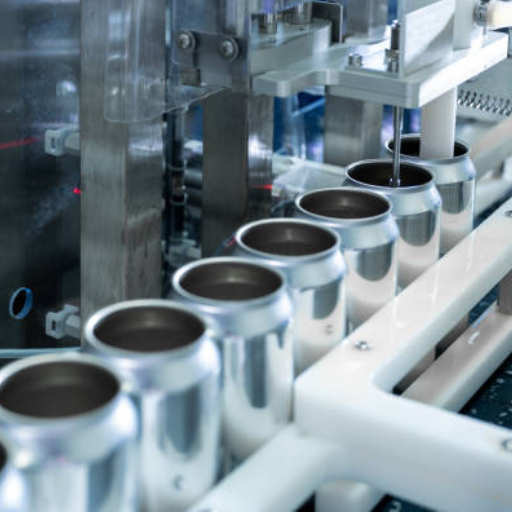
Beverage Can Filling Line Complete Guide: Ensuring Quality and Productivity
The Drinks Industry is a lot of action packed, effectively managed field. Efficiency and Quality are essential for every business…
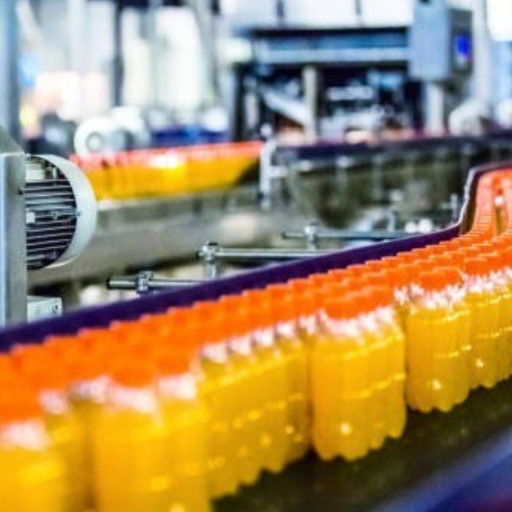
Energy Drink Production Line Setup: Ensuring Quality and Operational Excellence
The appropriate operational framework enables your business to achieve optimal productivity while creating products that fulfill customer needs for your…
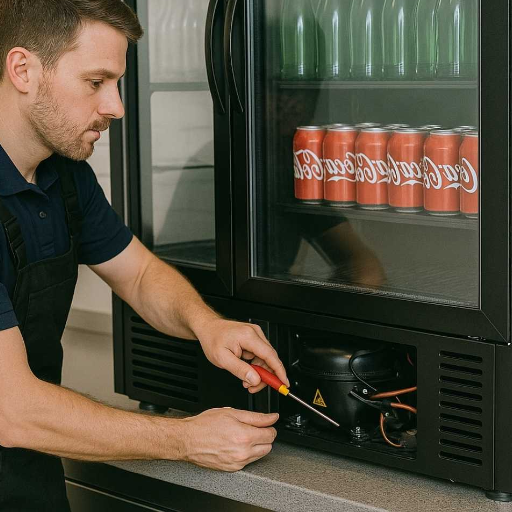
Preventive Maintenance for Beverage Equipment: Ensuring Longevity and Optimal Performance
The coffee shop which operates at full capacity and the bar and the restaurant need their equipment to be maintained…
Expert Guides to the Processing of Yogurt Processing Line
Why Is Yogurt Not Considered Dairy?
Yogurt is described as being a dairy product because it is made from milk, which undergoes bacterial fermentation for the particular texture and flavor.
What Is The Process Of Yogurt Production?
The production of yogurt entails pasteurizing the milk and then cooling it, inoculating it with starter cultures, fermenting the mixture with lactic acid production, and then cooling it, flavoring, and packaging.
How Much Is A Yogurt Making Machine?
Yogurt making machines typically range from $30 to $90, depending on the brand and features.
How To Culture Yogurt?
To culture yogurt, first heat the milk to 180°F; then cool it to 112-115°F, mix with a starter culture variety of yogurt bacteria, and incubate it for 4-12 hours at a steady warm temperature.
How Is Yogurt Produced?
Yogurt is made by heating milk and then adding selected bacteria, such as Lactobacillus bulgaricus and Streptococcus thermophilus, to let it ferment until it thickens and carries that slight tanginess.
Yogurt Making Machine Price
The most inexpensive yogurt maker will cost something around $40, such as an Euro Cuisine YM80. The bigger and more expensive ones include more features and advanced aids.
What Equipment is Included in a Yogurt Production Line?
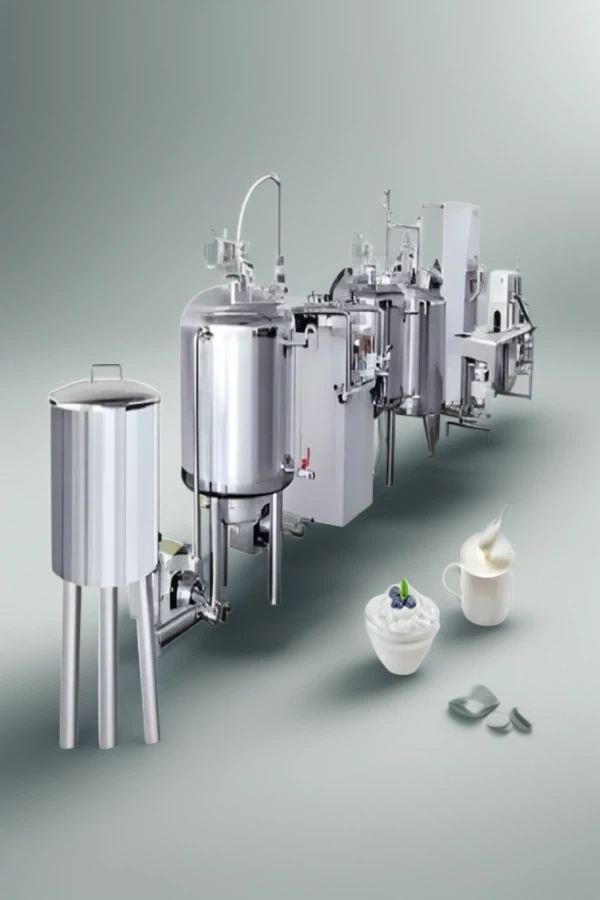
The typical set of equipment for the production line is as follows: storage tanks, filters, preheating tanks, homogenizer, pasteurizer, fermentation tanks, yogurt machines, pumps, and filling or packing systems.


What Our Customers Say
Learn how processing lines for Yogurt globally changed businesses for the better, achieving far more than anticipated.
The technical support team was wonderful during installation and training. They adapted the line to our needs for Greek-style yogurt. We are now producing 20 tons per day with amazing consistency. Just the automated CIP system saves us 4 hours in clean-up every day.

Maria Papadopoulos
Production Manager
Being a startup in the plant-based yogurt space, we needed equipment that processed oat and almond milk. This system surpassed our expectations with respect to its flexibility and precision. The enzymatic processing module was essential in bringing to life the texture that our customers love to pieces. So, yes, we went into profits in just 8 months!

Sarah Chen
CEO
Catering to around 500 small farmers in yogurt production for regional distribution, milk is processed from them. Due to the modular nature of the system, production is scaled as per the seasonal availability of milk. Energy costs went down by 42% thanks to the heat recovery system. It paid back the investment within 16 months, which was faster than expected!

Sophia Miller
Operations Director
Currently operating for 8 years, our yogurt line still performs like newly set up equipment. The system, made out of stainless steel, is extremely durable and has top-notch components. Every time we had a technical question, the support was always prompt. There was no hesitation at all when we put up our second line—same manufacturer.

Hans Müller
Operations Director
Frequently Asked Questions (FAQs)
In the fermentation process of the yogurt, the starter cultures are introduced into pasteurized milk and are further fermented at a suitable temperature. The microorganisms involved in fermentation convert lactose into lactic acid, which imparts the distinctive sour taste and thick texture to the yogurt.
Homogenizing is an important phase in yogurt processing that breaks down fat globules and among its various other advantages gives the yogurt a uniform texture. From a physicochemical standpoint, it also increases stability, preventing separation of cream from the yogurt due to its own weight, thereby providing consumers with a deliciously smooth and creamy texture.
Set yogurt is essentially produced by allowing the yogurt to ferment inside the container in which it is ultimately sold so that it becomes firmer. Stirred yogurt, however, is fermented on a much larger scale and then stirred before packaging to give it a creamy texture. Hence, both sorts of yogurt can be yielded through a yogurt processing line.
Yes, many suppliers can customize their yogurt production lines for any particular production purpose. The customization involves capacity, types of equipment used, and other configurations for different types of yogurts, such as Greek yogurt or flavored yogurt.
The storage tank in yogurt processing serves as a temporary holding area, keeping the yogurt between the fermentation and packaging stages. This allows for quality control to be applied in watching out that the product is sufficiently cooled and mixed before transferring it to the filling machine for packaging.
Greek Yogurt Production commonly involve filtering the whey to eliminate excess quantities, leaving it with a thicker consistency and a higher protein content as compared to an ordinary yogurt. This product might call for specialized equipment within the yogurt processing line to form the proper consistency.
Checking factors such as acidity levels, temperature during the fermentation process, and general safety of the finished product come under the control quality procedures of yogurt processing. A CIP cleaning system has to be installed and maintained well to keep the production line clean and prevent contamination.
Trending now