Get in touch with Victorystar

Cheese Production Line For Sale
High-quality, efficient, and reliable cheese production lines are on sale! Suitable for small, medium, and large generators of cheese.
Complete solutions from A to Z, starting with building engineering, the movement of equipment, its installation, commissioning, and operator training. Single point of responsibility.
Systems that can be personalized and expanded as the business grows. Reconfigurable for different kinds of cheese and production volumes.
Featuring SUS304/316 stainless steel throughout. Meets 3-A sanitary standards. Smooth, easy-clean design integrated with CIP systems.
Production capacity of 2,770 blocks of 18 kg each daily. Minimal product waste with optimized yield. Operations consume energy at a very low level to keep utility costs in check.
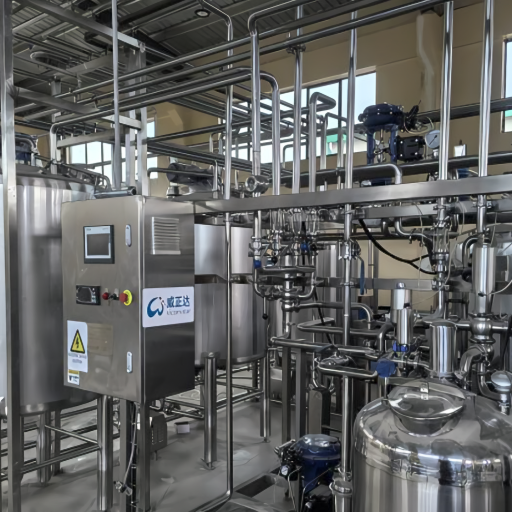
Systems are offered from pilot plant scale to industrial capacity of 400,000 liters of milk per day, with production rates adaptable to demand.
Installation experience around the world in more than 50 countries. Local service networks for immediate response. Remote diagnostic and troubleshooting capabilities.
Meets FDA, USDA, EU, and international food safety regulations. Complete documentation and certification are available. Traceability systems embedded.
Rejects the possibility of human contact with the product. Sanitary robots that can be washed by the application of high-pressure water and solvents. Intrinsic prevention of contamination exists at each stage of the processes.
Industry Challenges We Solve
Inconsistent milk supply and price have been affecting profitability, production scheduling, and procurement adversely, due to climate variation and disease outbreaks like HPAI.
Our Solution: Optimized processing systems that yield as much cheese as possible from one liter of milk, assuring up to 40% more fat and protein retention. With advanced inventory management integration, you may try to hedge against price volatility.
In essence, phage infections cause ceased production and product losses, which are highly detrimental and impacted most traditional cheese varieties that require long periods of ripening.
Our Solution: Closed-system design with UV sterilization and encapsulated starter culture technology able to avoid phage attacks. Our vats also offer fully-automated CIP systems equipped with validated sanitation protocols.
Traditional aging processes take months, holding your capital and shelf space hostage. Compounded by long production cycles is the inability to timely respond to market demand.
Our Solution: Sophisticated climate-controlled aging systems with automated pH monitoring and optimization of microbial activities to facilitate a 25-35% reduction in ripening time while either maintaining or improving flavor profiles.
The old processes are causing us to waste the precious proteins in whey, losing money in the process, not to mention disposal woes to the environment.
Our Solution: Integrated membrane filtration systems (UF/MF) capable of recovering whey proteins for incorporation into cheeses for 15-30% yield improvements. Conversion of whey byproducts into saleable protein concentrates is an optional module.
Cheesemakers who are skilled are few and far between and, therefore, way too expensive. Processes that are not automated tend to be very subjective and need to be constantly supervised.
Our Solution: Fully automated control with a SCADA system and touchscreen control via HMI. Over 50 different pre-programmed recipes for various cheese types. Almost no operator training is required, with only 3 skilled technicians needed to run production.
Meeting ever-changing food safety standards under FSMA, FDA, and EU means paying for expensive compliance plus liability risks.
Our Solution: Certified according to 3-A Sanitary Standards; with full traceability and automated documentation; monitors HACCP compliance with real-time alerts; materials are accepted under FDA/USDA.
Increasingly, pressures come to reduce water consumption, energy use, and greenhouse gas emissions and to responsibly manage waste.
Our Solution: The advanced water recycling with UV treatment lowers consumption by 60%. Energy-efficient design with heat recovery systems. Closed-loop processes mean minimized environmental impact and eligibility for sustainability certification.
92% of cheesemakers cite profitability as their concern. Imported and plant-based competition has pressed those margins even further.
Our solution: Reduce operating costs through automation and efficiency initiatives. Production capabilities continue to be flexible so it can be shifted quickly to premium, specialty, and plant-based cheese alternatives. Achieving ROI within 18-24 months is typical.
Cheese Processing Line Technical Specifications
| Stage/Equipment | Specifications | Features |
|---|---|---|
| Milk Reception & Storage | Capacity: 500–10,000 liters | Insulated tanks, CIP cleaning systems, transfer pumps |
| Pasteurization | Capacity: 500–15,000 L/hour, Temperature: 65°C–95°C | Fully automatic, PID/PLC controllers, energy-efficient heating |
| Coagulation & Curd Formation | Volume: 300–5000 liters, Material: AISI 304 stainless steel | Jacketed heating, gentle agitators (10–60 RPM), integrated pH and temperature monitoring |
| Curd Cutting | Blade Material: Stainless steel, Drive Power: 0.5–3 kW | Dual blade, variable RPM, semi/fully automatic |
| Whey Separation | Integrated with curd cutting | Gentle stirring or gravity-based separation |
| Molding & Pressing | Mold Sizes: Standard/custom (1–20 molds/unit), Pressing Force: 50–200 kg per mold | Pneumatic or hydraulic, PLC interface available |
| Salting/Brining | Capacity: 1000–8000 liters | Automatic salinity control, slow rotating paddle or bubble agitation |
| Aging/Ripening | Temperature: 10–15°C, Humidity: 80–95% | Stainless steel or food-grade plastic racks |
| Cutting & Packaging | Speed: 20–60 packs/minute | Vacuum seal, thermoforming, shrink wrap, integrated barcode and batch labeling |
| Automation | PLC and SCADA systems | Real-time monitoring, recipe memory, reduced manual intervention |
| Material | AISI 304/316 stainless steel | Ensures hygiene and food safety |
| Energy Efficiency | Heat exchangers, waste heat recycling | Reduces energy consumption |
| Cleaning | CIP (Clean-In-Place) systems | Ensures high hygiene standards |
| Customization | Flexible configurations for different cheese types (soft, hard, processed, etc.) | Modular systems for scalability |
Industry-Leading Performance
50+
Tons Per Day Production Capacity
30%
Increase in Cheese Yield
500+
Labor Hours Saved Weekly
99.9%
Product Quality Consistency
Cheese Making Production Line Process Flow Diagram
Explore a detailed process flow diagram of the different stages involved in the cheese production line, from milk reception to final product packaging.
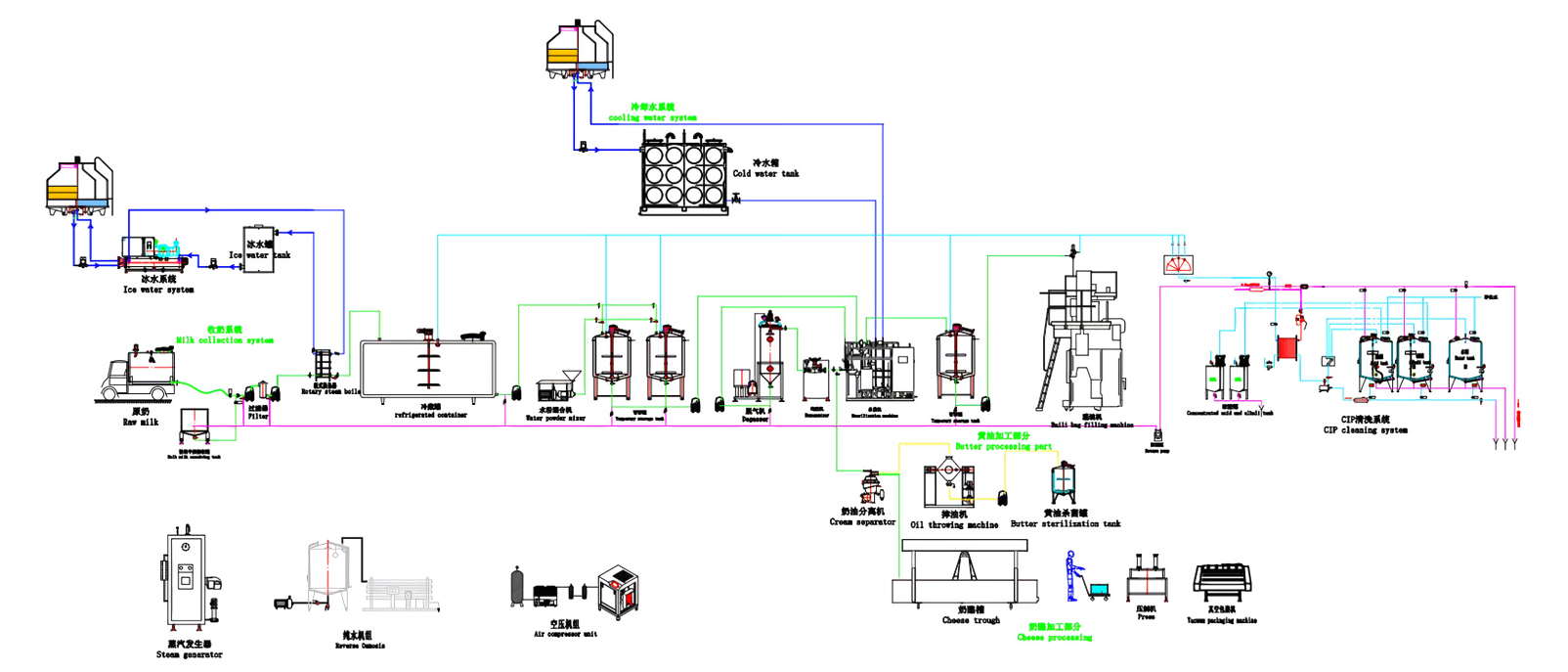
Industrial Cheese Production Flow Diagram
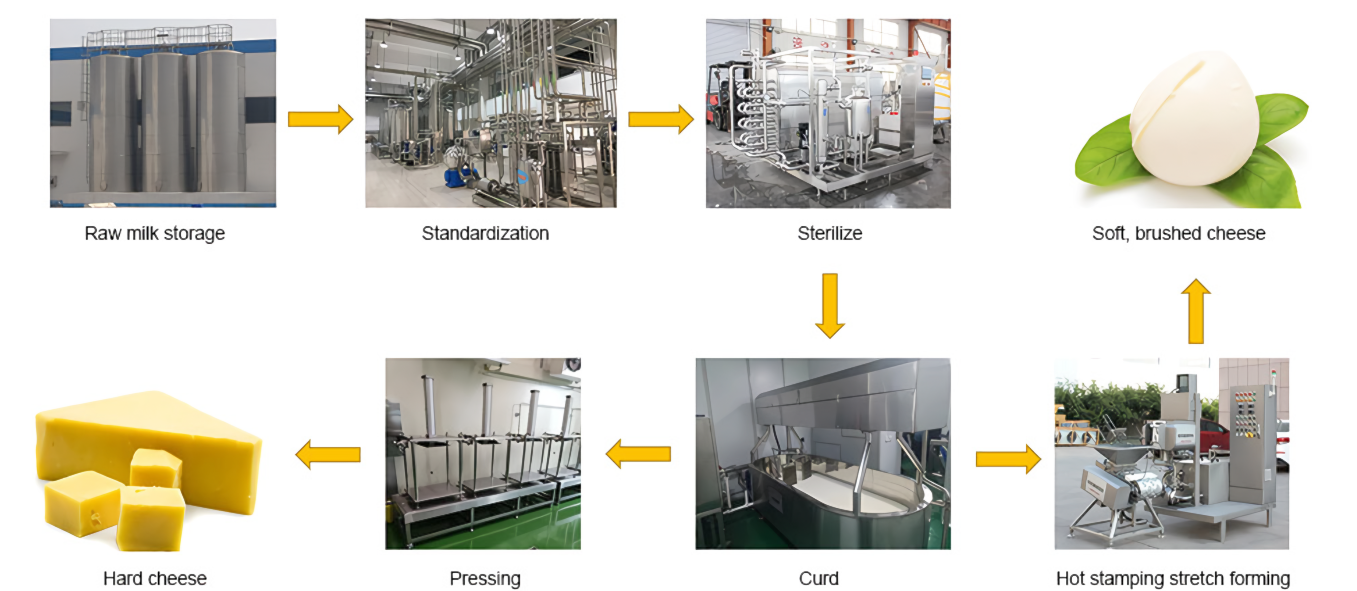
Versatile Applications
One system for all your cheese production needs
01
Natural Cheese
Cheddar, Colby, Swiss, Monterey Jack
02
Fresh Cheese
Cottage, Ricotta, Mascarpone, Cream Cheese
03
Italian Varieties
Mozzarella, Parmesan, Provolone, Gorgonzola
04
French Varieties
Brie, Camembert, Roquefort
05
Brined Cheese
Feta, Halloumi, Queso Blanco
06
Pizza Cheese
Shredded, Diced, Block forms
07
Processed Cheese
Slices, Spreads, Cheese Powder
08
Vegan Alternatives
Plant-based cheese products
Certifications & Compliance
Top 15 Cheese Production Line Manufacturers to Watch in 2026: Updated List
Top 15 Cheese Production Line Manufacturers to Watch in 2026: Updated List Modern cheese manufacturing relies on integrated production line…
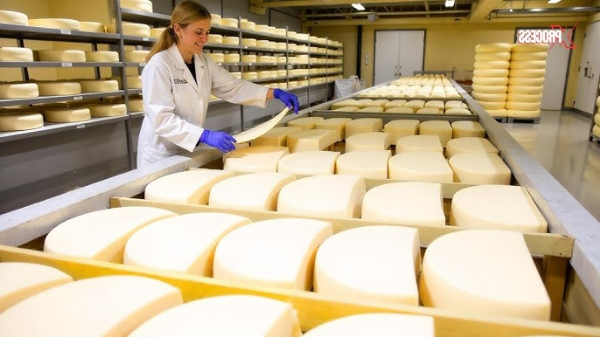
What is the process of cheese production?
Cheese has been a classic delicacy that people around the world love to savor, but have you ever thought about…
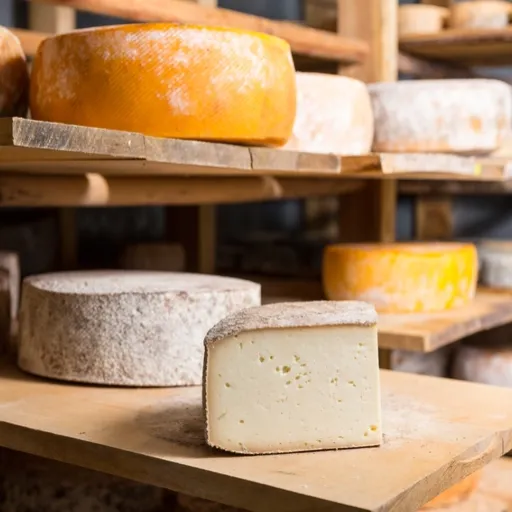
The Ultimate Guide to Cheese Production Line
Cheese is not only a favorite food but also a worldwide culinary necessity with a very interesting and complicated production…
Expert Guides to the Processed Cheese Production Line
What kind of milk is best for cheese?
Cow’s milk is often referred to as the perfect ingredient in cheese-making. It is available in abundance, versatile, and its composition is ideal to be used for a variety of cheeses. The better choice for making cheese recipes with cow’s milk would be cream-top milk rather than homogenized milk, as it causes better curd formation. This renders cream-top cow’s milk a preferred selection to make cheese successfully at home.
What are the 4 ingredients in cheese?
Cheese literature is very much enriched, going into the fine arts of artisanal cheesemaking. There are four main ingredients in these concoctions: milk, starter cultures, rennet (or coagulant for vegetarians), and salt. These basic elements are out there to mold countless cheeses among which we prefer a few.
What are the 6 stages of cheese production?
There are six main stages in the whole process of cheese preparation. Cheese production begins with acidification, followed by coagulation to form the solids. Subsequently, the producers concentrate on separating the curds and whey. Afterward, important stages like salting and shaping render the cheese ready for its final maturation. All types of delicious cheese require these important steps along the line.
What cheese is the healthiest to eat?
Missing with a least for the healthiest cheese, Cottage cheese undoubtedly has a strong claim for the title. After all, it has protein, probiotics, vitamins, and minerals-all good-nutrition giving elements.
Can cheese be frozen?
Yes, freezing can be done to cheese. Frozen cheese should ideally be consumed within two to three months for the best quality. The freezing process interferes with the texture of the cheese and makes it crumbly. For that reason, frozen cheese is really great for cooking and baking rather than eating fresh.


What Our Customers Say
Real results from real cheese manufacturers
“The automation system has really made a difference in our operation. We have now raised the production from 50,000 pounds per day to 90,000 pounds per day, all without building more facilities. The consistency is tremendous – every batch is good to go.”

Michael Patterson
Operations Manager, Large-Scale Dairy Processor
“Our production time was halved, and waste was cut by over 80%. Product damage was completely eliminated with under ultrasonic cutting. The payback time of this capital facility was less than 18 months.”

Sarah Chen
Production Director, UK Cheese Manufacturer
“One operator running several vats at the same time was a great leap in labor efficiency. Predictive maintenance alerts have reduced sudden downtime to almost nil. This technology is the future of the cheesemaking industry.”

James Rodriguez
Plant Manager, Regional Cheese Producer
Frequently Asked Questions (FAQs)
A: Cheese production lines may be defined as a series of connected machines and processes in order for cheese to be made from raw milk. Generally, it goes through several production stages, such as pasteurization, coagulation, curd cutting, and molding, to guarantee efficient and high-quality cheese production.
A: Those essential machines in a cheesemaking process consist of cheese vats, pasteurizers, curd cutting machines, cheese presses, and whey separators. Each piece of equipment has its own function in converting raw milk into finished cheese products.
A: The cheese processing line ensures product quality through quality control at every stage, temperature checks, consideration of hygienic regulations, and the use of food-grade materials to maintain cheese integrity throughout production.
A: On a production line, different varieties of cheeses can be made, such as hard cheese, semi-hard cheese, cottage cheese, ricotta, feta, and blue cheese. The customization option further entails catering shapes and sizes according to specific market needs.
A: Automated cheese production optimizes production by using advanced machinery and minimizes the need for manual labor to some extent. It comprises systems controlled by PLCs for monitoring and adjusting parameters during the process to ensure quality consistency and to reduce labor costs.
A: The manufacturers may vary their cheese-making process with respect to choices of processing equipment, recipe variations, and adding ripening, flavoring, or any other steps needed to fulfill special customer requirements or those market trends.
A: Pasteurization is significant in cheese-making, as it removes harmful organisms in raw milk, making it safe and giving it a longer shelf life. This process is important for keeping good-quality cheese and is commonly practiced for all dairy operations.
A: Cheese processing equipment varies depending upon the type of cheese being produced. For instance, cottage cheese making may require some specialized equipment such as separators and cheese presses, while hard cheese making requires vats of a different type along with aging rooms for ripening.
A: The function of a cheese press is extremely important to a cheese-making line, as it forces the curds with pressure to expel whey and take on the form of the cheese. This is very important for texture and consistency to be realized in the final cheese product.
Trending now