Get in touch with Victorystar

Top 10 Beverage Filling Machine Manufacturers & Suppliers

Contents
show
Choose the right beverage-fill-contract partner to be able to compete in an environment that is automatically dominated by sustainability and demands continual changes of consumer tastes in a number of beverages, such as soft drinks, carbonates, juices, and bottled water. Choosing the best filling machines can lead to completely optimized production for reducing overall costs and upgrading product quality. These are a few words of introduction, reflecting the broader context of proving competitiveness in filling solutions, advanced packaging, and flexible manufacturing capabilities for breaking into a competitive market.
Key Takeaway
Selecting a top-tier manufacturing partner is no longer just about the machine; it is about finding a strategic ally that integrates automation, sustainability, and high OEE (Overall Equipment Effectiveness) to navigate a shifting global market.
Why the Right Beverage Filling Partner Matters
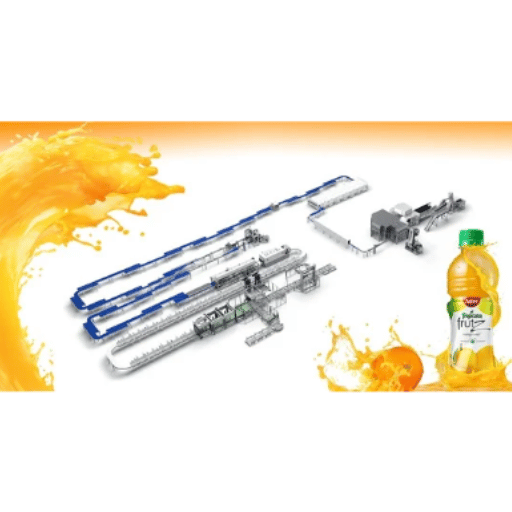
The beverage industry of today requires machines and systems that can flex over a wide range of stock-keeping units—from a lightweight bottle made for bottles of water or carbonated drinks in a robust package—while standing clear of the between-product change possibilities on throughput or hygiene. Beverage packaging machines need to provide precision, applicability, cleanability, and the ability to quickly switch products to keep pace on the production line of drink manufacturing plants that deal with large beverage companies or very special beverages producers.
More than anything else in the field, leading beverage packaging practices are witnessing upstream and downstream automation-interlocking-on the filling solution through depalletizing, rinsing, capping, labeling, and secondary packaging in a united production environment. Fully integrated lines forting with beverage manufacturers generally narrate as a step ahead in terms of production wherein higher OEE is attained with fewer oatstalls while in response to market demands, more agile approaches can be taken.
Key Evaluation Criteria for Filling Machine Manufacturers
In selecting a beverage filling machine manufacturer, attention must be oriented toward impressive competencies that stimulate performance and long-term value. High priority shall be given to hygiene and design, compliance and versatility across still and carbonated formats and accuracy that safeguards product integrity. Furthermore, the total lifecycle value, including service networks, spare part availability, digital diagnostics, and remote support, should also be evaluated.
A global leader usually provides packaging solutions from start to finish and uses its integration expertise to bring bottle handling, dosing, and packaging into harmony. They should also furnish the essential facility or program for these manufacturers by demonstrating sustainability roadmaps-from lightweighting to water and energy reduction in achieving environmental objectives while at the same time holding the reins to their operational costs.
| Capability Area | Key Focus |
|---|---|
| Product Performance | Hygiene design, versatility (still and carbonated), accuracy for product integrity |
| Lifecycle & Support | Service networks, spare parts availability, digital diagnostics, remote support |
| Systems Integration | End-to-end packaging solutions and integration of bottle handling, dosing, packaging |
| Sustainability | Roadmaps for lightweighting, water reduction, and energy reduction |
Trends Shaping Beverage Filling and Packaging
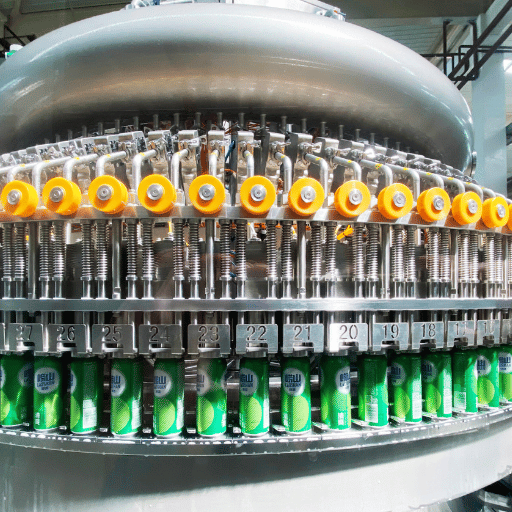
An era has been embraced by the automation activities of beverage makers through the employment of modern machines. Capable of numbering institutes, the modern beverage fillers still exploit servomechanisms and advanced sensors that apply predictive maintenance to maximize their efficient performances and lower the initial costs. Digital twins and line simulation prove beneficial for beverage producers to verify performance levels before the operation, and the associated networked controls further ensure real-time obsolescence.
Sustainability should not also be missed with focus now on clean-in-place efficiency, recovery loops, and designs that help reduce excessive usage of compressed air or CO2-necessary for carbonated drink lines. Varieties of packing are also undergoing an improvisation: the advanced lightweight bottles and tethered caps, recyclable materials-which necessitate the utmost of specifications in regard to handling to retain the quality intact.
How Top 10 Beverage Filling Machine Manufacturers Stand Out
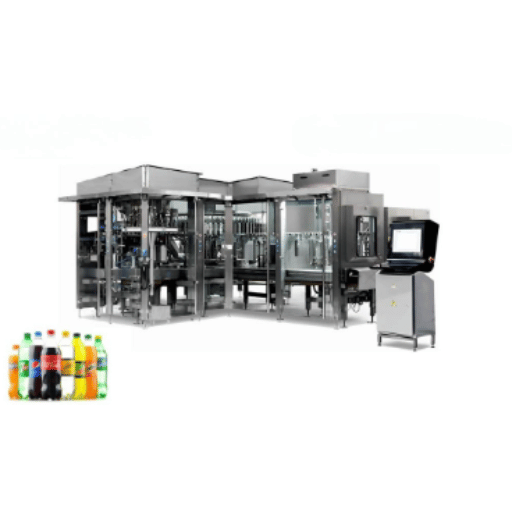
Ten leading beverage filling machine manufacturers set themselves apart with domain knowledge, innovation pipelines, and global scale, contributed in respect to the distributor arrangement of beverages. Some of the major key features to be found are that there are modular filler options for different beverages, hygienic monobloc options in which rinsing, filling, and capping are all combined, and aseptic technologies that create a barrier between sensitive juice and functional beverages and the potential for no preservatives.
Often, industry leadership is defined by these major manufacturers having high-impact machinery packages covered by a well-oiled software system that captures production data and thus drives continuous improvements-an ecosystem that has been the key to their growth. The big players tend to showcase these pieces in their array of plant installations for renowned beverage companies, such as wide-ranging regional programs for companies like PepsiCo and turnkey lines for small regional producers.
What to Expect in This Top 10 Review
Each set will elaborate on different USP, innovations, and contributions, with essentials catered primarily for the beverage industry. Each manufacturer will have a focus on special projects, latest technologies, unique canvass ranging from high-speed carbonated-beverage lines, aseptic juice systems, to those that address bottled-water solutions. The above-mentioned discussion will critique resolved goals of sustainability, efficiency, and flexibility-all to be borne by a spirited decision-making among the beverage community; and so they can make informed strategic decisions for short-term decisional bond and long-term feeling of relief.
Setting the Stage for Strategic Selection
Finding the right beverage-packaging partner–that mutually assures equipment capabilities and business objectives in terms of flagship carbonated-beverage-line expansion, launching the premium juice brand, or modernizing a legacy soda facility–gives leaders the perspective to critically think through how closely its engineering philosophies match their project’s process needs: sanitation standards, throughputs, packaging and brand-protection specifications. Resultantly, strategic, informed selection from the top 10 assist in streamlining finance channelization, lowering total cost of ownership, and afford competitive leverage to beverage brands in international markets.
Methodology for Identifying the Top 10 Beverage Production Line Manufacturers
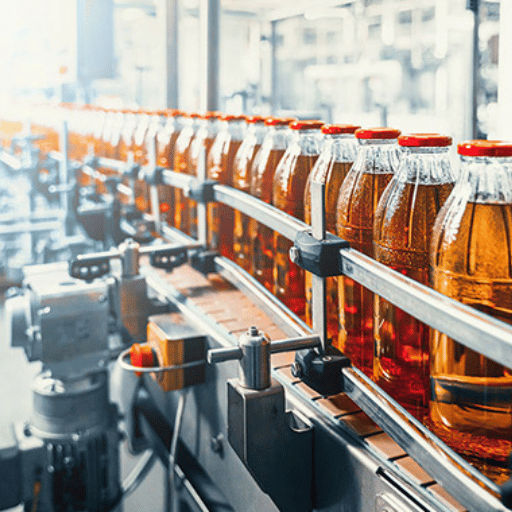
We sifted through the top 10; we viewed the technology depth, global presence, reference installations, and proven results found in automation, sustainability, and OEE for each of these manufacturers. “Versatility of the equipment which would work for both carbonated and still beverages” groups as well as the aseptic proficiency to accommodate juices were chosen for touchpoints, as was speed and precision for bottled water and a seamless packaging integration solution from one project. We also factored digitization services into the evaluation-full-fledged predictive maintenance, remote diagnostics, and modular upgrades-for the establishment of lifecycle value. Lastly, we scrutinized distinctive projects by the vendors with premium beverage corporations like PepsiCo to claim operational performance at scale.
| Evaluation Areas | Details |
|---|---|
| Core Criteria | Technology maturity and world-wide service landscapes de-facto refer to practical experiences that imply OEE, sustainability, and automation. |
| Product & Process Focus | Versatility for carbonated and still drinks; aseptic competence for juice; speed and accuracy for bottled water; and turnkey packaging integration. |
| Digital Capabilities | Predictive maintenance; remote diagnostics; modular upgrades to protect lifecycle value. |
| Scale Validation | Substantial projects with major corporations in the beverage sector, including large-scale enterprise-wide rollouts for PepsiCo. |
The Top 10 Manufacturers
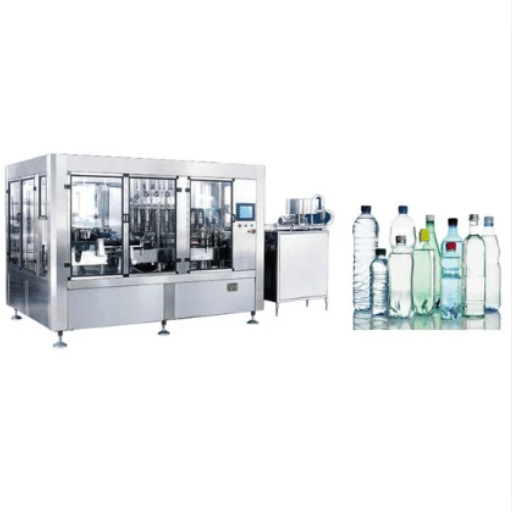
- 1
Krones
Krones, a global leader in beverage filling and packaging systems, is recognized for its modular filling machines that handle multiple categories with the utmost efficiency. Their Contiform and Modulfill platforms address hygiene issues, quick changeovers, sustainability through lightweight bottle design, lower utilities, and closed-loop cleaning. The integration of end-to-end automation with smart diagnostics and line visualization allows for optimal throughput enhancement and assurance of quality, with high-speed carbonated drink installations and turnkey lines that combine packaging solutions, inspection, and palletizing as evidence. - 2
KHS
KHS is capable of delivering robust solutions with a monobloc design to ensure Uptime and flexibility. While in treatment with carbon dioxide, KHS is known for gentle treatment in case of sensitive juices. It is engaged in the manufacture of hygienic and energy/water-saving solutions. The Innofill series enables provision for several bottle formats and integration with label and secondary package. Furthermore, KHS digital services help minimize losses in harsh environments by enabling users to carry out predictive maintenance and OEE analysis. - 3
Sidel
Sidel specializes in PET blow molding, high-speed filling and is offering integrated solutions to optimize line efficiency and quality. The Evoblow and an aseptic platform serve juice and dairy alternative beverages; carbonated lines use state-of-the-art processes for optimum CO2 retention and foam management. Sidel is committed to sustainability concerning line and resource-saving CIP. The lifecycle services offered by Sidel are accessible globally and support manufacturers in all stages-be it in design or in ramping up production. - 4
GEA
GEA brings its depth in process engineering, into which lies specifically its skills in aseptic integrity for products like juice and functional beverages. Complete control from recipe to bottle is created by thermal processing, separation, and homogenization, combined with their efficient filling machines. Key areas on which GEA has been focusing include heat recovery, water savings, and an optimized CIP. Another modern-day technological development at the service of GEA are digital twins, enabling rapid commissioning and ensuring a more stable running. - 5
Sacmi
Sacmi’s flexibles lie in integrating cap and preform systems with a multifaceted filling process. It is profitable to use the capping technique instead of compression and inspecting the quality of closures. By utilizing controls across the lines for blowing, filling, and capping, waste and downtime can be reduced. Automation, as well as lighter-cap ecosystems, is where Sacmi lays much of its emphasis, which in turn helps raise the packaging system’s overall performance. - 6
SIPA
SIPA designs PET preforms, bottles, and filling equipment, aligning engineering design efforts with excellence in filling. The Xtreme and SincroBloc platforms combine blow molding and filling in order to reduce the footprint and changeover time. SIPA’s sustainability measures include lessening the resin consumption, circular packaging strategies, and highly automated data capturing to give way to better OEE. - 7
ProMach (Zalkin, Fogg, Federal, and More)
A group of built-to-fit brands allows users to search for packaging and filling skill sets that are complementary to each other. Zalkin specifically creates a niche in capping for carbonated products with sensitive capping styles. Fogg and Federal contribute with a portfolio of hygienic rotary filling machines for bottle water & juice. The rest of the machines formed into ProMach ensure continuity between depalletization to case lines, pushing ability to offer high flexibility, cleanliness, and uptime. - 8
Serac
Embracing a weight-based filling accuracy and hygenic design for paramount production performance, Serac’s clean room environment and monoblocs limit the contamination risks and facilitate quicker format changes. Its sustainability efforts are supported by minimizing product giveaways and improved CIP usage in the interest of conservation. - 9
Tech-Long
Tech-Long provides high-capacity and cost-effective blow-fill-cap solutions with favorable TCO. Manufacturing lines comprise bottled water soft drink and carbonated beverages of all kinds, from servo-driven metering with quick changeovers. They avail global service options and digital tools for remote diagnostics, besides boasting features of sustainability such as reduced consumption of compressed air. - 10
Newamstar
Newamstar really focuses on turnkey filling and packaging lines associating hygienic design with robust automation. Lower energy use and smart CIP support sustainability, and digital tracking enhances uptime. With the technology-friendly engineering criteria, different bottle formats, as well as rapid SKU rotation, provide a quick start to manufacturing high-quality goods.
SIDEL Group Competitors: A Quick Comparative Lens
Differentiation focuses on aseptic and autonomous strength, high conception of rapid carbonators, and implemented solutions for minimization of footprints. Krones and KHS are established on a global scale-paperwork, innovation. Sidel and SIPA standout in the PET and blow-fill convenience. GEA and Serac are for hygiene and precision. To fulfill value-addition target, QUBAS Sacmi takes care of ProMach, Techlong, and Newamstar’s closures, modularity, and cost/performance balance. Tie these strengths back to the product mix, sustainability goals, and automation stage for flexible production.
| Vendors | Key Strengths |
|---|---|
| Krones, KHS | Global scale and innovation |
| Sidel, SIPA | PET and blow-fill integration |
| GEA, Serac | Hygiene and precision |
| Sacmi, ProMach, Tech-Long, Newamstar | Closures, modularity, and cost-performance balance |
Case Examples: Addressing Sustainability, Efficiency, and Automation
Leading manufacturers are working on ways to reduce CO2 emissions and water by using the most energy-efficient ovens, employing dry lubricant systems, and employing optimized CIP, with loops created to recover the least residue of products. Predictive maintenance, setting up machine hygiene again and a turn-key system, and control synchronization for bottle infeed to palletizing, which will improve efficiencies. Applications include lightweight carbonated soft drink lines for PepsiCo, an upgraded aseptic juice production that has much longer shelf life without preservatives, and changeovers on bottled water lines to meet rapid format changeover needs; visible gains in OEE and sustainability are recorded.
Reference Sources
- Beverage Industry: Detailed analysis of the top 100 beverage companies performing according to their sales.
- Investopedia: Global player insights for PepsiCo, Anheuser-Busch InBev, and Coca-Cola.
- Interfresh: Top players and soft drink manufacturing trends reshaping the industry by 2025.
Frequently Asked Questions (FAQs)
Q: What factors shall I consider while selecting a beverage production line manufacturer?
A: Some aspects to consider while selecting a manufacturer for a beverage production line are the capacity of production, intensification of customization options, energy efficiency, up-to-date after-sale service, and abiding to industrial regulations.
Q: What types of beverages can these machines process?
A: The produced drinks can generally go in several varieties of flavors of soft drinks, fruit juices, water, alcoholic beverages, and dairy drinks.
Q: Does the manufacturer offer turnkey solutions?
A: Yes, most sophisticated producers could assign the task of the turnkey solutions, which include the line designing, installation, and functioning.
Q: Does this product line cater to customization?
A: The majority of manufacturers offer custom-tailored solutions to meet the specific production requirements of various drinks.
Q: What would be the average costing for the beverage production line?
A: In the range of a few hundred thousands to some millions, costs would be based on productivity, degree of full automation, and degree of customization.

Candy
Articles: 37
Trending now