Get in touch with Victorystar

Apple Juice Processing Line for Sale
Discover a complete apple juice processing line for sale. High-quality equipment designed for efficient and effective juice production, from start to finish.
The market leader in apple juice processing with over 15 years of experience plus 500+ installations worldwide. China being the largest producer of 50% of the world’s apple juice, we are second to none in serving them.
Managing every phase of the project from site layout and equipment design all the way to installation and commissioning, plus training and after-sales support. One partner, zero hassle.
Each line is customized based on your requirements: capacity, product types, local power standards, space limitations, and budget. No standardized selections.
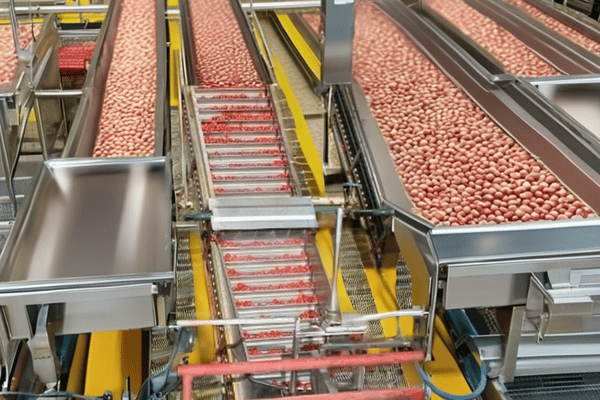
Advanced R&D centers, where future-generation technologies are developed: HPP non-thermal processing, ultrafiltration, aroma recovery, energy optimization systems.
24/7 multilingual support, spare parts stocking at regional hubs, remote diagnostic capability, annual maintenance programs.
Equipment meets international standards: ISO9001, HACCP, GMP, CE, FDA-compliant materials. Documentation to assist with regulatory approvals.
Your Apple Processing Challenges
Explore methods for optimal apple processing, stretching from harvest through storage, so as to enhance its yield, quality, and the level of profitability.
Losing 30-40% of potential juice with outdated equipment
✓ Our Solution: Our advanced belt press technology achieves 70-90% juice yield, increasing output by 20-35% compared to traditional extractors.
Browning, flavor loss, and nutritional degradation
✓ Our Solution: Enzyme-treatment systems, color-protecting technology with ascorbic acid/citric acid, and low-temperature vacuum evaporation keep flavor and nutrients intact.
Excessive energy consumption eating into profit margins
✓ Our Solution: Energy recovery systems and heat recycling cut down consumption by over 20% as compared to conventional equipment.
Manual cleaning takes hours; contamination risks
✓ Our Solution: Integrated CIP (Clean-In-Place) system automatic with control disinfection to ensure like HACCP/GMP and lessen labor intensity.
High labor costs and human error
✓ Our Solution: Fully automatic PLC control system reduces manual intervention, enhances efficiency, and ensures uniform quality.
Can’t keep up with market demand for different product types
✓ Our Solution: This versatile system makes clear juice, cloudy juice, NFC juice, concentrate (70 Brix), and various packaging formats.
Detailed Technical Specifications
| Category | Details |
|---|---|
| Raw Material | Fresh apple |
| Finished Products | Concentrated juice, clear juice, mixed beverages |
| Production Capacity | 1T/H to 50T/H |
| Juice Yield | 75% (25% fruit fiber, peel, and core) |
| Solid Content | 10-12 Brix |
| Concentrate Concentration | 70-72 Brix |
| Product Packaging | Aseptic big bag/glass bottle/PET bottle |
| Output | Customized according to customer needs |
Important Performance Indicators
Discover the key performance metrics used to optimize the apple juice-producing line with metrics on efficiency, quality, and production data.
99.9%
Automation Level
20%+
Energy Savings
95%
Microorganism Reduction
70-90%
Juice Yield Rate
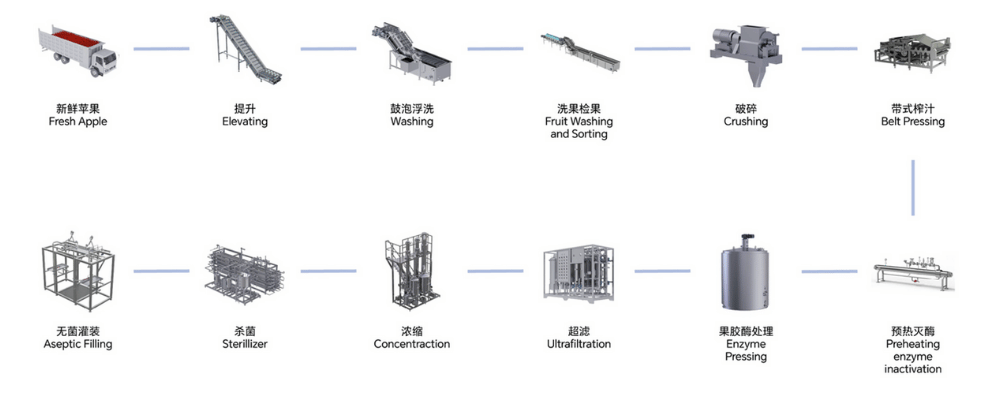
Apple Juice Processing Flow Chart
Learn how to convert fresh apples into the best quality apple juice by switching to this detailed flow chart.
Diverse Applications of Apple Juice Processing Line
Discover the versatile uses of an apple juice processing line-for beverages, food products, and even other innovative applications. Consider its broad-based industry impact.
01
Large-Scale Production
02
???? Agricultural Cooperatives
03
Craft Beverage Makers
04
Contract Packagers
05
?Organic Producers
06
Export Operations
07
Orchard Cooperatives
08
Regional Producers
09
Retail Brands
Specific Use Cases
The Ultimate Used Beverage Equipment: Buying Guide for Beginners
Acquiring secondhand beverage equipment provides businesses with a cost-efficient solution to launch operations or increase their existing activities. The process…
Predictive Maintenance in Beverage Manufacturing: A Game-Changer for Productivity
Predictive maintenance systems are changing how beverage producers manage their equipment performance and their production efficiency. This unique method uses…
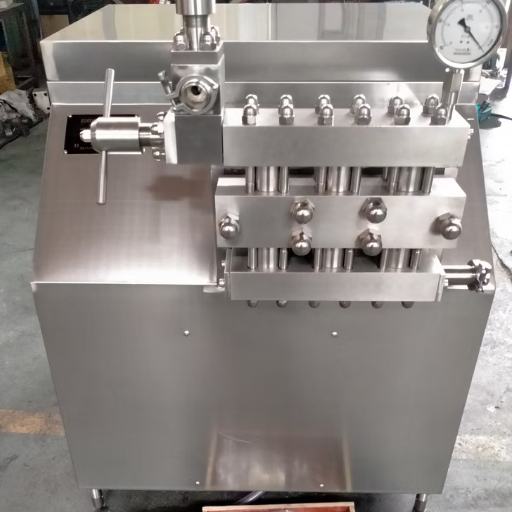
Homogenizer Selection for Beverage Production: Key Factors to Ensure Quality and Efficiency
The right homogenizer is a vital element in the success of the beverages produced by beverage manufacturers because if the…
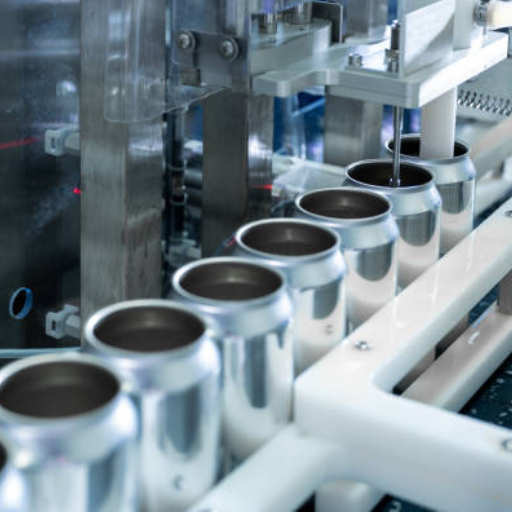
Beverage Can Filling Line Complete Guide: Ensuring Quality and Productivity
The Drinks Industry is a lot of action packed, effectively managed field. Efficiency and Quality are essential for every business…
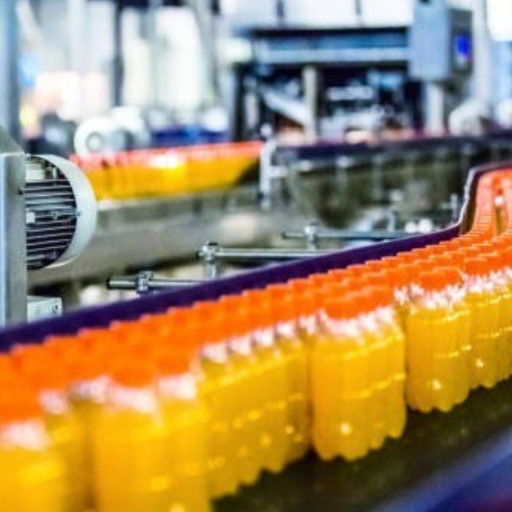
Energy Drink Production Line Setup: Ensuring Quality and Operational Excellence
The appropriate operational framework enables your business to achieve optimal productivity while creating products that fulfill customer needs for your…
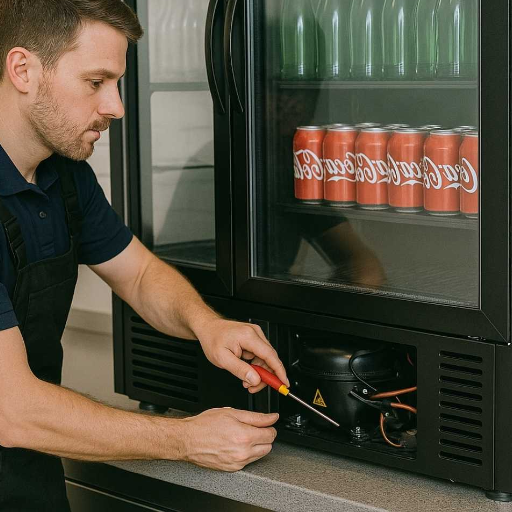
Preventive Maintenance for Beverage Equipment: Ensuring Longevity and Optimal Performance
The coffee shop which operates at full capacity and the bar and the restaurant need their equipment to be maintained…
Expert Guides to Apple Juice Processing Line
What Are the Steps in the Process of Apple Juice?
Making apple juice usually entails washing and sorting the apples, then crushing and pulping, through the various steps of juice extraction, clarifying or homogenizing, blending, sterilizing and finally pasteurizing.
Apple Juice Processing Equipment
Machines for sorting, cleaning, crushing, pulping, and juice extraction are among the equipment utilized in the processing of apple juice and they come in both commercial and industrial scales.
How to Filter Apple Juice?
Filtering of apple juice can be done by using either cheesecloth or a coffee filter to extract solid particles, or by applying enzymes and a drink filtrator for a more precise result.
How Is Clear Apple Juice Made?
Clear apple juice is produced by the extraction of juice from apples, followed by the clarification using enzymes, and then filtration to remove the solids and attain the transparency.
How Does Apple Juice Benefit You?
Apple juice is a good source of hydration and is also known for its several health benefits such as immunity boosting, heart and brain health support, and delivering antioxidants for overall wellness.


What Our Customers Say
Find out the opinions of our customers concerning the Apple Juice Processing Line. Check out the authentic reviews and testimonials to get knowledgeable about the qualities of our machines, like performance, reliability, and efficiency.
“After installing this processing line, our juice yield increased from 65% to 85%. The return on investment was achieved in 18 months. The automatic PLC control reduced labor cost by 40%.”

Zhang Wei
Production Manager, Golden Apple Juice Co., Shandong Province.
“The CIP system is a revolution. 4 hours of manual cleaning have been reduced to 45 minutes of automatic CIP. We’ve gone through HACCP audits excellently, and product quality consistency has tremendously improved as well.”

Maria Rodriguez
Quality Director, Fresh Valley Beverages, USA
“We were skeptical of the claim of savings, but electricity bills did drop 23% in our very first year. The heat recovery system and the evaporator really work. And the technical support is really top class.”

Boris Petrov
CEO, Crimson Orchards Processing, Russia
Frequently Asked Questions (FAQs)
We provide lines from 0.5 tons/hour (small operations) up to 30 tons/hour (handful of large industrial scale). The hours of operation determine the actual throughput ranging between 60-1500 tons per day. Each system is designed with respect to your specific throughput requirement.
Yes! The system works on processing apples, pears, and other fruits of similar characteristics. Such proficiency will highly maximize your equipment utilization and give you room to work on other product lines throughout the year.
The belt press allows between 75 and 90 percent juice yield with continuous operation and freshness maintenance (pressing time 1-2 minutes). Screw press is more economical for capacities under 2 tons/hour with 60-70% juice yield but produces heat which affects taste and the presence of vitamin C. If we’re asked, we always say that a good-quality and efficient belt press is way better.
Typical timelines: 2-3 months for equipment manufacturing; 4-6 weeks for installation; 1-2 weeks for commissioning and operator training. The total project timeline, i.e., from order to production start, usually lies in the range of 4-5 months.
Typically, daily CIP cleaning (automated); weekly inspections of belts and seals; monthly replacement of filters; and once-yearly comprehensive maintenance, with design for 99.5% uptime with very low manual intervention.
Yes, the line has clarification units for clear juice and homogenizers for cloudy juice. Switching between the two products is almost instantaneous, requiring only a bit of cleaning in between.
Keep in mind that our machines are already certified by ISO9001:2008, HACCP, GMP, and CE. All materials that come into contact with the product are composed of food-grade stainless steel, specifically SUS304 or 316L, thereby meeting international standards for food safety.
Space requirements differ by capacity, but for a standard 5 ton/hour line, it will be around 800-1200 square meters including production area, storage, and quality control labs. Detailed layout designs will be provided so as to better fit your facility.
Trending now