Get in touch with Victorystar

Mango Juice Processing Line: Enhancing Mango Juice Production with High-Quality Processing Equipment

Contents
show
Mango juice is celebrated for its sweet taste, bright color, and rich nutrient content, making it essential for the worldwide beverage-making industry. However, top-quality mango juice production at a commercial scale demands planning with precision, efficiency, and high-end technical skills. This comprehensive guide zeroes in on the underlying mechanism of a modern mango juice extraction plant that features advanced equipment, as well as techniques with an eye on assured quality, sustainable outcomes, and food safety rules. If you are a manufacturer intending to increase your output capacities or a professional desirous to get into the works of innovative processing technology, this guide will refine your understanding about mango juice production, showing you the full flavor and taste of mango juice extraction.
Overview of Mango Juice Processing
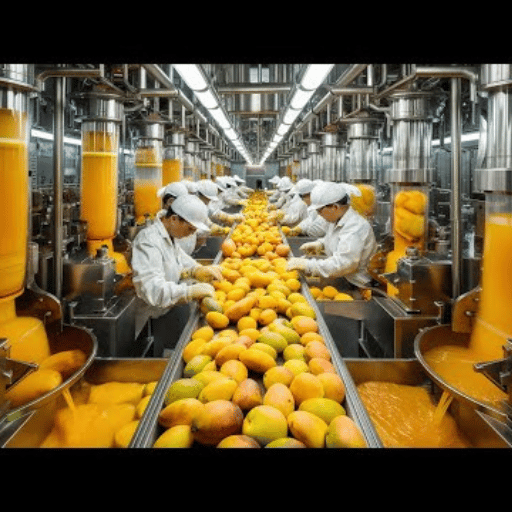
Mango juice processing involves a series of sequential steps planned to extract juice efficiently while keeping proper the established quality and safety standards. The important steps encompass:
1. Sorting and Washing
Fresh mangoes are split carefully for inspection to remove faulty or overripe fruits and are cleared after extensive scrubbing to do away with dirt, debris, and likely contaminants.
2. Peeling and Stone Removal
The cleansed mangoes are peeled from the outer skin, followed by destoning to separate the pulp from the seed.
3. Pulp Extraction
The pulp extracted from the mango is thoroughly drawn out by specially designed machinery such as fruit pulpers or finishers, to leave an even and smooth look.
4. Pasteurizing
After extraction, the juice gets pasteurized to nullify the effects of harmful microorganisms, which in turn gives extended shelf life while preserving the nutritional value and the authentic mango flavor.
5. Packaging
Lastly, the juice is stored in sterile containers such as bottles or Tetra packs in a sterile locality to avert any sort of contamination, thus maintaining the authenticity of freshness.
These processes are a well-conceived application of modern technology to ensure high-quality mango juice production while honoring the mandatory food and safety regulations and industry standards.
Introduction to Mango Juice
Given its varied flavor profile, appealing color range, and nutritional value, mango juice is among the most favorite beverages. For any professional in the industry, it is fundamental to comprehend the dynamics that come into play in ensuring the production of this juice, starting from sourcing and sorting good-quality mangoes and ending with the technologies behind pasteurization and aseptic packing. These processes help in both maintaining food safety compliance and keep the juice’s authenticity in terms of taste and goodness that come with the mango. Driven by innovation and truly professional, such an enterprise utilizes this model to provide consumers around the world with the greatest mango juice through continuous quality improvements and technological advancements.
The Importance of Quality in Mango Juice Production
Ensuring quality of mango juice production plays an integral role in attaining customer satisfaction, product safety, and market attractiveness. A quality mango juice, to begin with, is made by paying strict consideration towards raw material collection, so that with a prime condition of ripeness at the time of procurement, the mangoes should be such that they present no visible damage and are high in nutritional value. Cleaning, extraction, pasteurization, and packaging are exacting procedures, requiring food safety protocols and aseptic standards at each step. Quality assurance testing could be the monitoring process that goes realtime and ongoing even in the laboratory to ensure that the juice retains its natural taste, color, and nutrients. Above all, quality assurance aids in clients’ trust, which is gradually building loyalty, and therefore in a marketplace marked with high demand, quality producers are also the preferred choice for compliance and consistency in supply to premium products.
Key Components of a Mango Juice Processing Line
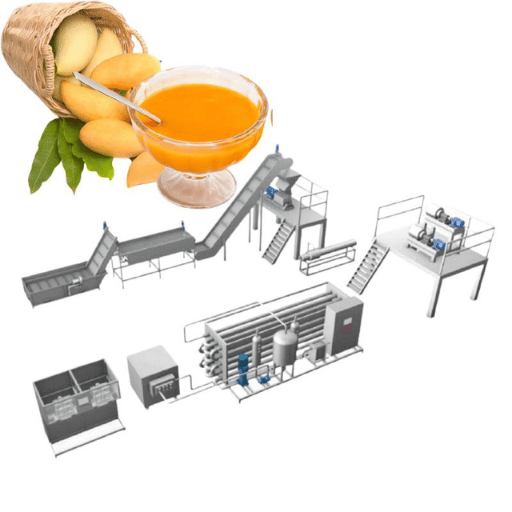
A generic mango juice process flow typically consists of several major elements to secure productivity, quality, and to abide with food safety standards. The system starts in cleaning and grading where raw materials are wet-milled and sorted to remove dirt or damaged fruits. After passing through a destoning and pulping machine where seed and peel are separated from the mangoes into a smoothly blended pulp. That pulp is then channeled into pasteurization, during which the pulp is rid of bacteria so that it can be warehoused safely. Homogenization, which sets the ground for uniform texture, prohibits the phase separation during warehousing. From there the product is injected into filling and sealing machines for clean packaging. Various ancillary systems, viz a viz, CIP (clean-in-place) sets, filter systems, and temperature control sets, among other auxiliary supporting systems, keep these processes on the radar by maintaining sanitary equipment and appropriate operational parameters. These unit operations collectively serve to increase production efficiencies and obtain guaranteed safety and quality properties of the final product.
Understanding the Mango Juice Processing Line
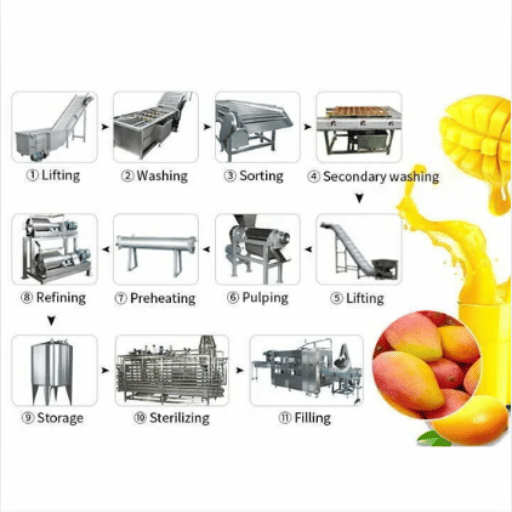
Mango juice processing is a well-defined process series designed to transform raw mangoes into packaged juice. Extensive processing entails the separation and cleaning of impurities, peeling followed up by fine pulping to the transition of the flesh quantity of the mango into the extract, while at the next station is the occurrence of pasteurization to eliminate unwanted microorganisms. In the line then the mango juice undergoes filtration for the purification of properties along with the seasoning, if necessary. The last and final step is the further filling of the aseptically sterilized container with the juice. At every step, great care is taken to see that all measures relevant for product quality and respect for rules of food safety are maintained.
What is a Mango Juice Processing Line?
A mango juice processing line is a comprehensive system of processes and machinery meant for converting fresh mango into very high-quality juice products. These processing lines entail a number of vitally significant operations like cleaning, peeling, pulping, pasteurization, filtration, blending and packaging, in keeping with high standards of hygiene and quality control. They are designed for optimum performance, the conservation of raw fruit’s natural taste and activities, and product safety in the face of ability for large-scale manufacturing.
Types of Processing Machines in the Line
- 1. Washing Machines
Specialized fruit washing machines do the trick to wash all dirt and impurities off mangoes so that their basic attributes remain intact before being transported to processing stages.
- 2. Peeling Machines
Automated peelers help eradicate more amount of the fruit’s cortex, so that only minimal waste goes wasted.
- 3. Pulping Machines
Very efficient operations separate the pulp from mangoes, extracting the seed and fiber to leave just the plain, smooth, liquid consistency.
- 4. Pasteurizers
Necessary to heat the pulp up, these machines accomplish a number of temperature-controlled activities, eliminating the organisms causing infections and keeping the natural taste and nutritive values of the fruit.
- 5. Filtration Systems
High-tech filtration systems remove any particulates, thereafter indicating a high degree of clarity and purity juice outcome.
- 6. Blending Systems
Precision blenders ensure homogeneity by mixing the mango pulp with other ingredients like stabilizers from high-quality suppliers to ensure a constant flavor profile.
- 7. Filling Machines and Packaging Machines
These machines fill juice into containers and pack them in a hygienic environment ready for distribution.
Individually, these machines remain pivotal toward setting up a mango juice-producing line into an efficient, safe, and quality-controlled zone.
Role of Aseptic Filling in Juice Production
Aseptic filling is a critical step in juice production ensuring the product sterility and freedom from microbial contamination throughout packaging. The use of sterilized containers and aseptic conditions is sure to maintain juice nutritional value and shelf life besides its naturally good taste without the use of any artificial preservatives. This advanced method also comes with minimal spoilage, improved consumer safety, and observance of stringent food safety standards, and that is why aseptic filling is very important in the most contemporary juice manufacturing processes.
Benefits of Investing in Advanced Processing Equipment
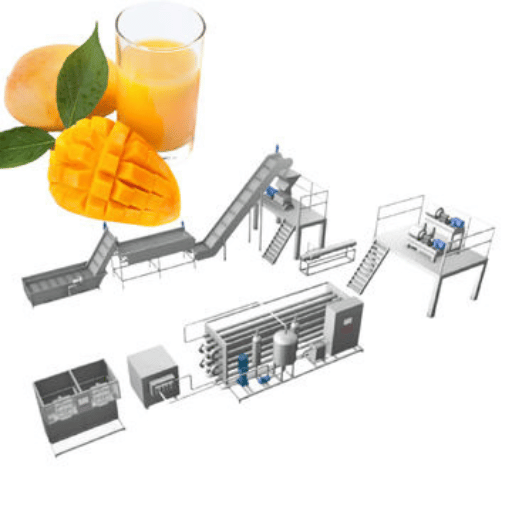
By purchasing cutting-edge processing equipment, one gets a lot of advantageous things. These systems give a big increase to efficiency by automating key procedures, meaning there is less downtime and more output. Since all the crucial variables of temperature and pressure can be controlled with a lot of precision, great product quality can be assured. Plus, all advanced equipment normally comes with crucial safety provisions to help guarantee strict food legislation. These benefits combine to eventually reduce operational costs and waste and better compete in the market arena.
Efficiency and Productivity Gains
Automated systems are crucial in enhancing functioning and efficiency by simplifying a complex set of processes, reducing manual intervention, and ensuring efficient operation at a very high level of precision. By greatly reducing the odds of errors, systems enhance resource utilization. Operations are constantly running and never bog down under predictive maintenance and real-time monitoring demands. Also, the speed of innovation allows shorter production cycles, which in turn allows a business to absorb increased demand without compromising quality. It further delineates a more agile and scalable production model, thus achieving pronounced improvements in the organization’s performance and including profitability gains.
Quality Assurance and Consistency
Quality assurance and consistency form two of the most important cornerstones for any industry in sustaining its competitive advantage. Standardized protocols, advanced inspection systems, and data-driven analytics form the structural base over which product uniformity is achieved without human error. Well-defined testing methodologies, which work in real-time with feedback loops, make sure that anytime things start to go wrong, such points of discrepancies can be instantly noticed and put right to ensure that product integrity is maintained. These measures augment ensured trust in the eyes of the customers and, hence, operational efficiency in rework and waste reduction adding altogether, extremely helpful long-term strategic goals alignment.
Cost-Effectiveness in the Long Run
Investing in advanced systems and robust quality assurance policies is a highly cost-effective strategy in the longer term. Thus, by reducing defects or configuration errors and minimizing redo, the organizations save significantly in their operational expenditures: waste, warranty claims, and so on. Beyond that, process improvements and data-driven decision-making result in a more rational allocation of resources and hence better productivity, thus pumping ROI to the maximum. Indeed, these actions are considered the key to progressing towards the future and holding an edge in a fiercely competitive market.
Innovative Technologies in Mango Juice Processing
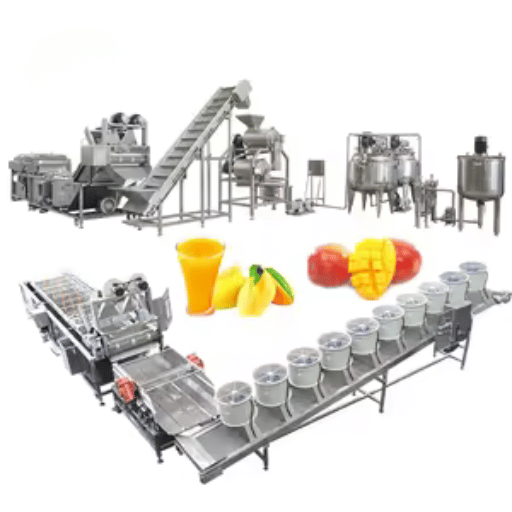
Modern technological advancements in the processing of mango juice are directed at increased efficiency borrowing from enhanced nutritional values alongside promising shelf life. Cold pressing has been identified as a game-changer in attaining higher juice yields with the naturalness, aroma, and nutritive value associated with the things delineating mangoes. High-pressure processing (HPP) is recommended as a heat-free antimicrobial agent to preserve high-quality fresh juice. Membrane filtration systems are increasingly being incorporated in mango juice to clarify the juice and eliminate undesired residue material, ensuring a smoother appealing product. These technicalities all at once simplify production, ensure whole product quality, and respond to consumer preferences of today.
Emerging Trends in Fruit Juice Production
In the increasing food business, new processes are tailored to market trends that elongate the growing consumer expectations and are sustainable. High on this change is the cold-pressed technology, which stays away from oxidation and helps retain the true colors and nutrients of the fruits. Following in this vein are functional beverages fermented with the benefits of probiotics and fruit juice to appeal to health-conscious consumers. The industry has also taken root on eco-friendly packaging solutions as are biodegradable materials and reusables to reduce the imprint on the environment. Of their own accord, these developments embody a strategic shift that seeks to promote the quality of the product, health functions, and environmental concerns.
The Impact of UHT Technology on Shelf Life
The technology that is UHT technology considerably extends perishables storage life and destroys microorganisms by heating them to 135-150°C for a few seconds. This process has the additional advantage of terminating the action of the enzymes that cause food spoilage, while the essential characteristics of the product are preserved. UHT treatment can also significantly enhance shelf-life (often for up to six months) by stabilizing products under aseptic conditions in a way which does not involve refrigeration. Dairy brands and plant-based-milk and fruit juice processors are among the primary beneficiaries of this invention, offering storage advancements for distributing their products to consumers.
Automation in Mango Juice Making
Automation indeed plays a pivotal role in the process of mango juice manufacturing as it streamlines operations to improve efficiency, consistency, and product quality. Major stages such as washing, peeling, pulping, pasteurization, and packaging are managed by automated systems. Elaborately developed peeling and pulping machines ensure maximum yields from the fruit while minimizing waste, and the pasteurization unit can control temperature very precisely; therefore, the taste and nutritious value will be maintained for the highest time. Aseptic filling and sealing during packaging, through the use of automated equipment, would reduce potential for contamination, thereby increasing the lifespan of the product. In response to real-time production monitoring of PLCs and sensors, the integration of controllers and sensors allows manufacturers to adequately manage production and optimize it toward standard-caliber output. Not only is this an opportunity to reduce costs within labor costs, while an automated system delineates increased turnover under the surge of fluctuating demand.
Conclusion and Future Outlook
The fruit juice industry has certainly progressed in an accelerated manner because even traditional processes are becoming more technology-based and consumer taste has also changed significantly. UHT processing, new filtration mechanisms, and automation have very much advanced production efficiency, product quality, and shelf life settings. Beverages are being produced in order to address ever-higher consumer demands for health, longer shelf life, and sustainability while keeping in mind requirements of smart technology and environment. Adaptation and innovation to new needs will enable companies to be prepared in order to satisfy the demands of global trends and consumer expectations.
Summarizing the Benefits of a Quality Processing Line
Processing lines are designed specifically to achieve operational efficiency, product uniformity, and regulatory compliance all through production cycles. Using the latest tech, these address wastage reduction, maximum resource utilization, and scalability for handling enormous market demand. Furthermore, the advanced processing lines vie to produce better-quality products, prolonged shelf life, and greener approaches in tune with the market-activated consumer perception and environmental stance. Without a shadow of a doubt, a robustly established processing line is an investment in profit, competitive edge retention, and industry longevity-growth together.
The Future of Mango Juice Production
Many of the technologies, such as data-backed processes and such other emerging areas, seem to embody fresh new vistas for the juice of mango manufacturing. In cognitive and automated quality control and AI supply chain optimization, new energy-efficient pasteurization can mean the difference between satisfying production/commercialization requisites and environmental targets. In addition, the incorporation of smart packaging and trace solutions empowers consumers with more brand trust and extra transparency. Efforts aimed at quality control, amid the strategy, will help minimize environmental damage and adjust swiftly to new environmental and market trends. All this is going to make a pretty huge advantage when dealing in such a competitive world market.
💡 Final Thoughts for Potential Buyers
The magic bullet for potential buyers who wish to align themselves with the emerging trends and sustainability would be to pick up vendors who enthusiastically demonstrate a stance on innovation and flexibility. One should enter into partnerships with companies that employ advanced technologies such as smart packaging and sustainability materials along with guaranteeing quality and traceable supply. This avenue is rewarding not only in upholding ever-changing regulations but also in promoting transparency and benefitting with a better trust level eventually, thus enabling long-term business growth in a very competitive market scenario.
Reference Sources
Shanghai Beyond Machinery Co., Ltd.
They are known for their processing and equipment plants for mangoes that are used in high-end mango juice facilities.
IMARC Group
This report provides insights about the financial model and cost analysis for setting up a mango juice and pulp processing plant.
Ken Research
The reports give a thorough analysis of the global processed mango products market, trends and growth drivers.
DataHorizzon Research
It discusses the size, trends, and growth analysis of the mango juice markets.
Data Insights Market
Gives competitive dynamics on the mango juice market, promoted by the issues between the competitors as well as some major market trends.
Frequently Asked Questions (FAQs)
Which equipment does a mango juice processing line commonly consist of?
A mango juice processing line usually includes equipment for washing, peeling, pulping, pasteurization, homogenization, filling, and packaging.
What is the production capacity of a common processing line for mango juice?
Production capacities vary greatly from 500 liters an hour for small-scale setups to more than 10,000 liters an hour for the larger industrial ones.
Can the processing line handle other fruits besides mangoes?
Many processing lines are designed to handle several fruits with minor adjustments. Some other options are guava, pineapple, and papaya.
What certifications are required for mango juice processing equipment?
Usually, these require certifications for ISO, CE, and FDA compliance to meet quality and safety standards.
What are the maintenance requirements for the equipment?
Cleaning, lubrication, and frequent inspections must be performed to prolong the life expectancy and restore the operational condition of the machines.

Candy
Articles: 37
Trending now