Get in touch with Victorystar

Key Benefits Of Our Pineapple Juice Production Line
Find efficient, high-quality, and cost-effective solutions with our pineapple juice production line designed to fulfill your every manufacturing need.
This means an increase in yield of about 85% in juice results in 40-60% charging per ton of raw material processed, for profit.
Adopting a fully automatic process severely cuts down on labor requirements by 85% through processing from sorting up to packaging.
Very little heat is involved to ensure the retention of vitamin and enzyme contents, and oxidation is totally prevented so that original flavor is retained.
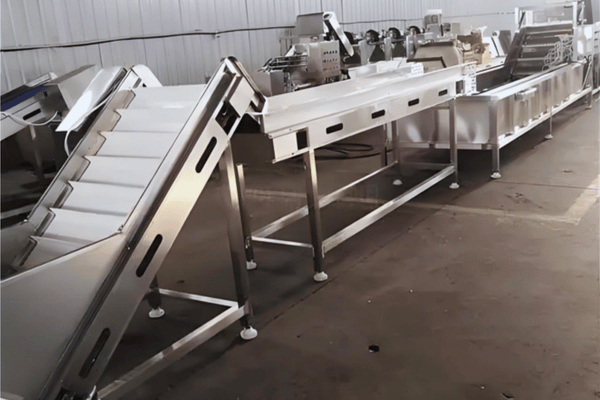
Instant changeover from NFC, concentrated, clear, cloudy, and canned products.
Lowering 65% in energy consumption and saving 50% water meet environmental objectives and reduce some carbon footprint.
With the modular architecture, the plant has been designed to be capable of expanding capacity from 20 to 1,500 tons/day as the business grows.
Are You Facing These Industry Challenges?
The Problem: There is a global pineapple shortage with production been down by 50% in key regions like Thailand and the Philippines. The prices have almost doubled: they were 7 baht/kg and now stand at 14 baht/kg. Concentrated juice is costing more than $5,000 per tonne.
Our Solution: Maximum Yield Extraction Technology (67-85% juice recovery) would ensure that you can get as much juice from the pineapples as possible, minimizing waste, and maximizing ROI, even with limited supply.
The Problem: From peeling the pineapples to processing the fruit, all procedures are labor-intensive, slow, and costly. Labor shortages are only aggregating worldwide.
Our Solution: Fully automatic peeling, coring, and extraction system with PLC control meant to cut manual labor needs by 80% while increasing processing speed to between 5 and 15 tons per hour.
The Problem: Inconsistent quality, huge pulp loss, oxidation, browning, all downgrade the product value and shorten the shelf life.
Our Solution: What advanced cold-pressing, vacuum degassing, and filtration of under 0.8mm pulp particles offer nutrients with the straightaway oxidation barrier are the highest-grade quality capable of getting higher prices.
The Problem: Inflation in utility tariffs, increased maintenance costs of equipment, and price hikes in raw material have been the margin shrinkers.
Our Solution: Operation costs are reduced by 40%, while the life span of equipment has increased by 50%, by virtue of using energy-efficient evaporators, auto CIP cleaning system, and food-grade SUS304 construction.
The Problem: Compliance with stringent hygiene standards and basic food safety rules costs much.
Our Solution: The entire equipment consists of food-grade materials, an UHT sterilizer (93°C for 15-30 sec), an aseptic filler, and an automated CIP system that comply with international safety standards with no effort.
The Problem: The market requires different products, but this single−purpose equipmentic isn’t that flexible.
Our Solution: A very flexible line producing clear juice, cloudy juice, concentration juice (60-72 Brix), NFC juice, puree, and processing other similar tropical fruits.
Detailed Technical Specifications
| Category | Details |
|---|---|
| Processing Capacity | 10 tons/day to 1500 tons/day (varies by setup). |
| Juice Yield | 55%-85% depending on pineapple variety and processing method. |
| Raw Material Consistency | 10-12 Brix (natural sugar content). |
| Concentrated Juice | 62-72 Brix after concentration. |
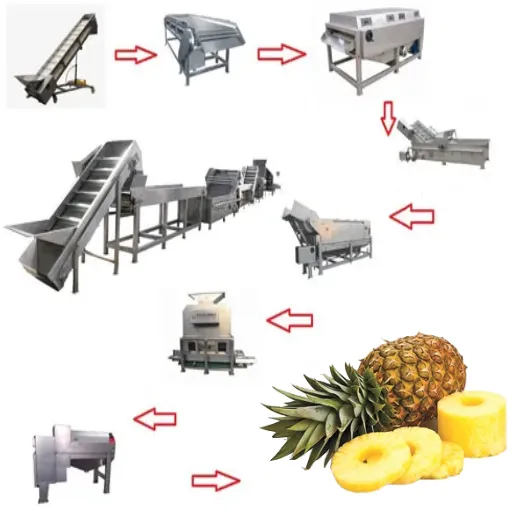
| Key Equipment | Washing machines, peeling and coring machines, crushers, belt press juicers, separators, vacuum concentrators, sterilizers, and filling machines. |
| Automation | Fully automated systems with PLC control for efficiency and safety. |
| Material | Food-grade SUS304/316L stainless steel. |
| End Products | Clear juice, cloudy juice, concentrated juice, canned pineapple, pineapple puree, dried pineapple slices, and pineapple wine. |
| Sterilization | UHT sterilization (115-120°C for 30 seconds) or pasteurization (95-98°C). |
| Energy Efficiency | Multi-effect evaporators for low-temperature vacuum concentration, saving energy and preserving nutrients. |
| Filling Options | Aseptic bags, PET/glass bottles, Tetra Pak cartons, or metal cans. |
| Additional Features | - Flavor recovery system to enhance aroma. - Degassing to prevent oxidation and improve appearance. - Adjustable pulp content (8%-20%). - CIP cleaning system for hygiene. |
| Flexibility | Can process other fruits with similar characteristics. |
| Drying Process | For dried pineapple slices: 60°C drying temperature, 20-22 hours per batch, reducing moisture content to 10%-12%. |
| Juice Clarification | Ultra-filtration and enzymatic treatment for clear juice production. |
| Packaging | Options include aseptic bags, glass bottles, PET bottles, Tetra Pak cartons, and metal cans. |
| Control System | Centralized control for monitoring and managing all stages of production. |
Your Return on Investment
67-85%
Juice extraction rate vs. 50-60% traditional methods
70%
Reduction in labor costs through automation
40%
Energy savings from heat recovery systems
18-24
Months typical ROI in current high-price market
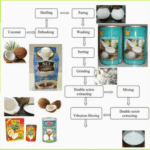
Pineapple Juice Processing Flow Chart
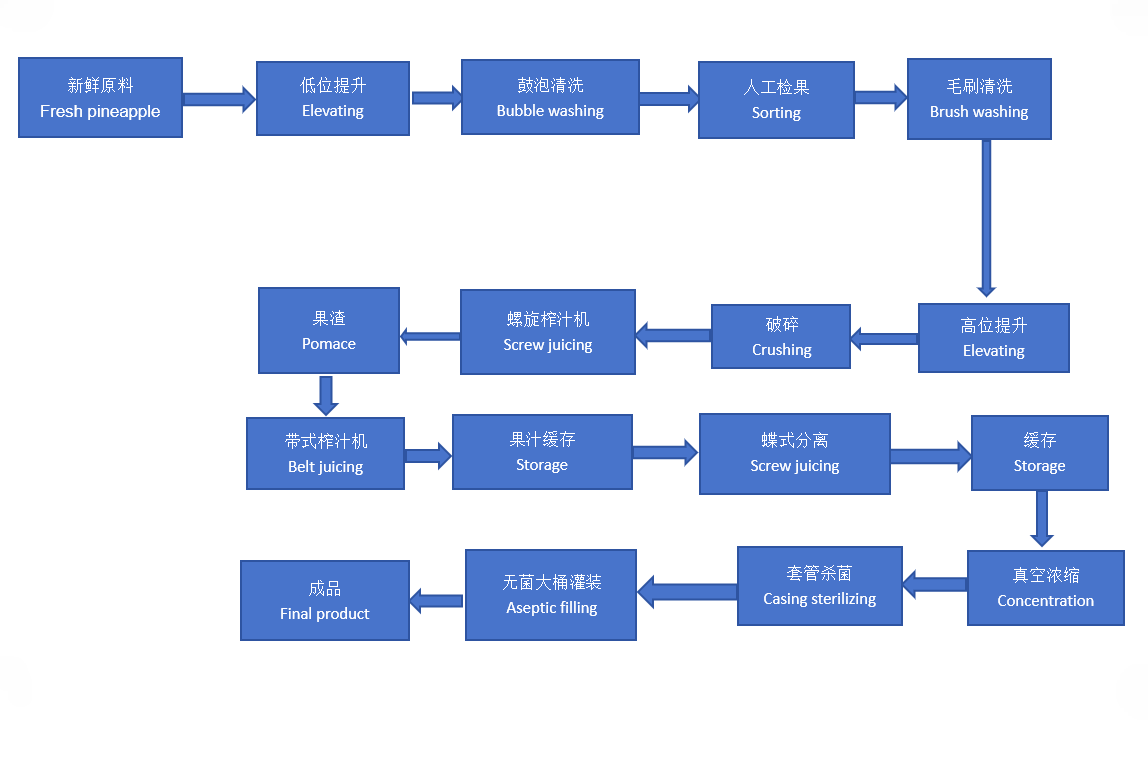
Product Capabilities
01
NFC Juice
A premium Not-From-Concentrate pineapple juice in PET, glass, or various aseptic cartons.
02
Concentrated Juice
Concentrated to 400-600 times, aseptic Bag-in-Drum filling (60-72 Brix), suitable for export and bulk sale.
03
Cloudy Juice
Natural pulp content to keep juice authentic in texture and preserving as much nutrition as possible (8-20% adjustable).
04
Clear Juice
Membrane separation produces ultra-filtered crystal-clear juice for premium positioning.
05
Canned Products
Services for pineapple chunks, slices, and jams on a shared equipment line.
06
Organic Certified
Designed for the equipment to process organic materials with minimal processing intervention.
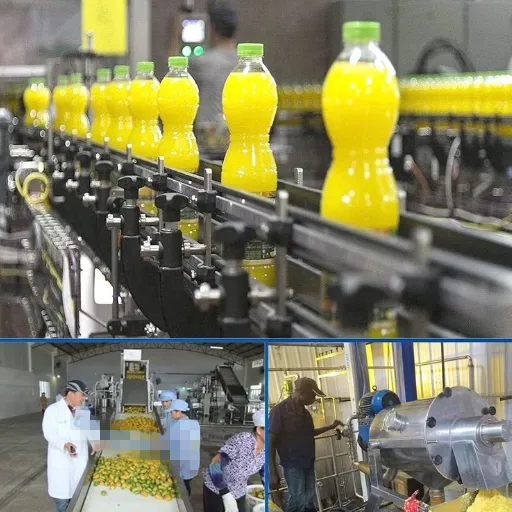
How Pineapple Juice Is Made In Factory: The Process of Pineapple Juice Processing
Pineapple Harvesting and Preparation Understanding Pineapple Cultivation Pineapple cultivation, undoubtedly, starts with placing considerations on proper circumstances. Pineapples basically need…
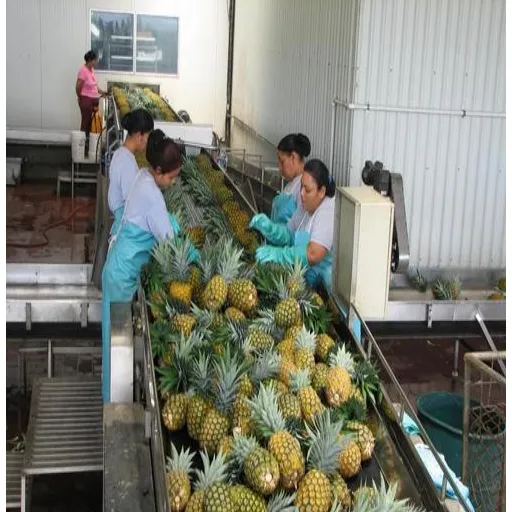
How is Pineapple Juice Processed? Understanding Pineapple Juice Processing in the Food Industry
The Importance of Pineapple Juice in the Beverage Industry Growing Consumer Demand for Natural Beverages The incremental consumer preference for…
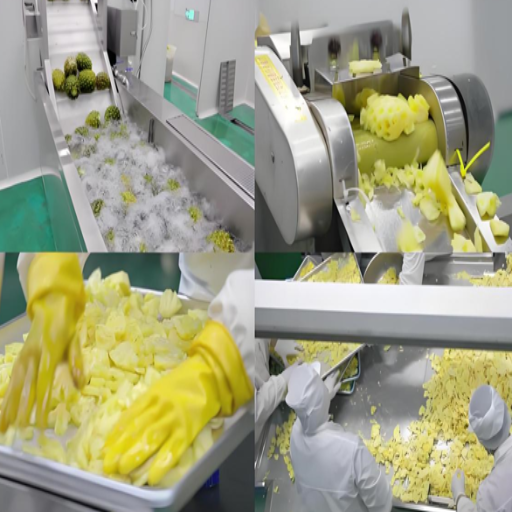
Exploring The Ultimate Guide to Pineapple Juice Processing Line for Beginners
One might think that processing pineapple juice must be complicated, but provided with the right set of instructions, a beginner…
Expert Guides to Pineapple Juice Processing
Pineapple Juice Processing Line Cost
Setting up a pineapple juice processing line could cost you a price anywhere, from $5,500 to $100,000. Depending on the scale of production, the kind of apparatus used, and stages of automation, the pricing differs. Knowing the price range for a small pineapple juice production business and a giant processing plant is healthy when going into budgeting.
Pineapple Juice Making Machine
A pineapple juice machine efficiently extracts juice from fresh pineapple. Either way, small pineapple juice extractors suitable for household use to large capacity industrial juice extractors can be found to fit into any need. Commercial pineapple juicers can process up to 10 tons of pineapples per hour; so producing fresh pineapple juice is fast and easy. Select the best pineapple processing equipment for efficient juice extraction.
How To Make Pineapple Juice Step By Step
Start with peeling and cutting a ripe pineapple. This implies blending the chunks along with water (sugar or honey may be added if you want it sweeter). Once blended, strain to separate the pulp, and you will have freshly made pineapple juice. Now, just add ice cubes for a fun drink or keep it as a healthy option to kickstart your day!
How Long To Ferment Pineapple Juice?
It usually takes 1 to 5 days for pineapple juice fermentation at room temperature, according to how much you desire fermentation and carbonation. This method is commonly used in homemade fermented pineapple drinks, kombucha, or tepache. The juices are best stored in a clean and airtight container; keep an eye on it daily to decide when to reach the ideal level of fizz and flavor.
What Is The Secret Of Pineapple Juice?
Pineapple juice is loaded with benefits. It is full of vitamin C and bromelain, enzymes with antioxidant properties and means by which to build natural defenses against bacteria, sit on the intestines aiding or preventing digestion, and soothing inflammation. Check out a few ways in which pineapple juice supports your health and well-being.
How To Preserve Pineapple Juice For A Long Time?
To be precise, if you would want to increase the shelf life of pineapple juice, it should be a straightforward procedure. For example, pasteurization may be achieved by heating the juice to 80–90°C (176–194°F). Afterward, pouring it into sterilized airtight containers and keeping them somewhere cool and dark would be beneficial. Fresh juice can also be refrigerated below 4°C (40°F) to prevent spoilage or to keep it fresh for a short while.
Does 100% Pineapple Juice Go Bad?
Absolutely! Pineapple juice does expire and especially when it is not stored properly. Normally, pineapple juice remains good for 8 to 12 months when it is sealed; however, once opened, pineapple juice spoils much earlier. To perform the treatment for keeping pineapple juice fresh, keep it cool and refrigerate it after opening.


What Our Customers Say
Discover what our clients are saying about their experiences with us.
“Insofar as production capacity is concerned, a 45% increment took place with the installation of this processing line, while the juice recovery rate was improved from less than 78 to 89. The automated CIP system, moreover, improved our cleaning time, from 3 hours a day to 45 minutes.”

Maria
Production Manager
“The technical support team provided exceptional guidance during installation and commissioning. Our operators were fully trained within one week, and target production rates were being met within the first month of operation.”

James
Operations Director
“The equipment has been more reliable than expected, with extremely little downtime in the first 18 months of continuous operation. Availability of spare parts, as well as response time from the technical department, has been wonderful.”

Sarah
Plant Engineer
Frequently Asked Questions (FAQs)
A: Pineapple juice production lines comprise processing machinery meant to delicately peel pineapples to produce the best quality juice. It generally includes machines that would peel, core, extract juice, and filter juice to ensure top quality from the final product.
A: The pineapple juice production line washes the pineapples first, then peels, and cores it. The juice is then filtered and depending on the requirement of the product, concentrated or kept as fresh juice. The whole production is supervised through PLC control system for efficient working.
A: The machines employed in the pineapple juice plant are juicing machines, extractor machines, and filtration systems. These aid in the processing of clear juices or concentrated juices while also maintaining the distinctive flavor of the pineapple.
A: Yes, the pineapple processing plant produces a variety of pineapple juice products-from fresh juice to concentrated pineapple juice as well as canned pineapple. This variety is obtained by varying the processing methods and equipment used.
A: The heat-treatment sterilizes pineapple juice to kill harmful microorganisms. Thereafter, the juice is usually aseptically packed in bags or bottles by means of an automatic fill-and-seal operation, so as to provide a good shelf life.
A: It is the cleaning machine that plays a very important role in this line of pineapple processing. Essentially, the pineapples are cleaned of dirt and contaminants before they go for further processing so that the final juice product conforms to international standards of quality.
A: Filtration imparts quality to pineapple juice by eliminating pulp and other solid particles, thereby giving a clearer juice. It helps also in preserving the flavor of the juice and prolonging its shelf life.
A: Frozen pineapple would enable year-round availability of fruit, thus ensuring that good-quality raw materials are always available. Making juice from frozen pineapple can retain the flavor and nutritional value of the fruit.
A: The machinery affects production efficiency of pineapple juice by streamlining the entire production process. Advanced machinery would mean less processing time and could cut down on labor costs while still ensuring high-quality output that goes into market.
Trending now