Get in touch with Victorystar

Double Heads Aseptic Filling Machine For Sale
Discover our Double Heads for Aseptic Filling. Gain that precision and efficiency with great-performing equipment for sterile packaging solutions to prevent any contamination.
A sterile environment created at >95°C using PT100 probes, steam barriers, and various safety features.
Independent filling heads ensure no flavor degradation and smooth operation.
Filling accuracy of ±0.5% for liquids, viscous, or chunky products in 1L-1400L aseptic bags.
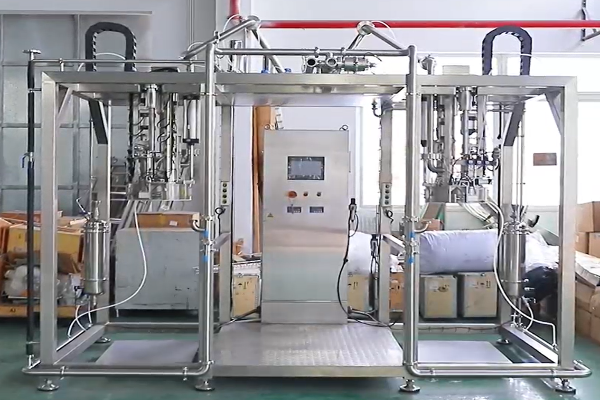
SUS304 frame, SUS316L contact surfaces, along with sanitary materials used for durability and compliance.
Siemens PLC with touchscreen capabilities in multi-languages and with CIP system integrated for real-time monitoring.
Can fill from 250 to 380 bags/hr with a capacity of 15 tons/hr and easy to maintain and upgrade.
How We Solve Your Critical Challenges
The problems that trouble food and beverage manufacturers, pharmaceutical companies, and dairy producers are understood by us. Now, the Double Heads Aseptic Filling Machine is made purposely to go around those very challenges:
Wherever there is manual filling, bacteria, pathogens, and environment contaminants find their way into a product, leading to recalls and reputational damage.
✓ Our Solution: An aseptic environment totally sealed with steam sterilization chambers having temperatures above 95°C, eradicating 99.9% contaminants.
Being filling methods, they require refridgeration and preservatives and therefore they increase cost and limit distribution reach.
✓ Our Solution: Aseptic cold filling technology maintains the nutrition and taste of your product for up to 1 or 2 years without refrigeration, or preservatives.
Single-head machines become bottlenecks, whereas manual processes are slow and inconsistent.
✓ Our Solution: The two filling heads operate alternately, thus preventing backflow and allowing for continuous production, doubling the throughput.
Inaccurate filling spells the loss of products, non-compliance to regulations, and consumers complaining.
✓ Our Solution: High-precision electromagnetic flowmeters guaranteeing ±0.5% accuracy for more than 10 years of reliable service.
Conventional approaches restrict output levels, failing to satisfy increasing market demand.
✓ Our Solution: The Siemens PLC control system with touchscreen interface with multi-lingual support for single-person operation.
Frequent breakdowns and cleaning requirements lead to prolonged downtime and have maintenance costs.
✓ Our Solution: Using the automatic CIP cleaning system, FDA-approved materials, and robust SUS304/316L construction minimale maintenance is needed.
Aseptic Filling Equipment Technical Specifications
| Specification | Details |
|---|---|
| Model Type | Double Head Aseptic Filling Machine (ASP100D / ASP300) |
| Filling Heads | 2 Independent Filling Heads with Simultaneous Operation |
| Filling Capacity (ASP100D) | 5L bags: 380 bags/hour | 10L bags: 320 bags/hour | 20L bags: 250 bags/hour |
| Filling Capacity (ASP300) | 3-6 tons/hour (220L) | 6-15 tons/hour (1000L) |
| Bag Size Range | 1L to 1,400L (Flexible adaptation to customer needs) |
| Supported Formats | Bag-in-Box (BIB): 1-25L | Bag-in-Drum (BID): 200-220L | IBC Bags: 1000-1400L |
| Spout Size | 1-inch (standard for juices/liquids) | 2-inch (for chunky products) |
| Filling Accuracy | ±0.5% (±0.5kg for large bags) |
| Metering System | High-precision Electromagnetic Flow Meter or Mass Flow Meter (10+ years reliability) |
| Alternative Metering | Weighing System with Electronic Balance |
| Material Construction | Frame: SUS304 Stainless Steel | Product Contact Parts: SUS316L Stainless Steel |
| FDA Compliance | All materials FDA approved for food/pharmaceutical contact |
| Sterilization Method | Steam Sterilization Chamber (95°C+) with PT100 Temperature Probes |
| Sterilization Coverage | Complete: Filling heads, nozzles, product pipes, flexible joints |
| Steam Requirement | 5-8 bar, 30-50 kg/hour (model dependent) |
| Compressed Air | 6-8 bar, 18-25 NL/min |
| Power Supply | 220V/380V AC, 50/60Hz, 1-5 KVA (model dependent) |
| Control System | Siemens PLC with Touchscreen HMI (Human-Machine Interface) |
| Language Options | Multi-language support (English, Spanish, Chinese, German, French, etc.) |
| Automation Level | Fully Automatic (except bag positioning in some models) |
| Cleaning System | CIP (Clean-in-Place) & SIP (Sterilize-in-Place) Automated Systems |
| Safety Features | No-Bag No-Fill System | Emergency Stop | Safety Guards | Operator Protection |
| Product Handling | Liquid, viscous, and particulate products (low & high viscosity, low & high pH) |
| Filling Type | Vertical filling (standard) | Horizontal filling (available for condensation prevention) |
| Optional Features | Turntable for drum positioning | Date coding system | Hydraulic system |
| Certifications | CE, ISO9001, SGS, FDA Compliance, cGMP Standards |
| Machine Dimensions | Compact footprint design (specific dimensions vary by model and configuration) |
| Warranty | 1 Year Standard | Extended Service Agreements Available |
| Customization | Available for specific production requirements and formats |
Performance Metrics That Matter
Our Double Heads Aseptic Filling Machine is really at the highest point of sterile packaging innovation, being meant to fulfill the demands set by pharmaceutical and general food and beverage industries found in the world. With a dual head filling system, efficiency will be doubled at a state of absolute sterility.
99.9%
Sterility Rate
±0.5%
Filling Accuracy
2x
Productivity Boost
1-2 Years
Extended Shelf Life
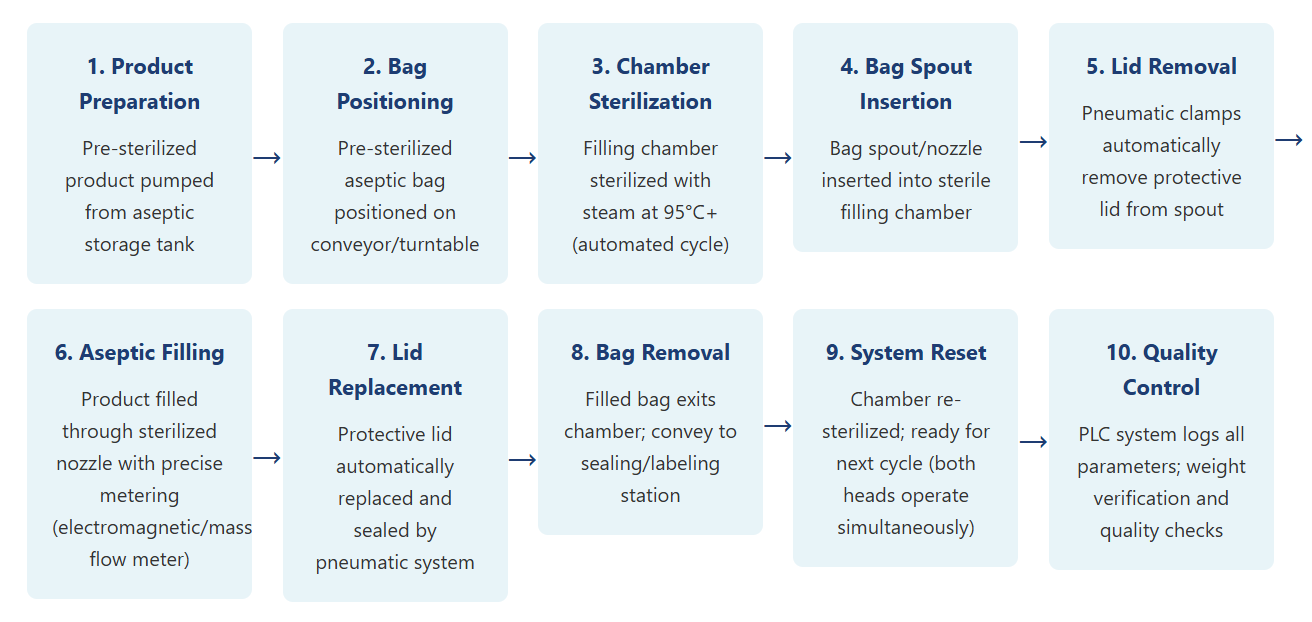
Double Heads Aseptic Filling Machine Flow Chart
Learn how a double-head aseptic filling machine works with our detailed flow chart. Understand each stage of the process, from sterilization to packaging.
Applications for Double Heads Aseptic Filling Machine
Versatile processing solutions for diverse industry applications and business models.
01
Juice Processing
- Fresh fruit juices, NFC juices, concentrated products with extended shelf life.
02
Dairy Industry
- Milk, cream, yogurt drinks, dairy alternatives for long-term storage.
03
Tomato Processing
- Tomato paste, puree, diced tomatoes in sauce for export markets.
04
Beverage Production
- Tea, functional beverages, sports drinks, liquid supplements.
05
Dairy Industry
- Fruit jams, jellies, marmalades for industrial and retail.
06
Soups & Sauces
- Ready-to-eat soups, cooking sauces, gravies, dressings.
Specific Use Cases
The Ultimate Used Beverage Equipment: Buying Guide for Beginners
Acquiring secondhand beverage equipment provides businesses with a cost-efficient solution to launch operations or increase their existing activities. The process…
Predictive Maintenance in Beverage Manufacturing: A Game-Changer for Productivity
Predictive maintenance systems are changing how beverage producers manage their equipment performance and their production efficiency. This unique method uses…
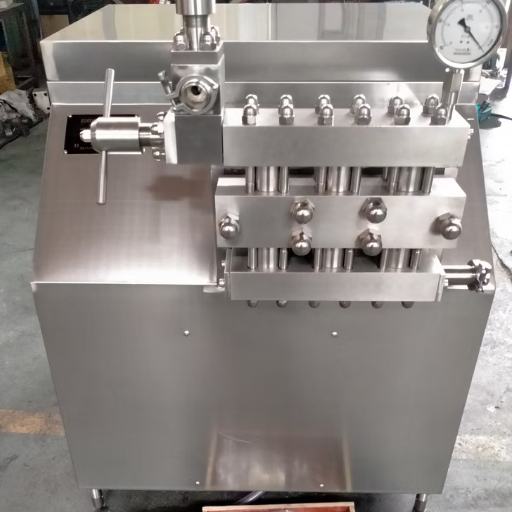
Homogenizer Selection for Beverage Production: Key Factors to Ensure Quality and Efficiency
The right homogenizer is a vital element in the success of the beverages produced by beverage manufacturers because if the…
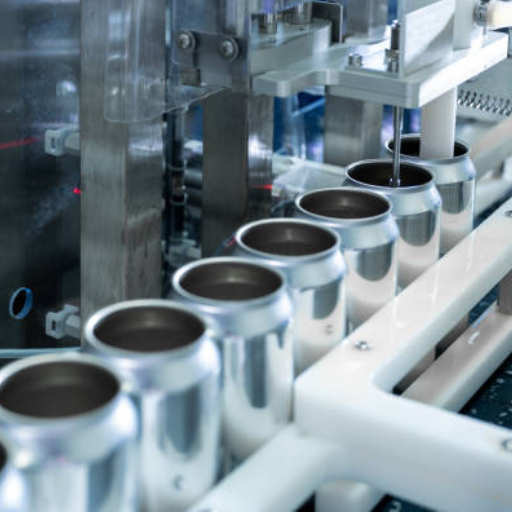
Beverage Can Filling Line Complete Guide: Ensuring Quality and Productivity
The Drinks Industry is a lot of action packed, effectively managed field. Efficiency and Quality are essential for every business…
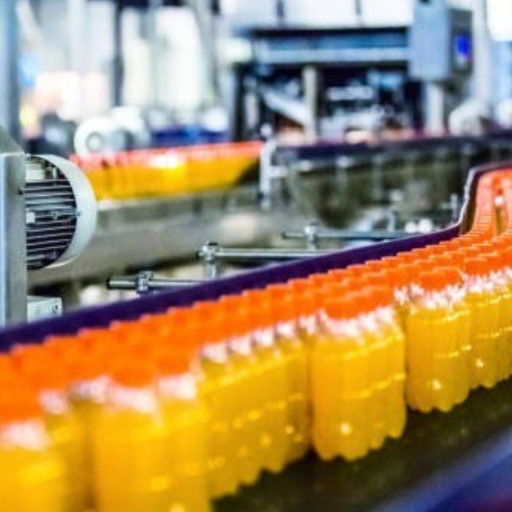
Energy Drink Production Line Setup: Ensuring Quality and Operational Excellence
The appropriate operational framework enables your business to achieve optimal productivity while creating products that fulfill customer needs for your…
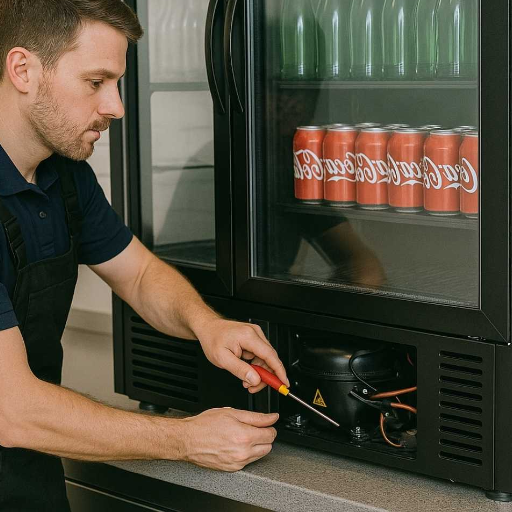
Preventive Maintenance for Beverage Equipment: Ensuring Longevity and Optimal Performance
The coffee shop which operates at full capacity and the bar and the restaurant need their equipment to be maintained…
Expert Guides to the Processing of Double Heads Aseptic Filling Machine
Aseptic Filling Machine Pharmaceutical
In aseptic filling, specialized machinery performs operations that fill sterile drug solutions into vials, syringes, or cartridges accurately and in a contaminant-free manner.
What Is An Aseptic Filling Machine?
An aseptic filling machine is a piece of equipment that fills pre-sterilized containers with sterilized products under a sterile environment, thus guaranteeing product safety and sterility.
What Is Meant By Aseptic Filling?
Aseptic filling is a method of packing products that have been sterilized into containers that have also been sterilized but under sterile conditions to keep the product sterile during its entire shelf life.
Is Aseptic Filling Better Than Terminal Sterilization?
Aseptic technique is of great significance for biologics and other sensitive formulations, but terminal sterilization is usually demanded as it provides a higher margin of safety and an economical modus operandum.
How Does An Aseptic Carton Filling Machine Work?
The aseptic carton filling machine operates by first sterilizing both the product and the packaging materials, then keeping the filling procedure in a sterile environment, and finally, by sealing the containers in a way that guarantees contamination-free and long-lasting products.
What Are The Techniques Of Aseptic Filling?
In aseptic filling, the containers are first sterilized by various methods like heat, mechanical means, irradiation, or chemicals, and then the sterilized products are filled into these containers under aseptic conditions and sealed to keep them sterile.
How Does Aseptic Filling Work?
The aseptic filling process involves first sterilizing both the product and the packaging separately, and then transferring the product into the sterilized containers that have been heated together with the filling machine under conditions that are sterile so as to avoid any contamination.


What Our Customers Say
Join thousands of satisfied customers with their operations transformed by our aseptic filling solutions.
We acquired this double-head aseptic filler six months back and our production capacity got boosted up to 85%. It is a wonderful thing that the precision is so high; we have cut the waste of the product nearly by 40%. The automatic sterilization process gives us total assurance regarding the safety of the product. It is the very best investment we have made during the past years.”

Dr. Michael Chen
Production Director, Premium Juice Co. (Thailand)
We have completely changed our tomato paste production with the dual-head system. We are now able to fill both 220L drums and 1000L bins equally well. The Siemens control system is so easy that our operators got trained in just two days. The CIP system lets us save 3 hours each day in cleaning.

Sarah Rodriguez
Production Manager
This machine is ideal for our fruit purees and concentrates even in the case of high-viscosity products. All the sterile barriers and automatic sterilization ensure that there are no contamination risks which were a problem in our old system. We have succeeded in 18-month shelf life without any preservatives. The ROI was achieved in less than 14 months.

Sophia Miller
CEO, Tropical Fruits Processing Ltd
It is impossible for us to forgo sterility for the dairy alternative products. This aseptic filler guarantees 99.9% contamination-free results every time. The electromagnetic flowmeter precision is unbelievable; we pass every regulatory inspection with a good margin of our winning colors. The multi-language interface is just right for our global team.

Dr. Anita Sharma
Quality Control Manager
We have continued this machine for three shifts a day, seven days a week, and after 18 months it has never faltered. The SUS316L material used in construction is tough and durable. The automation led to minimal maintenance. Our downtime has reduced by 70% compared to our old machine. Very reasonable cost for the investment.

Carlos Mendez
Operations Director, BevTech Manufacturing
Frequently Asked Questions (FAQs)
Working with two filling heads and having the ability to dispense into two containers at the same time, the double-head aseptic filling machine increases filling speed and efficiency of the production line. It follows sterilization procedures, which guarantee that the filling heads and the containers are sterile prior to the filling process.
Stainless steel aseptic filling machines have higher preferences for durability, corrosion resistance, and thorough cleaning. The stainless steel that is used is usually of the highest grade, such as 316L, to meet industry standards for aseptic packaging. Such machines are used in the hygienic handling of viscous products and liquid materials.
The PLC control system exists in the machine to undertake the control of filling processes that include volume fill and speed fill. The technology increases the efficiency of the filling system and brings about a reduction in the chances of human error, making the operation more reliable and consistent.
A bag-in-box filling machine is primarily used for the filling of various liquid products such as fruit juice, sauces, and purees. This type of aseptic filling system is suited for packaging large volumes of liquids where maintaining sterility of the content inside is convenient for storage as well as for transportation.
Sterilization is essential in the aseptic filling process as it removes any conceivable microorganisms that may spoil the product. Processes such as steam sterilization or UHT treatment make sure that the filler and containers are free from contaminants and hence improve product safety and shelf life.
A compact aseptic filler is designed not to occupy much space but to operate efficiently during filling. Other than that, it is mostly modular by design and very easy to integrate into an existing process line. Hence, this could be an excellent selection for manufacturers with limited floor space or wishing to modernize their filling system.
The aseptic bag-in-box filling machine operates for filling aseptic bags into boxes while upholding sterility in the process. Aseptic filling machines serve the common purpose of packaging liquid food products for prolonged shelf life without refrigeration.
Industry standards set by regulators demand stringent procedures for sterilization, material selection, and operational protocols to ensure the safety of the food and beverage products. In some cases, the machinery is made of SUS304 or 316L stainless steel to maintain safety and quality during the filling process.
Trending now