Get in touch with Victorystar
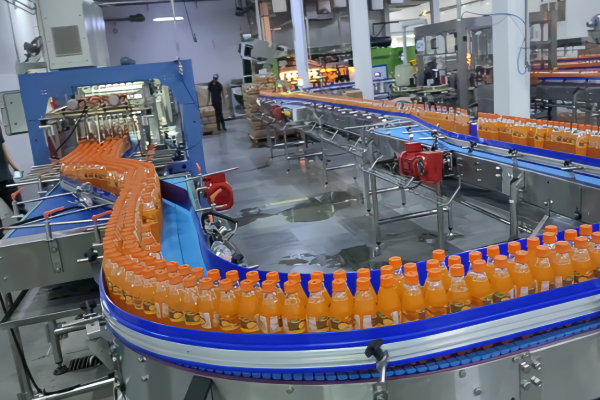
PET Bottle Carbonated Soft Drinks Processing Line for sale
This process involves complete setting of PET bottle carbonated soft drinks filling, capping, labeling, and packaging lines.
Utmost precision and hygiene while handling bottles of varying sizes and shapes.
Ensures great flavor profiles with correct carbonation levels each time.
Easy-to-use interface for monitoring and adjustments.
The steel used is the best quality for a long life span and minimal maintenance.
Permits the modification of dressing wheel speed, swing speed, stroke size, and grinding wheel positioning.
Precise and productive operations at every stage of production.
Understanding Your Pain Points
Learn how to identify and solve common challenges in PET bottle carbonated soft drink production lines. Boost your efficiency and overcome production hurdles with our expert guide.
Problem: Unscheduled stoppages of equipment have a negative impact on production planning and raise the overall cost.
✓ Our Solution: The Internet of Things-based, predictive maintenance and German-engineered reliable components together cut the downtime by 40%. The smart oversight system notifies you in advance of any breakdowns.
Problem: The product’s quality and profit margins suffer due to the varying carbonation levels and the loss of CO₂.
✓ Our Solution: The isobaric filling system that involves careful control of the pressure keeps CO₂ levels at the best point (up to 3.8 gas volume), which not only eliminates the wastage but also guarantees the same amount of fizz in every bottle.
Problem: One of the major factors that have a large impact on the profit margins is the increased cost of energy.
✓ Our Solution: The use of energy-efficient heat exchangers, smart cooling systems, and optimized carbonation processes cuts down the energy consumption by 30% when compared to the conventional systems.
Problem: Changing bottle formats requires extensive downtime and manual adjustments.
✓ Our Solution: 30 minutes or less for format change with no tools, thanks to quick-changeover modular design. Bottles from 200ml to 2000ml and different shapes can be handled without any problem.
Problem: Filling levels, temperature, and carbonation variations have a negative impact on the brand’s reputation.
✓ Our Solution: The cutting-edge PLC (Programmable Logic Controller) control system with live monitoring guarantees the ±1mm filling accuracy, stable liquid levels, and the same amount of carbonation in all bottles.
Problem: Environmental regulations and consumer demands for eco-friendly practices.
✓ Our Solution: TThe lightweight bottle capability (which reduces PET usage by 15%), water recycling systems, and CIP (Clean-in-Place) technology all contribute to the reduction of waste and environmental impact.
Detailed Technical Specifications
| Component | Specifications |
|---|---|
| Bottle Material | PET (Polyethylene Terephthalate) |
| Bottle Volume Range | 200ml - 3,000ml |
| Bottle Height Range | 170mm - 320mm |
| Bottle Diameter Range | 50mm - 100mm |
| Cap Type | Plastic screw caps, snap-on caps, twist-off caps |
| Filling Accuracy | ±1mm (99.8% precision) |
| CO₂ Gas Volume | Up to 3.8 volumes |
| Filling Pressure | 0.2-0.4 MPa (adjustable isobaric system) |
| Filling Temperature | 0-4°C (optimal for carbonation retention) |
| Material Contact Parts | SS304/SS316 Food-Grade Stainless Steel |
| Control System | Siemens/Mitsubishi PLC with HMI Touch Screen |
| Power Supply | 380V/50Hz or 220V/60Hz (customizable) |
| Compressed Air | 0.7-0.8 MPa |
| Water Consumption | 1.5-2.5 tons/hour (with recycling system) |
| Floor Space Required | Varies: 80m² - 400m² depending on capacity |
| Automation Level | Fully Automatic with Industry 4.0 integration |
Performance Metrics That Matter
The production line for carbonated soft drinks in PET bottles is the best in terms of efficiency, precision, and reliability for the production of cola, sprite, soda water, energy drinks, and sparkling beverages. The use of state-of-the-art automation and eco-friendly design allows us to assist you in accommodating the increasing market demand and at the same time, increasing the profit margins.
99.8%
Filling Accuracy
36,000
Extended Wheel Life
30%
Energy Savings
24/7
Technical Support
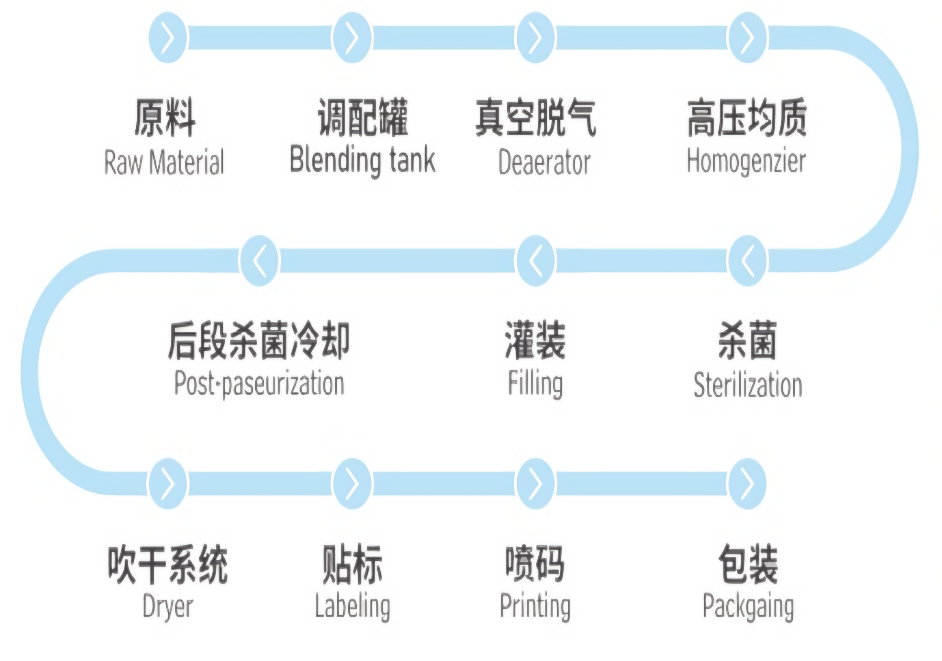
PET Bottle Carbonated Soft Drinks Production Line Flow Chart
Explore the complete step-by-step flow chart explaining the PET bottle carbonated soft drink production line process, from raw materials to finished product.
Industrial Applications of Carbonated Drink Production Line
Our production line handles diverse carbonated beverage types with precision
01
Cola Beverages
02
Lemon-Lime Sodas
03
Orange Sodas
04
Bearing Production
05
Energy Drinks
06
Carbonated Cocktails
07
Soda Water
08
Fruit-Flavored CSDs
09
Kombucha
10
Functional Beverages
11
Hard Seltzers
12
Craft Sodas
Specific Use Cases
The Ultimate Used Beverage Equipment: Buying Guide for Beginners
Acquiring secondhand beverage equipment provides businesses with a cost-efficient solution to launch operations or increase their existing activities. The process…
Predictive Maintenance in Beverage Manufacturing: A Game-Changer for Productivity
Predictive maintenance systems are changing how beverage producers manage their equipment performance and their production efficiency. This unique method uses…
Homogenizer Selection for Beverage Production: Key Factors to Ensure Quality and Efficiency
The right homogenizer is a vital element in the success of the beverages produced by beverage manufacturers because if the…
Beverage Can Filling Line Complete Guide: Ensuring Quality and Productivity
The Drinks Industry is a lot of action packed, effectively managed field. Efficiency and Quality are essential for every business…
Energy Drink Production Line Setup: Ensuring Quality and Operational Excellence
The appropriate operational framework enables your business to achieve optimal productivity while creating products that fulfill customer needs for your…
Preventive Maintenance for Beverage Equipment: Ensuring Longevity and Optimal Performance
The coffee shop which operates at full capacity and the bar and the restaurant need their equipment to be maintained…
Expert Guides to Soft Drink Production Line
What Is A Soft Drink Pet Bottle?
A PET bottle for soft drink is a plastic container that is made of polyethylene terephthalate (PET) and is light, durable, and transparent. It is the most common packaging material for carbonated drinks like soda and juices.
How Are Soft Drinks Processed?
The production of soft drinks takes place through the process of treating water, blending raw materials for syrup, introducing gas into the drink and finally, putting it into bottles or cans.
What Is The Production Process Of Carbonated Soft Drinks?
The creation of carbonated soft drinks consists of several stages which include purification of water, mixing of the ingredients to form syrup, carbonation by dissolving CO2, and eventually packaging the drink in bottles or cans.
What Are The Disadvantages Of Pet Bottles?
In the case of PET bottles, disadvantages include their biodegradability. The chemical remains can permeate harmful things in the PET material, and its oxygen permeability can compromise the quality of sensitive materials.
Which Is Better Pvc Or Pet Bottles?
PET bottles are generally considered better than PVC bottles due to their 100% recyclability, environmental friendliness, and superior sustainability.
What Is The Difference Between Soft Drinks And Carbonated Drinks?
Soft drinks are a category of drinks that do not contain alcohol and can be either carbonated or still, whereas carbonated drinks are limited to those with added carbon dioxide to get the bubbles.


What Our Customers Say
Discover what our clients are saying about their experiences with us. We take immense pride in empowering individuals to achieve their aspirations.
“The ability to do quick changeovers has made a real difference in our production line. We are producing 6 different SKUs a day and changing the format now takes just 20 minutes instead of 3 hours before. The engineering support during the installation was awesome – they were there till we reached full production speed.”

Priya Sharma
CEO, Mumbai Fresh Drinks Pvt Ltd (India)
“Energy efficiency was the main worry for us due to the increasing electricity costs. The new line was really good – in fact, our energy bills are 32% lower now and the smart cooling system consumes the power needed automatically. ROI obtained in 20 months. Very much recommended!”

Johann Müller
Operations Manager, Deutsche Getränke GmbH (Germany)
“We were after support and trustworthiness as a company starting up. The ready-to-use solution provided every single thing from the factory layout to educating our workers. Tech support is great – they get back to you within a couple of hours even about the smallest inquiries. The standard of our production is now competitive with the biggest brands.”

Sarah Chen
Founder, Artisan Sparkling Co. (Singapore)
“The isobaric filling technology revolutionized the industry. We are making premium craft sodas, and our brand relies on quality. No variation in the carbonation of the different batches. The HMI interface is user-friendly – even the newest operators learn it in days. Totally worth it.”

Carlos Mendes
Quality Manager, Bebidas del Sur SA (Brazil)
“We handle 18,000 bottles an hour and downtime is not an option. This machine has 99.2% availability – even better than our past German system! The automation of CIP cleaning eliminates 2 hours of work a day. The modular design allows us to upgrade to 24,000 BPH next year without changing the main equipment.”

Ahmed Al-Rashid
Plant Manager, Gulf Beverages Industries (UAE)
Frequently Asked Questions (FAQs)
The minimum order quantity is 1 complete production line. The standard configurations take 45-60 days lead time, and the custom high-capacity lines, 60-90 days. To shorten the delivery time we stock up on common parts. The majority of the customer’s needs can be met within one month due to the mass production of semi-finished parts.
Yes, complete turnkey service consists of: advice on factory layout design, professional installation by certified engineers, on-site commissioning and testing, operator training (5-7 days), maintenance personnel training (3-5 days), detailed operational manuals in English, and 24/7 technical support hotline.
Our modular design can definitely handle different sizes and kinds of bottles. Bottles of 200ml to 3,000ml; heights 170mm to 320mm, and diameters 50 to 100mm can all be accommodated seamlessly. The changeover time is only 20-30 minutes with no need for special tools. We also support round, square, oval, and custom-shaped bottles.
The typical ROI is 18-24 months at varying rates depending on production volume and regional costs. The energy cost reduction of 30%, lower CO₂ consumption of 25%, 75% waste reduction, and 40% downtime less compared to old systems are some of the ROI drivers.
The isobaric filling technology that we use keeps the pressure the same throughout the process that is taking place between the carbonation mixer and filling valve. The precision temperature control (0-4°C), PLC-monitored CO₂ flow rates, and float-ball liquid level control help us to achieve 98.5% carbonation retention with minimal variance between bottles.
Our production lines are certified with ISO 9001:2015 (Quality Management), CE marking (European safety), FDA compliance (US food safety), GMP (Good Manufacturing Practice), NSF International certification, HACCP certification, and Energy Star rating. We can provide the certification papers needed for regulatory submissions.
Yes, the modular design allows for easy upgrades. For instance, a DCGF 32-32-10 (10,000 BPH) can be upgraded to DCGF 40-40-12 (15,000 BPH) merely by adding filling heads and valve modules without changing the core components. This way, your initial investment is protected.
The minimum space requirement depends on the capacity: Small lines (2,000-5,000 BPH): 80-150m²; Medium lines (7,000-15,000 BPH): 200-300m²; Large lines (20,000+ BPH): 350-500m². As a part of the consultation process, we will share 3D factory layout designs that are customized and optimized for your specific floor plan.
Trending now