Get in touch with Victorystar

5L/5 Gallon Water Bottle Filling Machine – Water Production Line

Contents
show
Industries want to cater to the consumers of clean and well-packaged drinking water more and more who are not going away as long as the demand for efficient water bottle filling solutions with high-capacity continues to be up. The 5L/5 Gallon Water Bottle Filling Machine has been one of the greatest achievements brought into the modern era by water production lines. It has been designed to help the bottling process go through with the highest hygiene and efficiency standards at the same time. This writing will take a look at the main features, the benefits of the machine operation, and the technology that has made these machines possible, giving us the reason why they are necessary in the water production process of large-scale. Whether you are a manufacturer looking to optimize the production or a business intending to get more output, this ultimate guide will grant you the right view of the systems’ functions and their role in the industry as you get to read through the insights provided.
💧
Overview of Water Production Lines
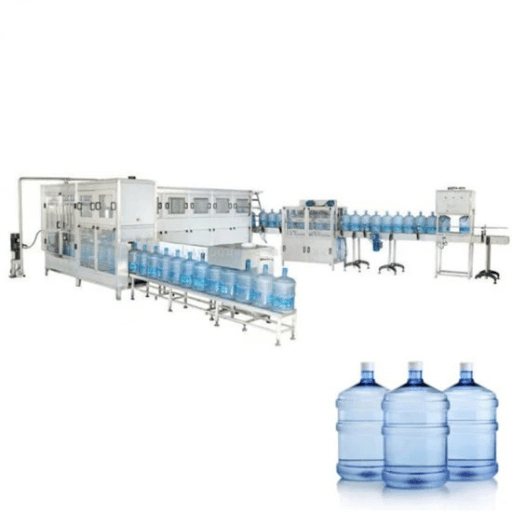
Water production lines are the essential systems that take care of water processing, purification, and packaging in a way that it can be distributed in large quantities. These lines usually have a few main steps that consist of water filtration, sterilization, bottling, and sealing. Filtration is the process that takes out all the impurities and makes sure the water is of the quality that is suitable and safe for drinking and if not then using the water for other purposes such as washing and cooking. The next step, sterilization, kills whatever harmful microorganisms are still left in the water. Then the bottling and sealing systems take over and make sure the product is packed with safety in a manner that hygiene is under control and no contamination occurs. The use of modern water production lines is in such a way that it is very much automated which in turn is a great source of efficiency, less human error, and uniform output that is the heart of high production in commercial and industrial settings.
⚡
Importance of Water Production
Water production is an important factor that guarantees the constant supply of good quality water for both consumer and industrial uses. The elimination of waterborne pathogens and contaminants is one of the reasons why water production is considered public health preventive activity. Besides, water production is a major contributor to the support of many industries like agriculture and manufacturing by supplying the needed water in high quality and in a constant manner. The economic growth, public health and environmental sustainability would have to overcome considerable hurdles without efficient and controlled water production systems, which would only reaffirm the importance of this process to modern society.
Types of Water Bottling Systems
The classification of water bottling systems is mainly done on the basis of three types according to their operational scale and level of automation: manual systems, semi-automatic systems, and fully automatic systems. The manual bottling systems are appropriate for small production and consumption scales and they need human labor for almost all the processes like bottle loading, filling, and sealing. In the case of semi-automatic systems, they use mechanical components along with human control, thus increasing production efficiency but without taking everybody’s input for the processes involved. On the contrary, fully automatic bottling systems are aimed at very high-volume production with minimal human intervention, relying on advanced technologies such as programmable logic controllers (PLCs) and automated conveyors for precise, smooth operations. These systems are also further customized according to the water preparation processes of filtration, sterilization, and bottling material compatibility to assure compliance with the industry standards and the operational requirements.
📊 Market Trends in Bottled Water Production
Several major market trends characterize the bottled water industry and are shaping its current and future landscapes:
- Sustainability Focus: Companies are tackling environmental issues by using eco-friendly packaging materials like biodegradable plastics and reusable containers.
- Technology Integration: Production technologies like IoT-enabled systems and machine learning algorithms are creating operational effectiveness and product quality.
- Premium Products: Consumers’ preference is moving towards luxurious water, including mineral and alkaline types, indicating increasing health and wellness consciousness.
- Regulatory Compliance: Manufacturers are introducing excellent quality assurance systems to comply with international regulations and build consumer trust.
Key Components of a 5 Gallon Water Filling Machine
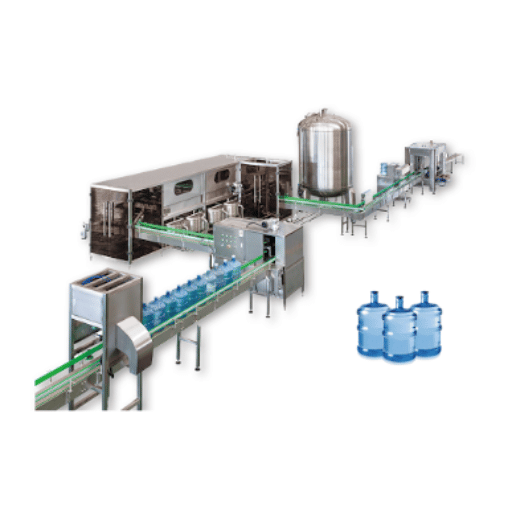
A comprehensive 5-gallon water filling machine consists of several critical components that work together to ensure efficient, hygienic, and precise bottling operations:
1
Washing Unit
The washer is the first unit in the process that prepares and sanitizes the bottles for the next step. High-pressure water along with specially made disinfectants are used to ensure that all impurities and contaminants are gone for good.
2
Filling Unit
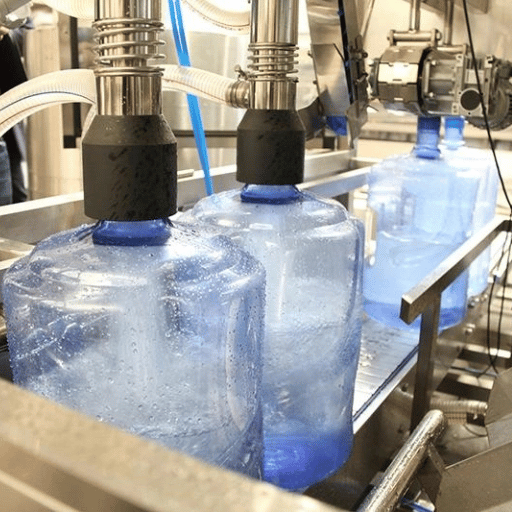
The filling unit is in charge of filling the bottles with purified water very accurately and quickly. It has very precise nozzles and controls to manage the volume and prevent any spilling.
3
Capping Unit
The unit for capping the bottles places the caps on them in an airtight manner to keep them sterile and also to stop them from leaking. The capping machine uses the same amount of pressure for every cap to make sure that all the caps are fitted properly.
4
Conveyor System
This is the system that moves the bottles through the different stages of the process. It affords washing, filling, and capping to pass one another without creating delays in production.
5
Control Panel
With the control panel, operators can check and set the machine parameters such as speed, filling volume, and water temperature, which helps to keep the machine working under optimum conditions.
6
Sterilization System
This system that is made part of the whole process guarantees that all the gear and parts that are in contact with water are kept sterile, thereby the quality of the final product that whole part is changed gets maintained.
Filling Machines: Types and Functions
Filling machines are categorized into different types according to their functions and the principles of their operation, with every type being suited for a particular industrial demand. The commonly used types are liquid filling machines, powder filling machines, and granule filling machines. Among the liquid filling machines, there are volumetric, gravity, and vacuum types which use different mechanisms for their operation according to the viscosity of the liquid and the specifications of the container. Powder filling machines are outfitted to deal with both free-flowing and non-free-flowing powders and they do so with great accuracy by using either an auger or a cup based filling method. Granule filling machines are very good at packaging rough or uneven materials and they often use weight-based systems for accuracy. Through these machines production lines are made highly efficient, accurate, and even hygienic thus they conform to industry standards and meet output requirements.
| Filling Machine Type | Mechanism | Best For | Key Advantage |
|---|---|---|---|
| Volumetric | Measures specific volume | Low viscosity liquids | High precision |
| Gravity-Based | Uses gravity flow | Thin, free-flowing liquids | Simple, cost-effective |
| Vacuum | Suction-based filling | Medium viscosity products | Clean, accurate filling |
| Auger-Based | Rotating screw mechanism | Powders (free & non-free) | Versatile handling |
| Weight-Based | Measures by weight | Granules & irregular materials | Maximum accuracy |
Capping Systems and Their Importance
Capping systems are of utmost importance when it comes to guaranteeing the integrity of the product, resistance to tampering, and longer shelf life. Different methods like screw capping, snap capping, or press-on methods are used to guarantee the precise application and securing of closures on containers made of different materials and of different sizes. Capping systems prevent leakage or contamination while maintaining the quality of the product because they provide a regular and unbreakable seal. Also, the use of advanced automation in capping systems helps in a more efficient production line and compliance with the strictest industry regulations. Their usefulness is vital in all the industries from food and beverages to medicine and cosmetics.
Automation Levels in Production Lines
Production line automation is divided into three main levels: manual, semi-automatic, and fully automatic. Manual systems are basically operated by people who do all the tasks like loading, operation, and inspection which means they are very flexible but might not be very efficient. Semi-automatic systems are a mixture of manual and automated ones where the operator is in charge of the process but the machine performs whichever is the most timely and accurate task thus leading to a compromise between productivity and adaptability. Fully automatic systems are the opposite, and they hardly ever need human help since they are equipped with robots, sensors, and software that ensure high efficiency, uniformity, and maximum production. Different levels of automation are employed according to the characteristics of the production process, the operational budget, and the output quality the company wants to achieve, which emphasizes the necessity of automation in the industrial sector’s efficiency.
⚙️ Technical Specifications of High-Capacity Water Processing Systems
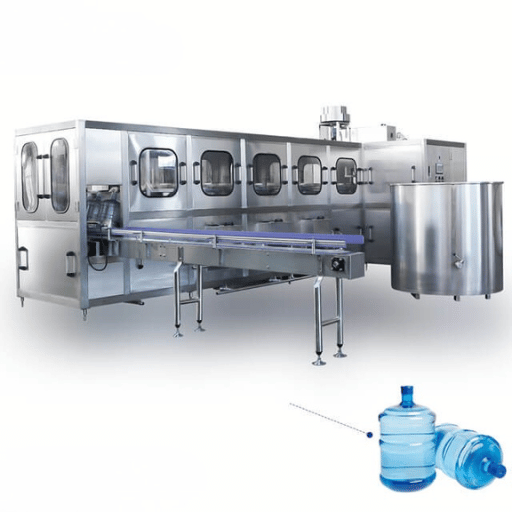
High-capacity water processing systems are meant for large-scale operations and have the ability to perform very efficiently and accurately. The key specifications include:
1. Processing Capacity
Generally between 50,000 and 500,000 liters per hour, depending on the system configuration and operational needs.
2. Filtration Mechanisms
Multiple filtration stages including sand filters, activated carbon, and micron filters to guarantee purity.
3. Sterilization Methods
UV treatment, ozone generation, or chemical dosing to ensure microbiological safety.
4. Energy Efficiency
Energy-efficient components like VFDs and optimized pump systems that reduce operational costs.
5. Control Systems
Advanced PLC systems with touchscreen HMI for real-time monitoring and control of critical parameters.
6. Material Construction
High-grade stainless steel (SS304 or SS316) ensuring corrosion resistance and longevity.
7. Integration Capability
Seamless integration with existing production lines through standard interfaces and modular designs.
Performance Optimization Factors
Energy Efficiency Considerations
Energy efficiency is a major factor in the process of modern industrial systems and affects directly the operational costs, the impact on the environment, and the compliance with regulations. Among the main points to be considered is the advanced control systems, such as variable frequency drives (VFDs), which can be used for optimizing the energy consumption and allowing adjusting the energy use to the instantaneous demand. Also, heat recovery methods should be part of the operations so that the waste energy can be captured and reused, leading to a decrease in the total energy consumption. Moreover, the use of energy-efficient parts like high-efficiency motors and LED lighting, improves the system performance considerably. The whole process will take place with the help of regular energy audits and monitoring through IoT-enabled devices, which will not only ensure that the efficiency gains are kept but also that the areas forfurther improvement are identified. All these measures would lead to large cuts in energy consumption in the industries, which would, in turn, be good for the environment and the companies’ long-term profitability.
Output Speed and Production Capacity
The output speed and production capacity are essential measurements that significantly impact the functioning of the whole process and the productivity realized. The optimization of these parameters necessitates a synchronizing process between the machines setting up, the transferring of work, and the allocation of resources. High-tech control systems and predictive maintenance practices make it possible to have steady output rates, lessening the time when production is stopped and solving the problem of slow production by being in the area. The combination of automatic machines and up-to-the-minute monitoring gives the manufacturers the chance to have better precision in production speed and at the same time, to increase capacity to supply the demand without losing the quality of the product.
Integration with Water Processing Technologies
The incorporation of water treatment technologies into the production process is essential for maximizing resource utilization and complying with regulations. Manufacturers typically use advanced filtration, reverse osmosis, and UV light treatment to achieve the water purity levels necessary for product manufacturing. The use of these technologies leads to an increase in the quality of the end products and also provides an opportunity for water to be reused and recycled thus providing a significant reduction in water consumption. Through the use of real-time monitoring sensors and automated control systems, water treatment processes can be expertly managed, waste reduced, and operational performance sustained which are all in line with sustainability goals and industry standard practices.
Selecting a Reliable Manufacturing Partner
It is very important to pick companies with good historical performance in supplying high-quality industrial solutions when selecting a manufacturing partner. Judge their professionalism by looking at the case studies, customer reviews, and the amount of projects they have successfully completed. Check their licenses and compliance with the industry standards to make sure they follow the regulatory requirements. Also, evaluate their capacity to cater to your production needs such as scalability, customization, and after-sales support. A trustworthy partner will show openness, communicate clearly, and place a long-term partnership as the forefront of their priorities.
🎯 Critical Selection Factors
✓ Compliance with International Quality Standards
Compliance with international quality standards entails a thorough assessment of a partner’s certifications, including ISO 9001 for quality management systems or specific industry standards like ISO 13485 for medical devices. Ensure that the partner adheres to documented procedures, carries out periodic audits, and undertakes corrective actions when required. Besides, evaluate their traceability systems and quality control processes to ensure that product quality is always up to standard and all global regulatory requirements are met. This degree of conformity not only signifies the organization’s trustworthiness but also guarantees the provision of safe, high-quality products which meet the industry standards.
✓ After-Sales Technical Support
One major factor that influences customer satisfaction and long-term value delivery is effective after-sales technical support. A comprehensive approach involves both the provision of easily accessible technical resources, like documentation, FAQs, and troubleshooting guides, as well as a knowledgeable support team who can address and resolve complex issues swiftly. Maintaining strong customer feedback channels is crucial for spotting frequently mentioned issues and also for pushing product enhancement. What’s more, the use of remote diagnostic tools and predictive maintenance technologies can not only keep the support team efficient but also reduce downtime to the minimum, which, in turn, would comply with the industry norms for after-sales help and customer loyalty.
✓ Scalability of Production Solutions
Scalability in production systems is a requirement that includes having a solid base to support increase in size step by step without any negative effect on performance or efficiency. The most important things are modular system design, which makes it very easy to integrate new resources, and also advanced automation technologies that will help to smooth the demand scaling process. Using cloud-based infrastructure makes it possible to allocate resources dynamically and also increases the adaptability to the changing requirements. Besides, using data-driven analytics will give the company predictive insights that will allow them to make adjustments pro-actively so that the continuity of their operations will not be affected. Companies that go according to these rules will not only have inexpensive scalability but will also have high quality outcomes.
Future Directions in Bottled Water Production
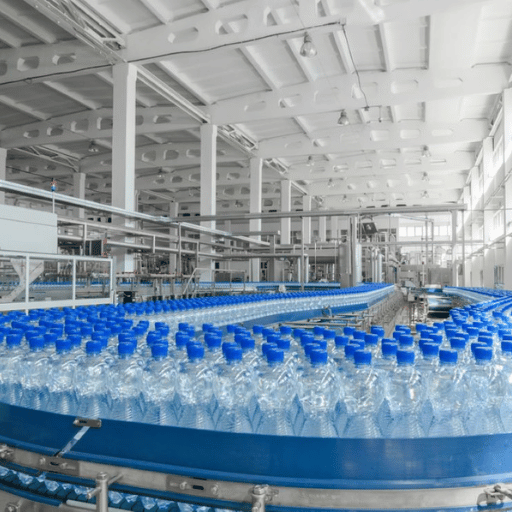
The bottled water business is changing in order to meet the growing requirements of consumers who want sustainability, innovations, and efficiency. One of the future paths that this industry will take is the use of friendly-packaging materials, like biodegradable plastics or fully recyclable materials, to lessen the impact on nature. Above all, companies are spending money on high-tech water purification systems to make the water more potable and use fewer natural resources at the same time. The use of robots and smart manufacturing techniques will be crucial in the production of efficient and consistent products. Along with this, the use of digital tracing systems is becoming more common, which lets the consumers check the origin and the manufacturing details of their bottled water. All these improvements are directed towards making the bottled water industry compliant with environmental, technological, and consumer standards.
🔬
Emerging Technologies
Technological advancements in water filling machines are modernized towards precision, efficiency, and sustainability through high-end automation and interconnectedness. The use of reliable and detailed sensors along with IoT-based systems provide constant supervision of the whole process, thus minimizing the time and maximizing the output. The installation of sophisticated robots in the bottling process is a major factor in maximizing filling accuracy and speed, whilst at the same time, water-saving systems cut down on water wastage. Moreover, the cooperation of new sterilization methods like UV-C or ozone treatment in the production process has contributed to the safety of the end product without the use of chemical additives.
♻️
Sustainability Practices
Sustainability approaches in the water manufacturing sector concentrate on lowering their environmental impact and at the same time keeping their operational efficiency. The main activities are utilizing energy-saving machines, cutting down water consumption by means of sophisticated filtration and recovery methods, and planting renewable energy such as solar or wind power within the production unit. In addition, the industry is using eco-friendly packaging materials like recyclables or biodegradables as a major strategy to reduce plastic waste. Digital tools such as IoT and AI are being used to track and improve the amount of resources used throughout the production process.
📈
Market Predictions
Over the next few years the bottled drinking water market will see a gradual growth which will be the result of more and more people choosing health-conscious and handy hydration solutions. The demand that will be coming from these consumers will be mainly guided by the rising premium and functional water products trend, which consists of mineral-infused, alkaline, or vitamin-rich formulations. Furthermore, the market will be significantly affected by the brands participating in sustainability initiatives and taking steps to meet newly imposed environmental regulations and changing consumer expectations.
📚 Reference Sources
Sunswell – Scaling a 5L Water Filling Line
Describes an advanced means of increasing capacity that consists of newer, faster fillers being integrated in the process.
HZM Machinery – Bottled Drinking Water Production Line
Talks about various pieces of technology that are used and the processes that are followed in producing bottled drinking water, even in 5L format.
Markets and Markets – Bottled Water Processing Market
Analyzes the processing market for bottled water in terms of size, trends, and projected growth rates, whereby larger formats like 5L are also included.
Frequently Asked Questions (FAQs)
Q
Which systems are part of a 5L water processing line?
A standard water processing line consists of water treatment systems, bottle blowing machines, bottling machines, capping machines, labeling machines, and packing systems.
Q
What kind of throughput does a 5L water processing line have?
The throughput can be in the range of 500 bottles/hour for small-scale setups to 10,000 bottles/hour or even more for large industrial lines.
Q
Is it possible for the production line to produce different bottle sizes?
The production line, which is intended for 5L bottles, can often be modified with supplementary parts to produce different sizes.
Q
What kinds of certifications are needed for the machinery?
Quality and safety standards can be satisfied by obtaining ISO, CE, and FDA compliance certifications, among others.
Q
What methods do producers use to maintain 5L bottled water quality?
The water quality and safety are ensured by the use of advanced technologies such as reverse osmosis, UV sterilization, and ozone treatment.

Candy
Articles: 37
Trending now