Get in touch with Victorystar

What Is A Filter Separator? Insights into Its Importance in Modern Industries

Contents
show
Not only are gas and liquid stream purity indispensable in modern industrial activities but also it is a matter of safety, efficiency, and the environment that they are highly pure. Even small amounts of impurities such as solids, liquids, and aerosols can result in a considerable amount of damage to the downstream equipment, which is to say spending vast amounts of money on repairs and not being able to operate at all. In different industries, the theory of filter separators is of great significance as they are the first step to prevent mechanical failure and product quality problems. The discussion elaborates on the nature of the separator, its operational principles, and industry-wide significance.
Understanding Filter Separators

Definition and Function of a Filter Separator
A filter separator is a pressure vessel that consists of several steps to separate the filtration process. It was made to take gases of multi-level impurities and to remove both particles and liquids effectively. The machine works by combining the mechanically filtered solid particles and the liquors that are brought into each other in the coalescing process until the resulting liquids can be easily removed from the flowing gas.
How a Filter Separator Works in Gas Processing
The process within a filter separator typically involves two or three distinct stages:
- First Stage (Inlet & Separation): The raw gas stream enters the separator, where its velocity is reduced. This initial slowdown allows larger solid particles and liquid droplets to fall out of the gas stream due to gravity. The gas then flows through a series of filter elements.
- Second Stage (Filtration & Coalescing): The gas passes through high-efficiency filter-coalescer elements. These elements are designed to capture fine solid particles and facilitate the coalescence of small liquid droplets. As the droplets merge, they grow in size and weight.
- Third Stage (Separation & Outlet): The larger, coalesced liquid droplets are then removed from the gas stream. This is often achieved using a vane mist eliminator or a wire mesh pad, which captures the liquid and directs it to a sump for collection and removal. The clean, dry gas then exits the separator through the outlet nozzle.
The Role of Filtration in Clean Gas Production
The production of pure gas is importance for many industrial purposes. One of them is in the natural gas sector, where contaminants can decrease the calorific value of the gas, harm the pipelines and compressors, and create safety problems. Filtration separators are the main actors in this process since they are the ones that guarantee the gas’s conformity with the quality requirements of the different types of its applications (transport, process, and sale) by taking the contaminants out. This does not only mean that the expensive plant machines will stay long but also that the operation of the whole gas processing plant will be much easier and more trusting together with improved efficiency of the process as well.
Types of Filter Separators
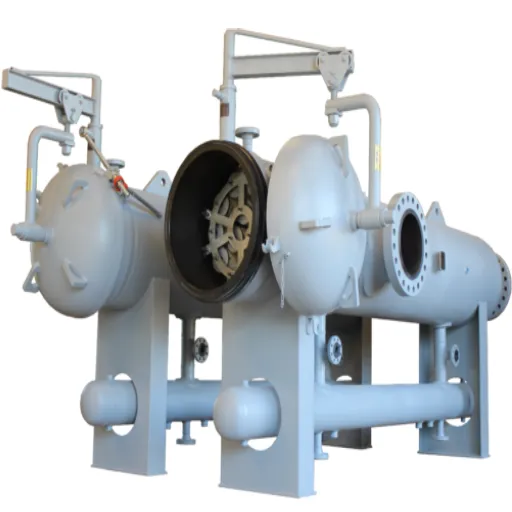
Coalescing Filter Separators
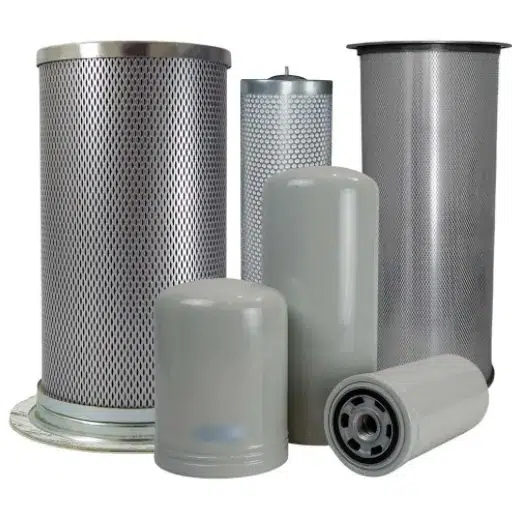
Coalescing filter separators are highly efficient devices designed to remove very fine liquid aerosols and solid particles from gas streams. They use special coalescing filter elements that cause microscopic liquid droplets to merge into larger drops.
- How They Work: Gas moves from the inside of the coalescer elements towards the outside. When the gas moves through the filter media, solid particles get caught while tiny droplets of liquid hit and form larger drops. These large drops subsequently move to the outer filter surface, run down to a sump for collection, and are eliminated.
- Applications: They are widely used in applications requiring extremely high gas purity, such as protecting compressors, turbines, and catalyst beds. They are also essential upstream of glycol dehydration and amine treating units.
Gas Filter Separators Explained
Gas filter separators, often referred to as dry gas filters, are primarily designed to remove solid contaminants like rust, scale, and dust from a gas stream. While they have some capability to remove liquids, their main function is solid particle filtration.
- How They Work: These units use cartridge-style filter elements to capture solid particulates. The gas flows through these elements, and the solids are retained on the filter media. The design is simpler than that of a coalescing filter separator.
- Applications: They are commonly used to protect meters, regulators, and other equipment where the primary concern is solid debris rather than liquid carryover. They are often installed at custody transfer points and fuel gas supply lines.
Comparison of Different Filter Separator Types
Choosing between coalescing and standard gas filter separators depends on the specific needs of the application.
The Importance of Filter Separators in the Natural Gas Industry

Enhancing Gas Quality with Natural Gas Filter Separators
The natural gas which is extracted from reservoirs typically contains a combination of hydrocarbons, water, solids (like sand and shale), and other impurities. To eliminate these contaminants, natural gas filter separators are installed at different sites in the processing system. The separators play a significant role in maintaining gas quality, i.e.,:
- Prevent Hydrate Formation: Removing water vapor prevents the formation of solid gas hydrates, which can plug pipelines and valves, especially in cold conditions.
- Increase Heating Value: A clean, dry gas has a higher and more consistent heating value (calorific value), which is crucial for its commercial value.
- Protect Downstream Processes: Processes like liquefaction (for LNG) and fractionation require extremely pure gas to operate efficiently and safely.
Impact on Safety and Efficiency in Gas Processing
The use of filter separators has a direct impact on the safety and efficiency of gas processing operations.
- Safety: By removing contaminants, separators reduce the risk of corrosion in pipelines and pressure vessels, which could otherwise lead to leaks or catastrophic failures.
- Efficiency: Clean gas allows equipment like compressors and turbines to operate at peak performance, reducing fuel consumption and maintenance requirements. Uninterrupted operation leads to higher plant availability and throughput.
Case Studies: Successful Filter Separator Implementations
Several businesses have seen very noticeable changes upon installation of the top-rated high-efficiency filter separation machines. An example is a big source of gas processing that reported a 50% drop in the money put in to keep the compressors working after the installation of the battery of super coalescing filter separators. There was also a case of an offshore platform that stopped shutting down often and cutting down on its liquid carryover issue by updating its separation system. As a result, the platform experienced a big increase in the yearly yield. All these cases point out the financial benefit, not just the technological, that a right filtration technology brings.
Filter Separators Use in Various Industries
Applications in Oil and Gas Sector
Beyond natural gas processing, filter separators are crucial in other areas of the oil and gas industry:
- Refineries: They are used to clean hydrogen and other process gases used in hydrotreating and catalytic reforming units.
- Offshore Platforms: Separators remove liquids and solids from gas streams at the wellhead to protect subsea pipelines and topside processing facilities.
- Petrochemical Plants: They ensure the purity of feedstock gases used in the production of plastics, fertilizers, and other chemicals.
Filter Separators in Water Treatment
In water treatment, filter separators are used in processes like aeration and digester gas handling. They protect blowers and other equipment from moisture and particulates present in the air or biogas streams. This ensures the reliability of the equipment used for biological treatment processes and energy recovery from waste.
Emerging Uses in Renewable Energy
The transition to renewable energy sources has opened new applications for filter separator technology.
- Biogas/Renewable Natural Gas (RNG): Raw biogas from anaerobic digesters is saturated with water and contains harmful contaminants like siloxanes. Filter separators are essential for cleaning the biogas before it can be used to generate electricity or upgraded to pipeline-quality RNG.
- Hydrogen Production: In green hydrogen production via electrolysis, filter separators are used to dry the hydrogen gas and remove any entrained electrolyte, ensuring its purity for storage or use in fuel cells.
Future Trends in Filter Separator Technology
Innovations in Filtration Techniques
Research and development are focused on creating more advanced filter media and separator designs.
- Advanced Materials: New polymer and composite materials are being developed for filter elements that offer higher efficiency, lower pressure drop, and better chemical resistance.
- Computational Fluid Dynamics (CFD): Engineers use CFD modeling to optimize the internal flow dynamics of separators, eliminating dead zones and improving separation performance.
- Compact Designs: There is a growing demand for smaller, lighter separation systems, especially for offshore and modular applications. Innovations in internal components are enabling more compact and efficient designs.
Environmental Impact and Sustainability Considerations
Sustainability is a key driver in the evolution of filter separator technology. Manufacturers are focused on:
- Reducing Emissions: High-efficiency separators minimize the carryover of hydrocarbons and other volatile organic compounds (VOCs) into the atmosphere.
- Energy Efficiency: Designs that minimize pressure drop reduce the energy consumption of compressors and blowers, lowering the carbon footprint of the overall process.
- Recyclable Materials: The use of recyclable or reusable components in filter elements is becoming more common, reducing the waste generated from maintenance activities.
Predictions for Market Growth and Technology Advancements
There is an upward trend in the demand for filter separators in the global market that is expected to continue due to the increased request for energy, the spreading of natural gas networks, and the happening of renewable energy sources such as RNG and hydrogen. In the forthcoming time, the focus of the technological advancement is going to be on separators which are not just smart but also equipped with sensors and analytics to continuously monitor the performance, predict maintenance needs, and automatically make changes according to the process condition of separation units. Thus, the digital technology and integration that follows will not only result in higher performance and efficiency in the separation process but also be more dependable systems.
Reference Sources
What Is A Filter Separator? – Explains the purpose and functionality of filter separators in removing contaminants from gases or liquids in industrial settings.
How a Filter Separator Works – Provides a detailed explanation of the working mechanism of filter separators, particularly in oil and gas applications.
The Role of Filter Separators in Ensuring Clean Gas Processing – Highlights the importance of filter separators in enhancing gas quality and operational efficiency.
Why Filter Separators are Essential for Natural Gas Processing – Discusses how filter separators ensure gas purity by eliminating harmful contaminants.
The Essential Role of Oil Water Separators in Industrial Operations – Focuses on the role of separators in treating wastewater, showcasing their broader industrial applications.
Frequently Asked Questions (FAQs)
What is a filter separator and how does it work?
A filter separator is a sophisticated machine that is built to get rid of both solid and liquid impurities from a gas stream. The filter separator works by permitting the gas to get into the separator where there is a two-stage filtration process. In the first stage, using a medium that picks up impurities the filter media removes larger droplets and solid particles. The second stage, however, concentrates on further purification, and thus it removes even the last liquid droplets and aerosols. This happens to let the gas flow to its destination solely as clean gas stream, which in cumbersome ways has always been a requirement of both quality and safety to be met.
What types of filters are used in filter separators?
Filter separators are equipped with different filter types for proper gas filtration. Among the filter types often used are coalescing filters, which trap and separate liquid droplets, and particulate filters, which catch solid particles. These filter units are modifiable either in a horizontal or vertical manner, depending on the particular need of an application and the gas plant’s demands. Every kind of these filters is equally important for the purity of the gas and the safe running of the downstream equipment by protecting it from rust or abrasion caused by the presence of contaminants.
How do gas filter separators function in natural gas pipelines?
Filter separators composed of gas represent a significant part of the natural gas pipeline system through the filtration of various impurities that would otherwise hamper the quality of the gas. While gas is sucked into the separator, it goes through a filtration unit that is provided with various filter media to gather liquid droplets and solid particles. Normally, this is done in one or two stages of filters where bigger droplets are also caught and so only the clean gas flow is allowed to go down. The separation of liquids by the units is also beneficial in compressors and other downstream equipment so that they maintain their high efficiency levels.
What is the importance of a natural gas filter separator in gas processing plants?
A filter separator for natural gas is a device that has to be present in the gas processing plants as it guarantees the removal of both solid and liquid contaminants from the gas flow. This process of removing contaminants is a very major one for the purpose of heat industry standards and system safety and operation efficiency, all these three main factors get affected directly by the process. It acts as a shield to the equipment situated after it by separating the liquid and aerosol droplets, hence preventing them from entering into the equipment and hence causing damage to them. It also plays a major role in the enhancement of the system’s performance by not only giving less load on the system but also by giving an inlet that is not containing the big or sticky particles, which means it is very much needed in natural gas processing.
How does the filtration system in a filter separator work?
The filtration mechanism in a filter separator is created for the purpose of eliminating contaminants efficiently from the gas flow stream. At first, when the gas gets into the separator, there is a filter media blocking course of passage for larger particles and droplets. It is mostly an initial filtration stage. Then in the second stage, our targeted components are much smaller droplets of liquid and solid impurities, thereby securing a gas stream that is cleaner. The whole process of filtration thus becomes very thorough: the purification is very essential in the cases where one needs clean gas for reasons of safety and efficiency.
What maintenance is required for filter separators?
Consistent filter separator upkeep is necessary in order for the equipment to be working at its best. It consists of periodical inspection of filters media to avoid them getting fully blocked and ensuring their full operation. Due to the flow of gas and the level of pollution, the filter elements could need changing and this should to be done hourly. Observation of corrosions or wearing-out of the separator vessels is another important aspect to be taken care of in order to avoid leaks and assure the operational safety of the plant. Proper maintenance is an important element because it ensures that the filter separator is working efficiently and removing impurities which, in turn, will bring about a longer life for the downstream equipment.

DU
Articles: 45
Trending now