Get in touch with Victorystar

Top 25 Yogurt Processing Line Manufacturers updated in 2025

Contents
show
To make yogurt that is of good quality, there is a need for the right equipment, precision, and also a highly effective process. Without yogurt processing lines, modern manufacturers of dairy products cannot produce in large quantities while at the same time maintaining hygienic and consistent products. This guide will take you through yogurt processing line manufacturers, showing you how crucial they are to the industry. If you are a dairy producer wanting to enhance your production capabilities or if you are an industry enthusiast wanting to know more about the technology behind the scenes, this article will lead you to understanding the essential components, innovations, and key players involved in yogurt processing lines. Keep reading to learn how state-of-the-art equipment transforms milk into the delicious, healthy yogurt which is enjoyed all over the world.
Introduction to Yogurt Production
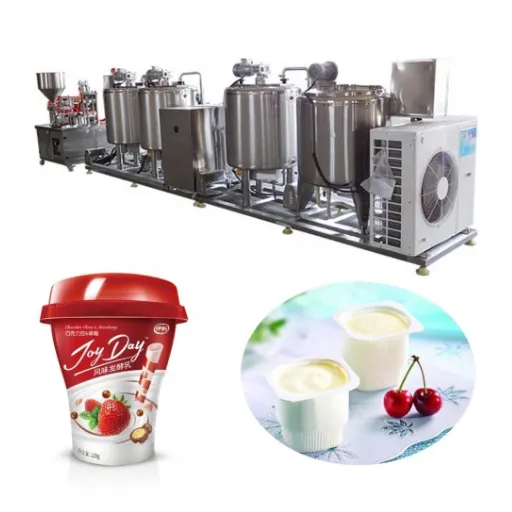
Yogurt and Its Varieties in General
Yogurt, one of the most famous milk products, is produced through fermentation of milk using live cultures, which are typically Lactobacillus bulgaricus and Streptococcus thermophilus, and the latter fermentation not only alters the texture and flavor of yogurt but also contributes to its digestibility and gut health, among the many advantages that the product offers. The variety of Yogurt is so great that it can cater to different tastes and at the same time fulfill different dietary needs of consumers.
Popular Yogurt Varieties
- Greek Yogurt: Thick and protein-rich consistency, highly searched and popular among health-conscious consumers
- Regular Yogurt: Lighter and more fluid texture, traditional favorite
- Plant-Based Yogurts: Made from soy, almond, or coconut milk, providing lactose-free alternatives
- Flavored or Fruit-Infused Yogurts: Sweetened and varied options for diverse taste preferences
According to the latest study based on search engine trend data, Greek yogurt is still the top variety in searches which is backed by the sustained consumer interest in the high protein and low-fat options. Besides that, the trend of plant-based yogurts is gaining more and more people in the market wanting vegan or lactose-free products which is all due to the wider acceptance of sustainable and health-conscious food habits. Thus, the constant introduction of new types of yogurts in the market is a reflection of the industry’s ability to adapt to changing consumer preferences, thereby keeping the yogurt section stocked with ample alternatives for every consumer.
Yogurt Processing’s Significance
One of the most significant behind-the-scenes factors that influence the final product in terms of quality, taste, and safety, is the yogurt processing. This is a long multi-step operation that involves pasteurization, fermentation, and cooling. During these steps, the microorganisms that cause spoilage are removed, while the nutrients are preserved. The recently published search trend data indicate that more and more consumers are looking for “yogurt health benefits” and “yogurt production process,” which reflects the raising of consciousness about the importance of manufacturing methods.
Advanced yogurt processing technology has opened a new range of possibilities for the manufacturers to produce different types of yogurt including Greek yogurt and plant-based ones, in this way meeting the specific needs of both the diet and taste. The yogurt processing methods of the past are still occassionally used by the dairy industry but at the same time more innovations are being introduced in order to satisfy the consumers’ demand for nutritious and high-quality products.
Yogurt Consumption Trends
Search engine data shows an exponential growth in interest in functional foods, with yogurt being one of the main drivers behind this trend. The terms “probiotic yogurt benefits” and “best yogurt for gut health” have received a lot of attention which indicates people’s increasing concern with health and wellness as well as gut health.
📈 Emerging Consumer Trends
- Growing interest in probiotic yogurt and gut health benefits
- Increasing searches for plant-based and vegan yogurt brands
- Demand for innovation in flavors and packaging
- Consumer focus on ingredient transparency and sustainability
In addition, the number of those who search for “plant-based yogurt” and “vegan yogurt brands” has gradually risen, indicating a shift to environmentally friendly and dietary-inclusive choices. In other words, the consumers are not restricted to regular milk products only but also seeking the ones that are good for their health and are in line with their beliefs. The trends in searches are a clear indication of a robust demand for novelties in taste, containers, and even the disclosure of the constituents used. Therefore, yogurt is no longer a fixed product but rather a fluid one, always changing according to the different dietary requirements worldwide.
Understanding Yogurt Processing Lines
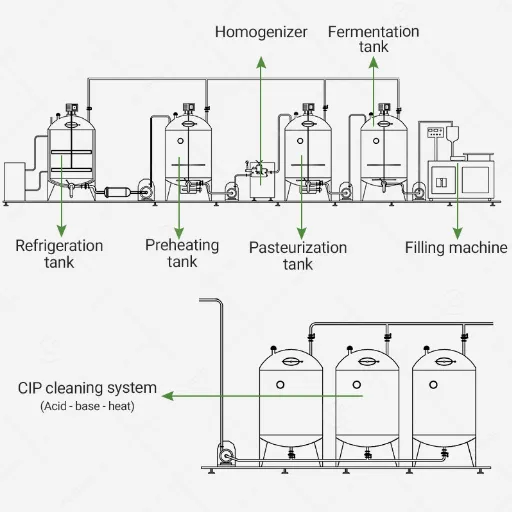
Yogurt Production Line Components
The components of a yogurt production line include materials like milk tanks, pasteurizers, homogenizers, fermentation tanks, filling machines, and cooling systems. The line for yogurt production always has quality and safety in mind.
The latest query trends from search engines show a growing consumer interest in easily understood and transparent yogurt production, frequently asking about the process and how processing technology relates to yogurt. This corresponds to a request for manufacturing lines that focus on the very best ingredients, light processing, and environment-friendly practices. For example, the use of advanced pasteurization and fermentation technology not only prolongs the yogurt’s shelf life but also retains the original quality and nutrients which attracts people who are cautious about their health and diet. The installation of production lines has also been influenced by the need for efficient automation as it provides consistency and reduction of waste that would satisfy both consumers and eco-friendly initiatives.
Yogurt Processing Equipment Types
The current yogurt manufacturing process makes use of specialized devices and machines to accomplish it with accuracy and speed while maintaining quality and safety. The main yogurt processing equipment types are:
Essential Processing Equipment
1. Milk Pasteurizers
These machines heat the raw milk for bacteria elimination and product safety assurance. Low-temperature long-time pasteurizers preserve the milk’s nutritional consistency.
2. Fermentation Tanks
Fermentation tanks facilitate hatching milk with bacterial cultures and carrying controlled incubation of fermentation. Tanks have temperature and pH monitoring systems to yield uniformity in yogurt’s texture and flavor.
3. Homogenizers
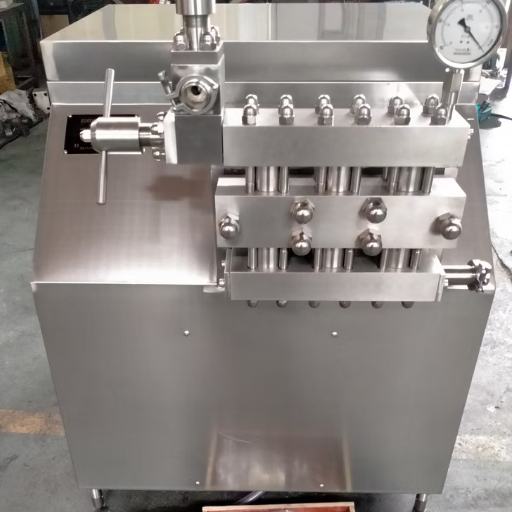
Creaminess in yogurt is achieved through homogenization by reducing fat molecules and dispersing them uniformly across the product, making the yogurt better in terms of mouth-feel.
4. Separator Machines
These machines efficiently extract the surplus whey creating thicker varieties like Greek yogurt. They also help to determine the strength of the yogurt line according to taste and texture preferences.
5. Filling and Packaging Machines
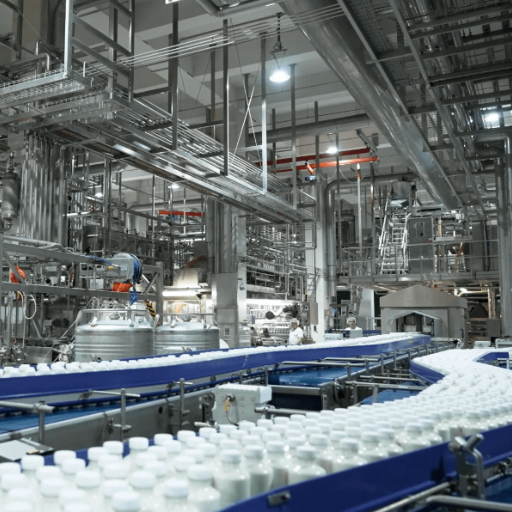
Filling machines manage to portion the yogurt in containers in an orderly way and free from contamination. Automated packaging machines boost productivity and maintain cleanliness during large-scale production.
6. Cooling Systems
Rapid cooling equipment stabilizes the yogurt’s consistency and prolongs its shelf life post-fermentation.
The use of innovative technologies, such as the integration of IoT for real-time monitoring and AI-driven automation, is constantly being applied to these machines. These developments guarantee the utmost precise production parameter control, cut down operational waste, and meet consumer demand for quality and eco-friendly yogurt products.
Small Scale vs. Large Scale Production Lines
The factors of cost, efficiency, and scalability come into play when looking at small-scale vs. large-scale yogurt production lines. By using small-scale production lines, artisans and niche markets can benefit the most since they are able to use more flexibility in terms of recipe customization and have a greater variety of batch sizes. This kind of production usually requires a lower investment and is less complicated to run, which makes it a perfect choice for start-ups or small-scale local production.
Comparison: Small Scale vs. Large Scale Production
| Aspect | Small Scale Production | Large Scale Production |
|---|---|---|
| Investment | Lower initial capital required | High upfront investment needed |
| Flexibility | High recipe customization, varied batch sizes | Limited flexibility, standardized production |
| Production Volume | Lower quantities, artisanal focus | High-volume, mass production |
| Cost Per Unit | Higher per-unit cost | Lower per-unit cost (economies of scale) |
| Automation | Less complex, manual processes possible | Advanced automation, cutting-edge equipment |
| Market Focus | Niche markets, local production, organic focus | Mass market distribution, wide consumer reach |
In contrast, large-scale production lines capitalize on economies of scale to provide the market with efficient high-volume yogurt production. With the help of cutting-edge equipment and automation, these lines not only maintain the same quality but also are in a position to support high consumer demand while enjoying a low per-unit production cost. However, they necessitate heavy investment in advance and require the necessary logistics to carry out mass distribution.
Based on the latest information coming from search engines, there is an increasing consumer interest sustainability practices in all types of production scales, both small and large. Small-scale producers are marketing their products as organic and eco-friendly, while large-scale producers are gradually adopting technologies that consume less energy and making use of packaging materials that can be recycled, thus, aligning with the sustainability preferences of consumers.
Key Manufacturers in the Yogurt Processing Industry
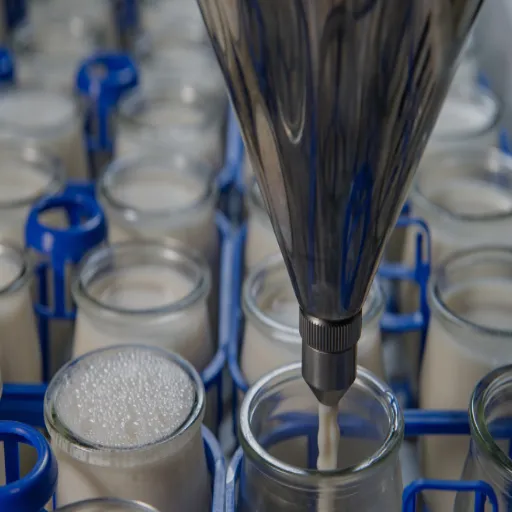
The following comprehensive list showcases leading manufacturers in the yogurt processing industry, providing essential information about their specializations, advantages, and market presence.
1. Victorystar
| Introduction: | Leading manufacturer specializing in innovative yogurt processing lines with a focus on efficiency and quality |
| Main Products: | Complete yogurt production lines, fermentation tanks, and filling machines |
| Advantages: | High customization options, advanced automation, excellent after-sales support |
| Disadvantages: | Premium pricing |
| Website: | Victorystar Official Website |
2. Shanghai Beyond Machinery Co., Ltd.
| Introduction: | A prominent Chinese manufacturer offering a wide range of dairy and beverage processing equipment |
| Main Products: | Yogurt processing lines, pasteurizers, and homogenizers |
| Advantages: | Comprehensive solutions and competitive pricing |
| Disadvantages: | Limited global presence |
| Website: | Shanghai Beyond Machinery |
3. LILE JIMEI Machinery Group Co., Ltd.
| Introduction: | Known for its expertise in dairy and beverage production lines, including yogurt processing |
| Main Products: | Yogurt production lines, CIP systems, and sterilization equipment |
| Advantages: | High-quality equipment and strong technical support |
| Disadvantages: | Longer lead times for custom orders |
| Website: | JIMEI Machinery |
4. Kunshan Vonfo Machinery Co., Ltd.
| Introduction: | Specializes in turnkey solutions for yogurt and dairy processing |
| Main Products: | Yogurt production lines, pasteurizers, and filling systems |
| Advantages: | Over 15 years of experience and strong after-sales service |
| Disadvantages: | Limited product range for smaller-scale operations |
| Website: | Vonfo Machinery |
5. Zhengzhou Wenming Machinery Co., Ltd.
| Introduction: | Offers a variety of yogurt production lines tailored to different capacities |
| Main Products: | Greek yogurt production lines, CIP systems, and fermentation tanks |
| Advantages: | Affordable pricing and flexible customization |
| Disadvantages: | Limited international certifications |
| Website: | Wenming Machinery |
6. SM Engineering
| Introduction: | Focuses on yogurt, curd, and lassi processing plants with a strong presence in India |
| Main Products: | Yogurt processing plants, curd production systems, and packaging machines |
| Advantages: | Cost-effective solutions and local expertise |
| Disadvantages: | Primarily serves the Indian market |
| Website: | SM Engineering |
🌍 Global Industry Leaders
The following manufacturers represent established global brands with extensive experience and worldwide presence in the yogurt processing industry.
7. Tetra Pak
| Year Founded: | 1951 |
| Introduction: | A global leader in food processing and packaging solutions, including yogurt production lines |
| Main Products: | Yogurt processing equipment, filling machines, and packaging solutions |
| Advantages: | Cutting-edge technology, global presence, and strong sustainability initiatives |
| Disadvantages: | High cost of equipment |
| Website: | Tetra Pak |
8. GEA Group
| Year Founded: | 1881 |
| Introduction: | A German-based company specializing in process technology and components for the food industry |
| Main Products: | Yogurt production lines, separators, and homogenizers |
| Advantages: | High-quality engineering and extensive global support |
| Disadvantages: | Complex systems may require specialized training |
| Website: | GEA Group |
9. Alfa Laval
| Year Founded: | 1883 |
| Introduction: | A Swedish company known for its innovative solutions in heat transfer, separation, and fluid handling |
| Main Products: | Yogurt processing lines, heat exchangers, and separators |
| Advantages: | Durable equipment and energy-efficient solutions |
| Disadvantages: | Premium pricing |
| Website: | Alfa Laval |
10. SPX FLOW
| Year Founded: | 1912 |
| Introduction: | A global supplier of highly specialized, engineered solutions, including yogurt processing systems |
| Main Products: | Yogurt production lines, homogenizers, and pasteurizers |
| Advantages: | Advanced technology and strong customer support |
| Disadvantages: | Limited availability in some regions |
| Website: | SPX FLOW |
11. IDMC Limited
| Year Founded: | 1978 |
| Introduction: | An Indian company providing turnkey solutions for dairy and food processing |
| Main Products: | Yogurt processing plants, pasteurizers, and filling machines |
| Advantages: | Cost-effective solutions and strong local expertise |
| Disadvantages: | Limited global reach |
| Website: | IDMC Limited |
12. ProXES Group
| Year Founded: | 2014 (merger of Stephan Machinery, FrymaKoruma, and Terlet) |
| Introduction: | A German-based group offering high-quality processing solutions for the food industry |
| Main Products: | Yogurt processing lines, mixing systems, and homogenizers |
| Advantages: | Innovative technology and strong R&D capabilities |
| Disadvantages: | Higher initial investment |
| Website: | ProXES Group |
13. Paul Mueller Company
| Year Founded: | 1940 |
| Introduction: | A US-based company specializing in dairy processing equipment |
| Main Products: | Yogurt processing tanks, pasteurizers, and cooling systems |
| Advantages: | High-quality stainless steel equipment and excellent customer service |
| Disadvantages: | Limited product range for large-scale operations |
| Website: | Paul Mueller Company |
14. Feldmeier Equipment
| Year Founded: | 1952 |
| Introduction: | A US-based manufacturer of stainless steel processing equipment for the food and dairy industries |
| Main Products: | Yogurt processing tanks, mixers, and CIP systems |
| Advantages: | Customizable solutions and robust equipment |
| Disadvantages: | Primarily serves the North American market |
| Website: | Feldmeier Equipment |
15. TechniBlend
| Year Founded: | 2008 |
| Introduction: | A US-based company offering advanced beverage and dairy processing systems |
| Main Products: | Yogurt processing lines, blending systems, and pasteurizers |
| Advantages: | Innovative automation and energy-efficient solutions |
| Disadvantages: | Relatively new in the market |
| Website: | TechniBlend |
Production Techniques in Yogurt Manufacturing
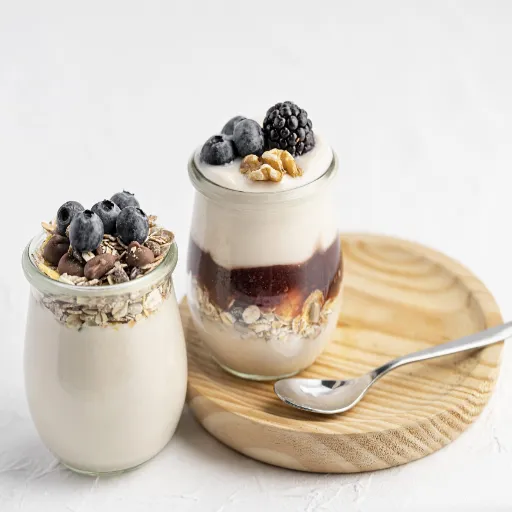
Traditional vs. Modern Yogurt Production Methods
In most cases, the techniques applied in the traditional yogurt production are derived from simple and natural processes that have been passed over generations. The process involves very little use of machinery; natural or artificially added bacterial cultures are used for the milk fermentation. The process takes its while but the result is a full-flavored, thick and creamy yogurt with no additives or preservatives at all. Those who use traditional methods always produce yogurts that are essentially artisan, emphasizing the quality factor even if this results in lesser quantities of the final product.
Production Methods Comparison
| Feature | Traditional Methods | Modern Methods |
|---|---|---|
| Process | Simple, natural, minimal machinery | Automated, technology-driven, continuous processes |
| Fermentation | Natural or manually added bacterial cultures | Controlled temperature, pH, and fermentation times |
| Production Speed | Slow process, allows full flavor development | Fast-paced, high-volume production |
| Product Quality | Thick, flavorful, no additives | Uniform taste and texture, consistent quality |
| Scale | Artisanal, small batches | Industrial scale, mass production |
| Variety | Limited product range | Wide variety: low-fat, Greek, plant-based options |
Contrastingly, modern yogurt production has been taking full advantage of technology advancements to supply the market with good quality yogurt at a fast pace. The industrial process employs machines that are mostly ongoing for pasteurization, fermentation, and packaging. One important aspect is the control of parameters like temperature, pH levels, and fermentation times, which will in turn result in a product that has a uniform taste and texture. Modern production also opens up a variety of yogurts such as low-fat, Greek, or plant-based, innovating according to dietary needs and trends of the market.
Citing the most recent search engine data, it seems that consumer preference is gradually shifting toward traditional, artisanal yogurt for its genuineness and modern yogurt for its variety and convenience. The trend of people wanting healthier food and going for organic and probiotic-rich options is an indication of consumers being more quality conscious no matter the production scale. Hence, both methods together are responsible for fulfilling the diverse demands of the present-day yogurt market.
Role of Technology in Yogurt Processing
Technology has a great impact on the modern yogurt industry in terms of both efficiency and quality. The innovations in automated production lines and fermentation monitoring systems are giving manufacturers the advantage of large-scale yogurt production without compromising on the quality of the taste and nutritional benefits.
💻 Key Technological Innovations
- Automated Production Lines: Enable large-scale production while maintaining quality standards
- Advanced Fermentation Monitoring: Precise control of fermentation parameters for consistent results
- Strain-Breeding Technologies: Enhanced probiotic strains for health-conscious consumers
- Intelligent Packaging: Active packaging materials extending shelf life and promoting sustainability
- Customization Capabilities: Technology allowing smaller batches and artisanal options
Coupled with the latest search engine data, it is clear that consumers’ dual demand for variety and artisanal authenticity is the key factor driving technological advancements that allow for smaller batches and customizable options. The cutting-edge strain-breeding technologies are further improving the competitiveness of probiotic strains, thus addressing the health-conscious customer segment. Moreover, intelligent and active packaging materials are signaling the growing trend of sustainability while at the same time extending the shelf life of products. By using modern innovations and setting up new ones besides traditional processes, the industry caters to both large-scale and artisanal yogurt markets capable of meeting diverse customer demands.
Specialized Equipment for Greek Yogurt Production
Greek yogurt production is associated with specialized machinery that will eventually lead to food that has the characteristic thickness and creaminess similar to its regular counterpart with excess whey completely removed from the process. One piece of equipment that stands out is a straining machine/centrifuge designed to extract excess whey and make the product denser.
🥛 Essential Greek Yogurt Production Equipment
- Straining Machines/Centrifuges: Specialized equipment designed to extract excess whey, creating the characteristic thick and dense texture of Greek yogurt
- Top-Notch Fermentation Tanks: Equipped with accurate temperature regulation to facilitate the proliferation of beneficial bacteria during fermentation
- Advanced Homogenizers: Guarantee uniformity in yogurt by efficiently breaking down fat globules for consistent texture
- Automated Filling and Packaging Machines: Quicken the process while complying with hygiene standards for both commercial and artisanal production
Moreover, the necessity for top-notch fermentation tanks with accurate temperature regulation is built to facilitate the proliferation of good bacteria during fermentation. Besides, having advanced homogenizers guarantees uniformity in the yogurt by efficiently breaking down fat globules. To add to that, some production lines make use of machine-filling and packaging that are automated to quicken the process and comply with hygiene standards. In this way, the integration of specialized instruments gives manufacturers the ability to produce Greek yogurt with no variations in quality for the entire range, whether commercial or artisanal. Such progress is indicative of an alliance between traditional skills and modern technology. Thus the market continues to grow along with consumer demand.
Future Trends in Yogurt Production Lines

Sustainability in Yogurt Manufacturing
Sustainability has emerged as a significant issue in yogurt production, and manufacturers are adopting green practices that will not only satisfy the consumers’ expectations but also the environmental requirements. The main activities are the investment in machines that consume less energy, the switch to renewable energy sources, and the minimization of water use in production. Furthermore, the consideration of biodegradable or recyclable packaging has gained a lot of attention as a solution to the problem of plastic waste.
🌱 Sustainable Manufacturing Practices
| Practice | Implementation | Benefits |
|---|---|---|
| Energy Efficiency | Use of energy-efficient machines and renewable energy sources | Reduced carbon footprint and operational costs |
| Water Conservation | Reduction of water consumption in production processes | Lower environmental impact and resource preservation |
| Eco-Friendly Packaging | Biodegradable or recyclable packaging materials | Reduced plastic waste and improved brand image |
| Byproduct Reuse | Circular economy strategies, whey repurposing | Additional revenue streams and waste reduction |
Recent data shows a collective of consumers wanting environmentally friendly food products, thus, suppliers have to be responsible to nature through creating sustainable solutions. Yogurt manufacturers can integrate byproduct reuse, like whey, in other products, which will create additional revenue streams as well as amplify their sustainability efforts through circular economy strategies.
Emerging Technologies in Yogurt Processing
The yogurt industry is on the verge of getting immense technological advancement that will contribute to the improvement of production efficiency, sustainability, and product innovation. A prominent example of an innovation is the development of advanced fermentation techniques through which bacterial cultures are perfected, thus giving a quality of yogurt that has better texture, taste, and nutrition.
🔬 Cutting-Edge Technological Advances
- Advanced Fermentation Techniques: Perfected bacterial cultures for improved texture, taste, and nutrition
- Robotics and Machine Learning: Reduces waste while ensuring consistent quality throughout production
- Smart Sensors and IoT Devices: Real-time monitoring of temperature and pH for precise production control
- Circular Economy Models: Repurposing byproducts like whey for additional product development
Getting manufacturers to use robots and machine learning in their processes is another advancement, whereby the former will reduce waste while the latter ensures quality is constant. Monitoring of parameters such as temperature and pH is facilitated by smart sensors and IoT devices, the result being that producers are able to maintain production very accurately.
Looking at the latest search trends that show an increase in consumer interest in sustainable food products helps understand how the industry can win over customers. Yogurt manufacturers have the possibility of meeting the rising demand for environmentally-friendly and health-conscious foods in a very effective manner through the combination of innovative processing methods and circular economy models, such as repurposing byproducts like whey. This joining together of technology and sustainability puts the industry in a good position to cope with changes in the market and to grow.
Market Opportunities for Yogurt Producers
A look through the most recent data from search engine trends shows that consumers are increasingly interested in functional foods and wellness products. There is a remarkable rise in searches for “probiotic-rich foods”, “gut health”, and “high-protein snacks”, which means consumers are looking for yogurts that fit their health goals.
📊 Key Market Opportunities
| Opportunity | Consumer Demand | Product Focus |
|---|---|---|
| Functional Foods | Probiotic-rich, gut health benefits | Yogurts with enhanced probiotics |
| High-Protein Products | Fitness and health-conscious consumers | Greek yogurt, protein-fortified options |
| Fortified Yogurts | Vitamins and minerals supplementation | Health-enhanced formulations |
| Plant-Based Options | Vegan, dairy-free alternatives | Almond, coconut, oat-based yogurts |
Yogurt makers now have the opportunity to produce and promote such types of yogurts that have probiotics, are high in protein, or are fortified with vitamins and minerals catering to this demand. Consumers have been developing a more favorable opinion of non-dairy products, which is the reason for the increased interest in plant-based diets that can be a source of yogurt innovation. Searches for “plant-based yogurt” and “vegan alternatives” indicate that there is a clear trend towards dairy-free consumption and thus, it would be very advantageous for manufacturers who already have almond, coconut, or oat-based products to open up even more channels. Thus, the competitive and dynamic yogurt market will be mainly filled with targeted product offerings and manufacturers will ultimately succeed in this market if they are responding properly to consumer trends.
Frequently Asked Questions (FAQ)
What are the crucial elements of a yogurt production line?
One of the most critical components of a yogurt production line is the yogurt machine. Others are pasteurization equipment and fermentation tanks. The starting point of the process is milk pretreatment, which could involve standardization and homogenization to ensure that the quality of milk is the same all throughout. Milk pasteurization is followed by cooling to the incubation temperature, and then yogurt cultures are introduced. The line could also feature pre-installed automated systems for smooth running, and CIP cleaning systems for maintenance that is not labor-intensive. Depending on the processing equipment, various types of yogurt, including Greek yogurt and stirred, can be produced.
What measures do yogurt processing equipment manufacturers take to guarantee quality?
Quality control is achieved through focusing on various aspects by processing equipment manufacturers. They fabricate machines in strict accordance with hygiene standards and materials like SUS304 stainless steel are often used for their long-lasting and easy-to-clean properties. The control system is a critical component that maintains monitoring of such parameters as temperature and fermentation time, which are very important for the production of consistent yogurt. Besides that, milk powder addition can be regulated in a manner that creates the desired thickness and taste. Manufacturers might also install CIP cleaning systems as an aid to sanitary processing, thus ensuring that equipment is constantly free of contamination.
What are the plus points of small scale yogurt production?
Small scale production of yogurt has its share of benefits catered for both entrepreneurs and small businesses. It gives full freedom to produce various kinds of yogurts, such as frozen yogurt or drinking yogurt, which leads to serving niche markets. The initial capital requirement is, in general, much lower than that of large-scale operations, which makes it suitable for startups. Small production processes can get fresh milk from local farms, and thus the final product’s quality and freshness will be improved. Moreover, small yogurt manufacturers have the opportunity to change flavors and formulations; thus, they can reach out to the health-conscious segment of consumers that are asking for different offerings.
What should I take into account when picking a yogurt production line manufacturer?
Choosing a yogurt production line manufacturer is not an easy task, as there are many factors to be taken into account. First of all, the background and reputation of the manufacturer should particularly reliable and quality should be checked. It is essential to do thorough research on the machines they produce; they could be for UHT milk, for instance, or certain yogurt machines that are compatible with the producers’ capacity. It is also important to verify whether the machinery is equipped with such advanced features as a CIP cleaning system which will help maintenance and reduce downtime to a minimum. Moreover, inquire about their support services and whether they will take care of the installation and training of your operators. Besides, comparing prices with warranties can be another way of finding the best option.
How does the yogurt processing line contribute to the diversity of products?
The processing line for yogurt processing has a very big effect on the diversity of products that can be made. Different settings of the processing machines enable different types of yogurts to be made by manufacturers, including regular, Greek, and frozen yogurts. The use of different kinds of milk like liquid and small scale milk yogurt can further make the product more diverse. By changing the incubation temperature and fermentation time, one can create new textures and flavors. Optional features like flavoring systems for the production line allow more variety of products to be introduced in the market.
📚 Reference Sources
- Strawberry or Plain Yogurt? Product Line Expansions and … – Kansas State University
This academic paper analyzes the impact of product line expansions in the yogurt industry, providing insights into manufacturing strategies. - Oikos Pro’s Game-Changing Yogurt Moments – University of Southern California
A comprehensive guide exploring advanced features and benefits of premium yogurt production equipment. - Schedule A & B – Department of Agriculture and Markets
A government document detailing yogurt production standards and classifications, useful for understanding regulatory compliance.
Key Takeaways
- ✦ Yogurt production requires specialized equipment including pasteurizers, fermentation tanks, homogenizers, and filling machines
- ✦ Consumer demand is shifting toward Greek yogurt, plant-based alternatives, and probiotic-rich functional foods
- ✦ Both small-scale artisanal and large-scale industrial production lines serve important market segments
- ✦ Leading manufacturers include Tetra Pak, GEA Group, Alfa Laval, and emerging Chinese and Indian companies
- ✦ Technology integration (IoT, AI, robotics) is revolutionizing yogurt processing efficiency and quality control
- ✦ Sustainability practices including energy efficiency, water conservation, and eco-friendly packaging are becoming industry standards
- ✦ Future opportunities lie in functional foods, plant-based products, and innovative fermentation techniques

GW
Articles: 39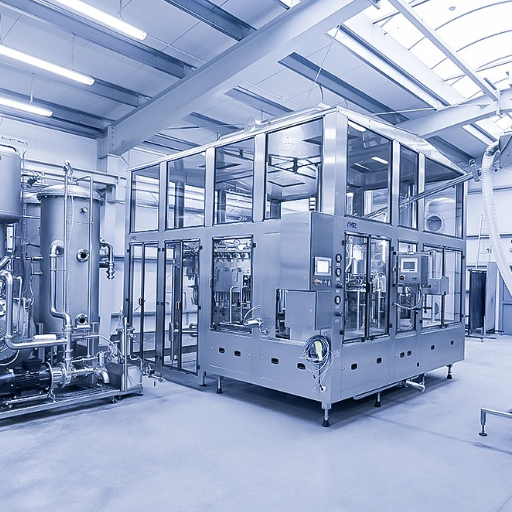
Trending now