Get in touch with Victorystar
The Ultimate Guide to 330ml 500ml 1000ml 1500ml Water Processing Line

Contents
show
Clean and high-quality bottled water delivery is closely related to the effectiveness and precision of your water processing line. More than ever, the bottling sizes of 330ml, 500ml, 1000ml, and 1500ml require a thorough understanding of the water processing line for efficient production, compliance with industry standards, and full fulfillment of demand. This guide is to help you with all the necessary steps in water processing from water purification to bottling technologies, alongside tips and best practices for optimizing your operations. Whether you are an industry expert looking for updates or a rookie trying to get a strong foundation, this post will give you the insights that you need to improve your water processing. Let’s get into the details of how to create a water processing line that is both streamlined and efficient!
Introduction to Water Bottling
Bottled Water’s Necessity in the Beverage Sector
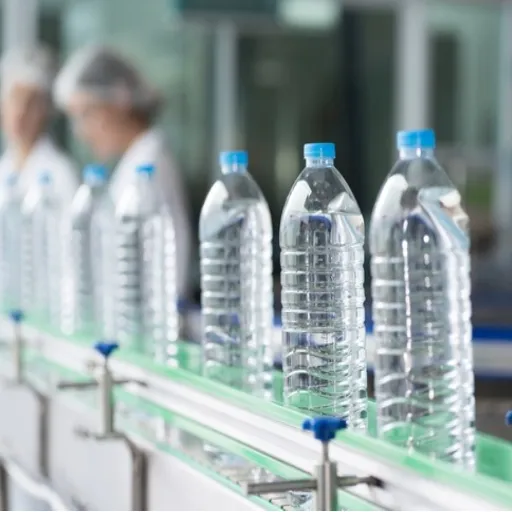
Bottled water is being one of the most rapidly growing segments in the worldwide beverage market, and this is a true reflection of the fact that it is an indispensable element in the appeasement of the consumer demands for convenience, health, and hydration. The sales of bottled water have been increasing steadily leading to a market value which is expected to be more than $350 billion globally by 2025.
Key Market Drivers
- Health Consciousness: People are drinking water instead of sweetened drinks, regarding it as a zero-calorie beverage option
- Convenience Factor: Built-in convenience of drinking water wherever and whenever has become a basic need
- Market Presence: Essential in homes, offices, and places of events all over the world
A company that invests in bottled water will not only be acting in line with consumer preferences but also gain from a profitable and growing market segment.
Beverage Water Lines Overview
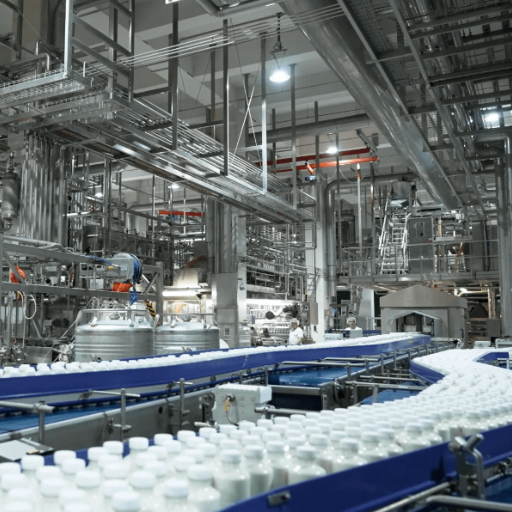
Water lines for production consist of elaborate systems that not only play the role of bottling but also help in doing it in a very hygienic and efficient manner. Such production lines usually consist of various steps of purification, as well as the making, filling, sealing, labeling, and packaging of bottles.
Modern Production Line Features
- Automation and real-time monitoring technologies
- Energy-efficient equipment integration
- Sustainable practice industries implementation
- Production capacity of up to 50,000 bottles per hour
- Compliance with environmental standards and consumer demand for eco-friendly products
Considerations That Different Bottle Sizes Have in Common
When it comes to talking about the scalability of production for different bottle sizes, it is very essential to factor in the adaptability of the machines, the usage of materials, and the demand from the market. The current production lines have to be ready to deal with the various sizes of bottles, from the small and easy-to-carry ones like 250 ml to the big family-sized bottles of 2 liters maximum, at the same time not losing their efficiency.
Understanding Water Treatment Processes
Raw Water Treatment Methods
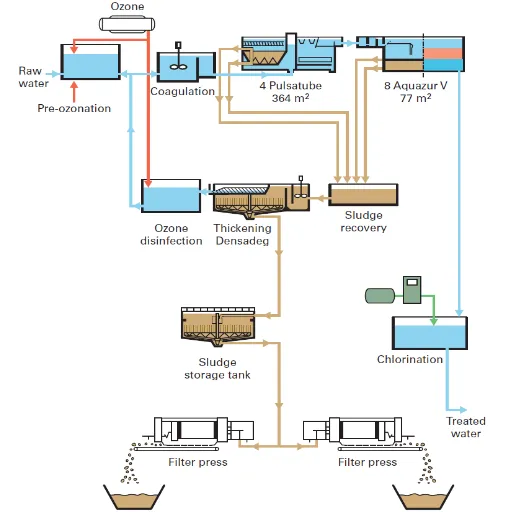
The first step to make water potable is the raw water treatment which includes a few basic processes. Coagulation, sedimentation, filtration, and disinfection are the main techniques adopted to carry out the purification of water.
1. Coagulation
Chemical process that makes tiny particles stick together by forming larger clumps
2. Sedimentation
Larger clumps settle down during this phase of the treatment process
3. Filtration
Smaller particles are removed through filtration mechanisms
4. Disinfection
Chlorine or ultraviolet light destroys harmful microorganisms
Emerging Trends in Water Treatment
The advanced and sustainable water treatment methods are slowly and steadily becoming popular among the masses. An increasing number of searches for keywords “smart water treatment” and “eco-friendly purification” show a notable shift in the mindset of people regarding the environmental impact and the need for efficiency.
The industry is being forced to turn to the adoption of new-age technologies like membrane filtration, nanotechnology, and automated systems due to these developments. By complementing the conventional raw water treatment processes with the latest breakthroughs, the producers and environmental engineers can manage the dual concerns of efficacy and sustainability in the realm of contemporary water treatment solutions.
Filtration Methods for Pure Water
Filtration methods are indispensable in the production of pure water, considering that they not only guarantee the meeting of safety standards but also various use requirements.
| Filtration Method | Primary Function | Key Benefits |
|---|---|---|
| Reverse Osmosis (RO) | Removes dissolved salts and impurities | Can remove up to 99% of all contaminants using semipermeable membrane |
| Ultrafiltration | Targets larger particulates and microorganisms | Ideal for water with high levels of suspended solids |
| Activated Carbon | Removes organic compounds and odors | Eliminates chlorine and improves taste and quality |
| Distillation | Precise contaminant elimination | Advanced technology for specific contaminant removal |
| Ion-Exchange Systems | Targeted contaminant removal | Modern precision technology for specific applications |
💡 Best Practice: Hybrid Systems
Hybrid systems that utilize multiple filtration technologies in tandem have great efficiency and results according to the latest trends in water treatment. For instance, the combination of RO systems with activated carbon pre-filters not only provides top-notch purification but also prolongs otherwise limited membrane lifetime. The multi-barrier method offers greater defense against different kinds of contaminants and is in line with water treatment solutions that are future-proof and evolving through data-driven innovation.
Importance of Quality Control in Water Treatment
Quality control is a water treatment process aspect that ensures the water supplied is safe and adheres to health standards. Communicating water quality through the monitoring and testing at various stages of the water purification enables the facilities to identify early the presence of contaminants and keep themselves in line with the required regulations.
Advanced Quality Control Technologies
- Real-Time Monitoring Systems: Enable efficient detection of problems as they occur
- Predictive Analytics: Assist water treatment plants in being proactive against seasonal variations
- Contaminant Threat Detection: Identify upcoming contaminants marked as threats globally
- Resource Optimization: Reduce operational costs while maintaining top quality supply
This proactive stance not only protects the health of the public but also plays a major role in the resource optimization process.
Components of a Water Bottling Line
Essential Machinery for Water Bottling
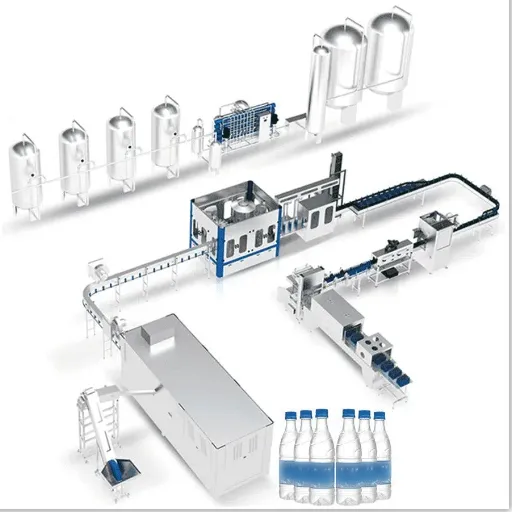
The water bottling operation is efficient only because of the essential machinery that is used in its production line, and the quality of the product is determined by the equipment installed.
Water Treatment Equipment
Purifies water to meet safety standards
Rinsing Equipment
Disinfects empty bottles before filling
Filling Machine
Accurately dispenses water into containers
Capping Machine
Seals bottles securely for freshness
Labeling Machines
Apply product information and branding
Packaging Equipment
Organizes bottles for storage and transport
🔍 Integration with Predictive Analytics
Today’s bottling lines have the capacity of using predictive analytics and hence their operations won’t have any issues. Different sources of information regarding consumers’ tastes may even be used to the production program and market requirements will be met. Bottling firms will be able to catch up with the new contaminant trends or the change in consumption of a certain product (e.g., customers’ demand for eco-friendly containers) fast while still being within the limits set by the law and keeping the satisfaction of the customers.
Overview of Water Filling Machines
The development of water filling machines has been a long and winding road, where they now showcase automation, precision, and efficiency as the dominant factors to satisfy in the demand for bottled water that is constantly increasing. This is done in an even more efficient manner now that real-time data from search trends has been integrated, as manufacturers not only can tell but also can plan their production to be in line with the customer’s taste.
If, for example, the search data points to an increasing consumer preference for reusable and sustainable water packaging, water filling machines will be able to work with glass or biodegradable plastic. This partnership assures that the processes are not just effective but also aligned with the shifting demand for green alternatives. The water bottling sector’s technology used in this manner is agile and maintains its competitiveness.
Understanding the Capping Process
The capping process is one of the most important stages in the water bottling industry as it makes sure the product is bottled and hence the quality and freshness are preserved. To carry out this process, placing the caps and sealing them is done by the automated capping machines.
Modern Capping System Features
- High-speed accuracy in cap placement
- Compatibility with different bottle sizes and cap types
- Sustainable and tamper-proof capping methods
- Enhanced safety features for consumer protection
- Environmentally friendly packaging solutions
By going in for such capping innovations, the manufacturers not only gain in terms of efficiency but also cater to the customers’ desires for safe and green products.
Filling Line Operations
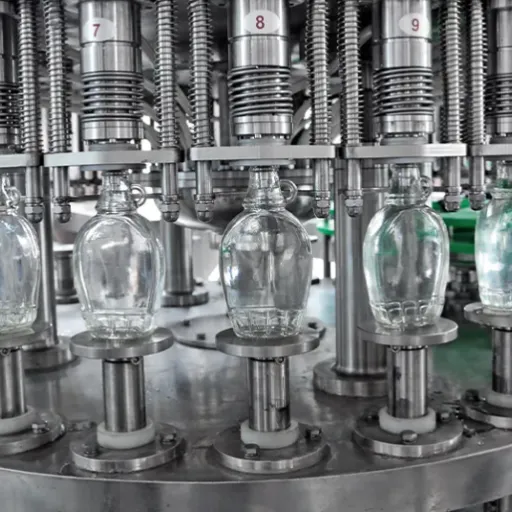
Choosing the Right Filling Machines for Different Bottle Sizes
In order to select the right filling machines for different bottle sizes, one must consider operational efficiency, product compatibility and market trends really carefully. A recent study based on searches shows that there is an increasing interest in flexible and automated filling systems that can do multi-dimensional bottle filling without any hassles.
✓ Key Features to Look For
- Adjustable Settings: Ability to quickly modify parameters for different bottle sizes
- Modular Construction: Easy customization without lengthy production halts
- Smart Technologies: Machine learning, AI, and IoT integration for precision
- Flexibility: Capability to handle diverse product lines efficiently
- Speed Optimization: Enhanced production rates without compromising quality
Through the adoption of such highly innovative trends, companies can not only streamline their operations but also accordingly meet consumer expectations with respect to the quality of the product and the efficiency of the process.
Maximizing Efficiency in the Filling Process
Maximizing filling process efficiency is only possible through advanced technology integration and data-driven solutions leveraging. According to the latest insights from searches, industries are increasingly migrating to automation and AI-powered systems in concert with their workflows optimization.
| Technology | Benefits |
|---|---|
| Automated Filling Machines | Sensors and analytics tools ascertain accuracy and minimize waste |
| Real-Time Monitoring | Allows rapid production demand adjustment and quality control |
| Predictive Maintenance | Effectively reduces downtime and enhances operational continuity |
| IoT Connectivity | Improves overall production and competitiveness through data insights |
Maintenance Protocols for Filling Machines
A strong maintenance protocol is the key to filling machines’ optimal performance and life span. The regular checks and cleanings of the machine parts like nozzles, valves and seals are done to avoid blockage and deliver precise operations.
🔧 Essential Maintenance Practices
- Regular Inspections: Check nozzles, valves, and seals to prevent blockage
- Proper Lubrication: Maintain machinery parts to prolong life span
- Wear and Tear Monitoring: Identify issues before they escalate
- IoT Sensor Integration: Real-time machine health insights
- Predictive Maintenance: Address impending issues proactively
- Data-Driven Solutions: Maximize efficiency and minimize waste
If these practices are coupled with the latest technologies and data-driven solutions, then businesses will be able to reach the maximum efficiency, lowest waste and the consistent quality of the product that they want.
Packaging and Labeling Considerations
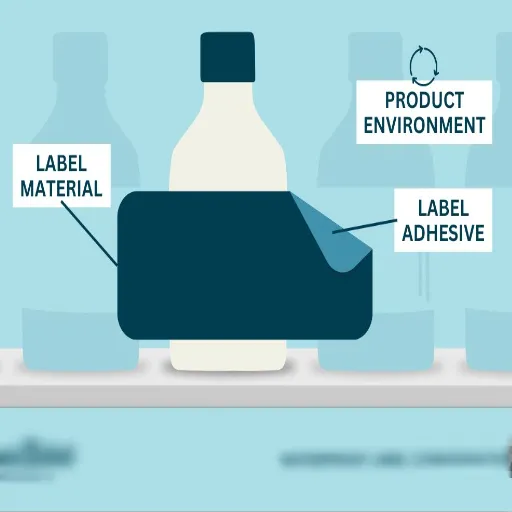
Types of Packaging for Bottled Water
Bottled water has various packaging alternatives already in place, depending on the different consumers’ tastes and the environmental implications.
Plastic Bottles
Materials: Mostly PET and HDPE
Advantages: Lightweight, durable, cost-effective, recyclable
Concerns: Plastic waste and environmental impact
Glass Bottles
Positioning: Premium, eco-friendly option
Advantages: Completely recyclable, no chemical leaching
Drawbacks: Heavier weight, higher transportation costs
Aluminum Cans and Bottles
Trend: Gaining popularity as sustainable option
Advantages: Fully recyclable, reusable indefinitely without quality loss
Appeal: Popular among eco-friendly consumers
Boxed or Carton Water
Materials: Paperboard with plant-based plastics
Advantages: Low environmental impact
Limitation: Recycling facilities not as widely available
Reusable Bottles with Refill Stations
Concept: Purified water station refills
Advantages: Eliminates single-use packaging
Target Market: Ecologically conscious individuals
📊 Market Insight
The strong appeal of sustainable and innovative packaging solutions is a consumer demand that is clearly growing with the help of insights from real-time search data. Environmentally responsible choices are being increasingly prioritized by consumers, and that is why companies are adopting recyclable materials and waste reduction strategies in their packaging.
Labeling Requirements and Best Practices
It is crucial to align with growing consumer demands in making packaging labels that are clear, accurate, and informative. The latest data from search engine trends shows that consumers are most often looking for information on recyclable packaging symbols and proper disposal methods.
✓ Essential Labeling Components
- Standardized Recycling Icons: Show clear, recognizable symbols for recycling
- Material Composition: Detail the exact materials used in packaging
- Disposal Instructions: Provide clear guidance for proper disposal or reuse
- Eco-Friendly Claims: Include certifications like “BPA-free,” “biodegradable,” or “carbon-neutral production”
- Regulatory Compliance: Meet FDA guidelines and ISO standards for sustainability
- Transparency: Use clear, easy-to-read fonts and layouts
⚠️ Important: Applying false or hard-to-read labels will cause distrust and loss of reputation for the brand. Having concise designs that meet local and global regulations will build consumer trust and give them the chance to feel the brand’s commitment to sustainability in packaging.
Innovative Packaging Solutions in Water Bottling
Innovative packaging solutions in water bottling have managed to maintain environmentally friendly approaches while ensuring the necessary functionality, thus eco-conscious consumers’ concerns have been addressed gradually. Supported by search data, recent trends show that there is a large increase in consumers who are interested in compostable, biodegradable, and reusable bottle materials.
| Innovation | Description | Benefits |
|---|---|---|
| Plant-Based Plastics (PLA) | Made from polylactic acid instead of petroleum | Similar durability with lessened environmental footprint |
| Aluminum Bottles & Cans | Infinitely recyclable metal packaging | Sustainable option for single-use and premium brands |
| Collapsible & Lightweight Packaging | Reduces material usage and space | Lower transportation emissions and storage requirements |
| Smart Packaging Technology | Integrates QR codes for tracking and information | Meets modern consumer need for transparency and sustainability |
The combination of these innovations not only ensures compliance with environmental regulations but also places the brands in the limelight as visionary leaders in the water bottling market.
Optimizing Production Efficiency
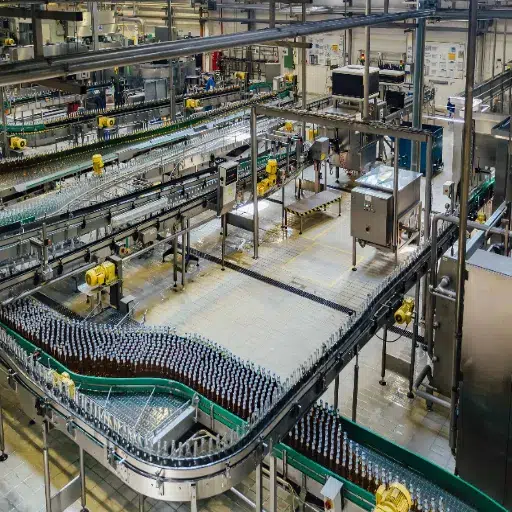
Strategies for Minimizing Downtime
To minimize downtime, it is essential to use a proactive approach, making full use of the latest technology and data analytics. The implementation of predictive maintenance systems together with AI and IoT technology will be an effective way to spot potential equipment failures even before they take place.
🎯 Proven Strategies for Downtime Reduction
- Predictive Maintenance Systems: Use AI and IoT to identify potential failures before they occur
- Real-Time Data Analysis: Monitor sensors and machinery to plan maintenance at convenient intervals
- Automated Scheduling Tools: Optimize production resource allocation for consistent output
- Digital Performance Monitoring: Track metrics to streamline supply chain operations
- Preventive Intervention: Address issues before they cause unplanned interruptions
Research trends suggest that there is a rising interest in using consolidated digital solutions to keep an eye on performance metrics, thereby streamlining the supply chain and improving overall operational efficiency. All the mentioned measures together will result in the reduction of downtime, enhancement of productivity, and ability to stay ahead of the competition.
Leveraging Technology in Modern Bottling Lines
Implementing cutting-edge technology on modern bottling lines not only makes the process faster but also conforms to the trends predicted by research through web search data. The big question, however, is: How can the technological advances be tailored such that they result in the least amount of waste, and at the same time, the highest efficiency in bottling?
Intelligent Automation Systems
Very fast processing with uniformed product quality throughout production
IoT Devices
Real-time monitoring helps catch equipment problems early before they escalate
Predictive Analytics
Accurate demand forecasting prevents overproduction and minimizes waste
By the implementation of such data-driven solutions, sustainability is not only achieved but the overall productivity is also improved, which in turn, makes technology a must-have in the coming of age of bottling industry.
Performance Metrics for Water Production Lines
When evaluating the water production line, the most crucial key performance indicators are overall equipment effectiveness (OEE), production throughput, and downtime percentage. The OEE shows the whole situation of the production line by combining availability, performance, and quality in a single metric. The top levels of throughput are signs of effective production methods, while the lower levels of downtime guarantee that the operations run uninterrupted and hence the output is at the maximum level.
📈 Industry Insight
The latest data shows that companies investing in up-to-the-minute monitoring as well as predictive maintenance are able to raise production line efficiency by as much as 20%. The combination of advanced data analytics and IoT technologies is the facilitator for manufacturers to detect bottlenecks, eliminate quality problems, and cut down operating costs, thus not only increasing performance but also making it more environmentally friendly.
Frequently Asked Questions (FAQ)
What are the types of bottling lines available for water production?
Different bottling lines are available for water production depending on the quantities and specifications. A fully automated line is an option to consider but then there are semi-automated systems and manual bottling setups. There are differences in the number of bottles produced per hour, and in the usability of different sizes of bottles (330ml, 500ml, or 1500ml). The advancement in filling machine technology has led to such integration into bottling lines that speed and accuracy are maximized. Also, the selection of bottling line could have a significant effect on both the costs and the efficiency of production. For the companies that aim at streamlining their processes, a proper knowledge of these classifications is very helpful.
How does a water filling machine work in a bottling line?
A water filling machine occupies a central position in a bottling line and it serves to fill different types of water into bottles, including still and sparkling water. Gravity or pressure is the means by which the machine precisely dispenses the liquid into each bottle according to its specified volume. Water filling machines of the present day have highly sophisticated control schemes that provide for uniform filling levels and very minimal wastage. The whole process commonly includes further operations like capping and labeling to complete the packaging. These machines are capable of accommodating different bottle sizes from 330ml to 1500ml according to the production requirements and are indispensable for maintaining high production volume coupled with quality control.
What components make up a complete water bottling line?
A water bottling line made complete by a hundred percent includes so many different components which are very important in the production process. A water bottling line typically incorporates a bottle washer, a filling machine, a capping machine, and a labeling unit. Quality control measures may also be provided by the integrated systems which would be done to ensure the bottled water consistency. The flow of the production line is deliberately made to be very fast and efficient, so that changing from one process to another can be done seamlessly. Knowledge of the components is crucial in choosing the appropriate bottling line based on your production volume and type.
How can I optimize my bottled water production line?
If I were to tell you how you could optimize your bottled water production line, I would suggest that you think of introducing the latest filling technologies, together with workflow improvements, and perhaps, installing the latest filling technologies. An integrated system for water treatment would improve the quality of the product and would be a good selling point because the water would be up to health standards. The routine maintenance of machines and the investment in quality control measures would also result in an uninterrupted flow of the operation and less downtime. Moreover, teaching your workers the latest bottling methods and whatnot would result in an increase in productivity. Lastly, taking stock of what your production needs are at present and adjusting the capacity accordingly can help one achieve the desired results.
What is the role of capping in the water bottling process?
Capping might be considered a major control point in the entire process of water bottling since it secures the bottled water quality and safety as well. By adopting a proper capping process, the bottled water product (whether it is mineral or fizzy) receives no contamination and its quality is maintained during the whole life cycle. The use of machines for capping, in the case of modern bottling lines, has become widespread as one of the methods to yield dependable results and concurrently increase the efficiency of production. The type of cap that is chosen has the ability not only to influence customer perception and, thus, to create an impression of the brand but also to determine the ease of use for customers, which is why it is important to find the right solution. To sum it up, capping that works effectively has a substantial contribution in providing consumers with bottled water of high quality.
Reference Sources
California State University – Modernization of a Pilot Water Treatment System
This project discusses the design and testing of water treatment systems, providing insights into water processing technologies.
Utah State University – Slow Rate Sand Filtration with and without Clinoptilolite
This study compares water treatment methods, focusing on water quality and filtration economics, which are relevant to processing lines.
American Chemical Society – Process Water Management
This paper explores water management strategies and treatment technologies, offering valuable context for industrial water processing.
Final Thoughts
The water bottling industry continues to evolve rapidly, driven by technological innovation, environmental consciousness, and changing consumer preferences. Success in this dynamic market requires a comprehensive understanding of every aspect of the water processing line—from raw water treatment and advanced filtration methods to precise filling operations and sustainable packaging solutions.
By implementing the strategies and best practices outlined in this guide, manufacturers can create efficient, scalable, and environmentally responsible production lines that meet the demands of modern consumers while maintaining the highest standards of quality and safety. The integration of smart technologies, predictive maintenance, and data-driven decision-making will be crucial for staying competitive in the years ahead.
Remember that optimization is an ongoing process. Regularly assess your production metrics, stay informed about emerging technologies, train your workforce on the latest methods, and remain adaptable to market changes. With the right approach and commitment to continuous improvement, your water processing line can achieve exceptional efficiency, sustainability, and profitability across all bottle sizes—from the convenient 330ml format to the family-sized 1500ml options.
The future of water bottling lies in balancing operational excellence with environmental responsibility, and this guide provides the foundation you need to succeed in both areas.
📌 Quick Reference Checklist
✓ Water Treatment
Implement multi-barrier filtration systems
✓ Equipment Selection
Choose modular, adjustable machinery
✓ Quality Control
Establish real-time monitoring systems
✓ Maintenance
Schedule predictive maintenance protocols
✓ Packaging
Select sustainable, compliant materials
✓ Technology
Integrate IoT and AI solutions

GW
Articles: 39
Trending now