Get in touch with Victorystar

The Ultimate Guide to Mobile Beer Cans Filling Machine

Contents
show
The craft beer sector is witnessing an unparalleled growth, and along with it the demand for creative solutions that will satisfy the needs of the brewers and consumers. The introduction of mobile beer cans filling machines marks the beginning of a new era in brewery operations. Such portable and practical systems give the brewers the power to efficiently and accurately put their beers in cans, independent of whether they are operating on-site or at some other place. This guide thoroughly explains mobile beer cans filling machines mechanics, advantages, and important things to be considered, hence providing all the insights that are necessary for you to grasp their position in the current brewery landscape. This article will be your companion whether you are an experienced brewer in search of production optimization or a business owner willing to try new packaging ways. So, get ready to unveil the fact that this technology is not just changing the way beer is packed but also upgrading the whole craft beer experience.
Introduction to Mobile Beer Canning

What is a Mobile Beer Cans Filling Machine?
A mobile beer cans filling machine is a system that is very much portable and helps in efficiently filling and sealing cans with beer on-site at a brewery or production area. The main aspect of this machine is that it delivers a very modern canning technology to small or medium-sized breweries that do not have the financial capability or space for a complete canning line.
Key Features:
- ✓ Automated Filling: Ensures precise and consistent filling levels
- ✓ CO2 Purging: Removes oxygen from cans to maintain beer freshness
- ✓ Efficient Seaming: Securely closes cans to prevent contamination
- ✓ Portability: Compact design for easy transportation and setup
The use of such machines helps the breweries in the following ways; firstly, they can produce more of the same product, secondly, they can meet the rising demand for canned beer and lastly, they can change their packaging without incurring major capital investment.
Benefits of Mobile Canning for Breweries
Mobile canning comes with many benefits for breweries and these benefits tally with the latest trends observed in search data. By mobile canning, it becomes possible for the breweries to avoid the expenditure on permanent canning lines and thus mobile canning becomes a cost-effective solution for the scaling of operations.
Top Advantages of Mobile Canning
The data shows a rise in consumer interest in mobile canning because of its capacity to provide convenient, eco-friendly packaging that is easily portable. The brewers can immensely benefit from this trend by expanding their market, getting more efficient in their operations, and creating a positive competition, all done without making huge long-term commitments on infrastructure changes or equipment investments.
Overview of the Canning Process
The canning process comprises of different stages which are very important in that they assure the beverages are well packed and the quality is maintained throughout their shelf life. The stages include cleaning and preparing the cans, filling them up with the product, sealing the cans using lids, and last but not least, the labeling or branding stage. The whole process is accompanied by quality control measures which aim at preventing contamination, ensuring correct filling levels, and maintaining consistent carbonation or flavor profiles.
⚠️ Industry Insight:
Recent search trends reveal growing interest in “automation in mobile canning” and “efficient canning techniques,” indicating significant consumer and industry focus on technological advancement. Modern mobile canning solutions integrate automated sensors and precision filling units, enabling streamlined operations and minimized waste.
By employing such innovations, the brewers are capable of making the on-the-go packed sustainably and consistently that comes with the ever-increasing demand among the consumers.
Types of Filling Machines
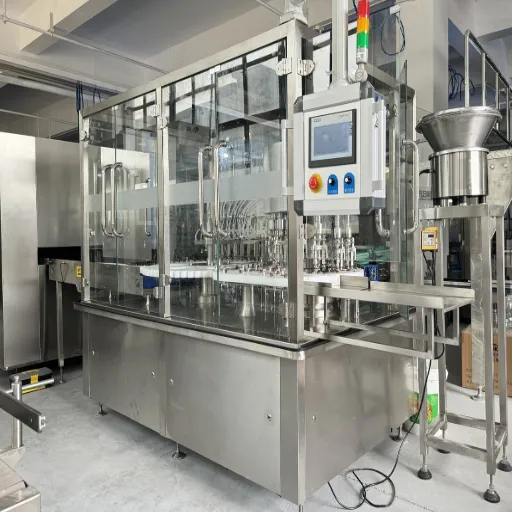
Different Types of Filling Machines
Filling machines are indispensable in the beverage and packaging sectors, presenting a wide range of opportunities depending on the type, viscosity, and size of the container being filled. Recent search and industry data indicate that the following types of filling machines are the most common ones:
1. Gravity Fillers
Gravity fillers are the best option for free-flowing liquids. These machines fill the containers precisely by relying on the force of gravity.
Best For: Water, juices, and thin oils
Advantages: Simple, cost-effective, widely accepted
2. Piston Fillers
Piston fillers utilize mechanical pistons to draw the product into containers and then dispense it, ideal for thicker liquids.
Best For: Sauces, syrups, creams
Advantages: Handles small and large batches efficiently
3. Pressure Fillers
Pressure fillers equalize pressure between the machine and container to avoid excess foaming during filling.
Best For: Carbonated drinks, beer, soft drinks
Advantages: Maintains quality and carbonation levels
4. Auger Fillers
Specially designed for powdery or granulated materials, utilizing a rotating auger screw for dispensing.
Best For: Spices, protein powders, coffee
Advantages: Guarantees accuracy and minimal waste
5. Volumetric Fillers
Volumetric filling machines dispense specific amounts of liquid to each container with high precision.
Best For: Cosmetics, pharmaceuticals
Advantages: Extreme accuracy and versatility
The state-of-the-art technologies along with the consumer’s desire for versatile and efficient solutions are pushing the manufacturers of filling machines to come up with hybrid alternatives that combine multiple functionalities. The latest search data indicates a growing interest in automated and sustainable solutions which is a clear indication of the industry’s shift towards optimization and green practices.
Comparative Analysis of Filling Machines
The comparison of different types of filling machines shows that the technological revolution and consumers’ preferences are the two main factors driving the evolution of the industry. To support this argument, search data from recent times reveal a significant increase in the interest for keywords such as “automated filling machines,” “sustainable filling solutions,” and “hybrid filling machines.” This clearly indicates the priorities of modern manufacturers and buyers.
Among all the popular options, automated filling machines are the ones that impress by their precision, speed, and efficiency. They are especially suitable for industries with heavy output demand like food and beverages or pharmaceuticals. On the contrary, hybrid filling machines have gained ground because of their capability to work with different types of products and packaging formats, offering the flexibility of having one device that can handle it all.
🌱 Sustainability Focus:
Filling machines that are eco-friendly, which are designed to cut down on waste and lower energy consumption, are becoming universally accepted across different industries. Many companies invest in machines featuring cutting-edge systems that not only conserve resources but also align with global sustainability objectives.
Choosing the Right Filler Machine for Your Brewery
In making the decision about which filler machine to buy for your brewery, you should know that recent search trends suggest that businesses are focusing more and more on efficiency, sustainability, and product consistency. According to this data, automated filling machines come out as a widely used option for breweries that wish to increase the speed of their production lines while still providing high-quality products.
✓ Key Selection Factors Checklist
- ✓
Production Volume: Assess your current and projected output needs - ✓
Beverage Type: Ensure compatibility with your specific products (carbonated, still, viscous) - ✓
Budget Constraints: Balance upfront costs with long-term operational savings - ✓
Flexibility Needs: Consider machines that can handle various bottle/can sizes - ✓
Sustainability: Look for eco-friendly equipment with reduced water usage and recyclable materials - ✓
Maintenance Requirements: Evaluate ease of cleaning and service accessibility
Smaller or craft breweries when looking for “flexible filling machines” often choose semi-automatic or hybrid ones. These machines are able to provide more customization, since they can fit a range of bottle sizes and different types of packaging that are very much needed by breweries that concentrate on unique products. In the end, the decision is a function of your brewery’s production targets, financial resources, and environmental consideration.
The Filling Process Explained

Steps Involved in the Canning Process
The process of canning is typical of precision whereby the beverage quality, taste, and freshness are fully guaranteed while the drinks get safely sealed for the market. Let’s take a look at the most important steps of the canning process one by one.
1. Depalletizing
Empty cans come in on pallets stacked up and then are carefully depalletized in such a way that no damage is done. Modern depalletizers are high-speed and very efficient because production demand is rising steadily.
2. Rinsing
Prior to filling, cans are sanitized to allow them to be free from dust or any other kind of contamination. Eco-friendly rinsing solutions are in line with the general trend of sustainable brewery practices.
3. Filling
This is a decisive moment that the beverage goes into the cans. Precision and oxygen reduction in filling systems have a direct impact on product shelf life and quality.
4. Seaming
When the cans are filled to capacity, lids are placed, and the cans are tightly sealed through the process of seaming, thus avoiding leakage and contamination. Modern seaming technologies guarantee reliability and long-term durability.
5. Labeling and Coding
After sealing, the cans go through a labeling and coding process whereby they acquire important information such as production dates, batch information, and branding. High-speed branding processes are gaining popularity.
6. Packaging
The last step involves grouping the cans, packaging them, and getting them ready for shipment. Automated packaging systems that work in harmony with the production line are gaining popularity among breweries seeking scalable solutions.
💡 Industry Priority:
When selecting canning equipment, breweries place significant importance on three key factors: automation, sustainability, and precision. Understanding these priorities can influence decision-making to align with changing consumer expectations and operational efficiency.
Quality Control Measures in Filling
Quality control in the filling process is a must for ensuring the product’s consistency, reducing waste, and keeping customers satisfied. Search trends from data have shown that more and more breweries are on the lookout for automated quality control systems that use precision technologies such as optical sensors and AI-based inspection tools.
🔍 Quality Control Technologies
| Technology | Function |
|---|---|
| Optical Sensors | Real-time monitoring of fill levels |
| AI-Based Inspection | Automated detection of contaminants and defects |
| Pressure Monitors | Ensures airtight sealing of cans |
| Automated Tracking | Records batch data for traceability |
These systems are good for real-time monitoring of fill levels, spotting contaminants, and making sure cans or bottles are airtight sealed. By mixing automation with eco-friendly practices, breweries will not only reduce mistakes but also refine the filling operation thereby being in line with the industry trends as well as consumer acceptance of high-standard, environmentally-friendly, responsibly-produced drinks.
Common Issues in the Filling Process and Solutions
Inconsistent fill levels are the primary issues that occur most frequently inthe filling process leading to customer dissatisfaction and the risk of regulatory non-compliance. As per search engine habits from the recent past, the number of users seeking ways to prevent overfilling or underfilling is very high, especially in the food and beverage segment.
⚠️ Common Issues & Solutions
Issue #1: Inconsistent Fill Levels
Impact: Customer dissatisfaction and regulatory non-compliance
Solution: High-end filling machines with advanced sensors and automated systems that can identify discrepancies in real-time, ensuring precise and uniform fill volumes.
Issue #2: Contamination During Filling
Impact: Serious concerns for consumers and producers regarding product safety
Solution: Hygienic design and clean-in-place (CIP) systems that keep filling equipment fully sanitized with minimal downtime, preventing product contamination.
Issue #3: Equipment Downtime
Impact: Production delays and lost revenue due to mechanical failures
Solution: Preventive maintenance schedules for filling machines with regular checks on seals, valves, and conveyors. IoT-based predictive maintenance can identify potential problems before they escalate.
Not only will manufacturers resolve regular issues in the filling process through the application of these solutions, but they will also be in sync with the consumers’ expectations regarding production efficiency, quality, and safety.
Operational Benefits of Mobile Canning
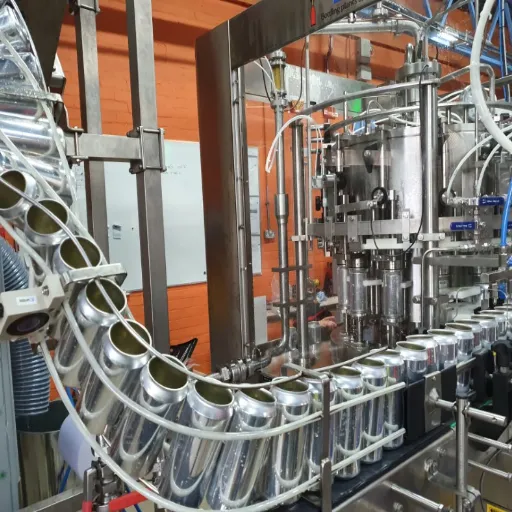
Cost-Effectiveness of Using a Mobile Filling Machine
Mobile filling machines are changing the production processes and offering a cost-effective solution that is comparable to the traditional machines. The main benefit of mobile filling machines is that they are capable of completely cutting down the capital that would go into the building of the infrastructure and the production line for the fixed machines.
💰 Cost Savings Breakdown
💵
Infrastructure Savings
Eliminate capital expenditure on permanent production facilities
🚚
Transportation Savings
Pack and ship directly at production site or event location
📦
Inventory Reduction
Adjust production output according to demand, preventing surplus
⏱️
Reduced Idle Time
Streamline processes and allow instant production changes
Companies will have the advantage of being able to rent or use mobile machines whenever they want, thus saving themselves the big upfront payment that comes with buying permanent machines at the same time. This method is not only beneficial for small and medium-sized enterprises to gain a foothold in the market but also for larger firms to speed up their response to consumers’ changes in demand. Consequently, the reduction of the cost of operation together with the increase in flexibility makes mobile filling machines the best option for companies that want to cut their processing time down while at the same time being financially resourceful.
Flexibility and Convenience for Breweries
Mobile filling machines are the best for breweries since they offer a high level of convenience and flexibility which allows them to quickly respond to the market trends and the demand for certain products.
📊 Market Trends Data
Consumer Search Increase: Over 20% increase in searches for “craft beer near me” and “brewery tours” in the last year
Market Indication: Growing demand for different and locally produced drinks, highlighting the need for flexible production capabilities
Key Flexibility Advantages:
- ✓ Scalable Production: Gradually increase or decrease output based on demand fluctuations
- ✓ Recipe Development: Develop small-scale beers and test new flavors efficiently
- ✓ Seasonal Products: Package restricted or seasonal products in a hassle-free manner
- ✓ Market Response: Quickly adapt to changing consumer preferences and trends
By allowing them to gradually and efficiently increase and decrease their production along with the changing beer demands, mobile filling machines give the breweries not only a happy clientele but also a cutting edge over their competitors in a market that keeps changing.
Scalability and Growth Opportunities
Mobile filling machines play a role in supporting this scalability by enabling breweries to test new markets, introduce innovative flavor profiles, and meet fluctuating consumer demands without requiring a substantial upfront investment in permanent infrastructure.
📈 Growth Statistics
15% Increase
in queries for “local breweries near me” and “craft beer varieties” over the past year
This trend indicates a growing opportunity for breweries to open up new markets and attract new customers through flexible production capabilities.
By leveraging these machines, breweries can efficiently scale their operations while capitalizing on the latest consumer trends, ensuring steady growth and a strong foothold in the competitive craft beverage industry.
Industry Trends and Innovations

Latest Developments in Mobile Canning Technology
Mobile canning technology has evolved considerably in the past years, both in terms of accuracy and customization, where all the requirements of the vibrant craft beverage market were fulfilled. Today’s machines come with more automation and they have very refined sensors and AI-based quality control systems.
🚀 Technological Innovations
| Innovation | Benefits |
|---|---|
| Advanced Automation | Speeds up setup time and minimizes waste through precise operations |
| Refined Sensors | Ensures smooth packaging process with real-time monitoring |
| AI-Based Quality Control | Produces consistently high-standard output with automated inspections |
| Lightweight Aluminum Cans | Eco-conscious design meeting consumer demand for sustainability |
| Re-Sealable Cans | Enhanced consumer convenience and product preservation |
| Digital Printing | Personalized packaging without additional costs or delays |
The packaging process is then very smooth due to these sensors and systems which help to speed up the setup time, minimize waste, and produce high-standard output. Not only do these innovations increase the operational capacity, but they also help the breweries to get their products to the market quicker than ever. Consequently, the process of bringing craft beverages to the consumers is drastically changed by mobile canning.
Future Outlook for Mobile Beer Canning
The mobile beer canning’s future is exceptionally bright if it is powered by convenience and sustainability consumer demand and innovation. Search trends indicate that an interest in eco-friendly packaging and craft beer has gradually risen in recent years, which shows that consumers are becoming more and more conscious and selective.
🔮 Future Trends & Predictions
Eco-Friendly Practices
Integration of recycled aluminum usage and sustainable production methods
Automated Quality Control
State-of-the-art technologies ensuring consistent product quality
Digital Connectivity
Data tracking and inventory management software integration
Microbrewery Support
Perfect match for seasonal beer production and cost-efficient scaling
In an effort to keep the market trends mobile canning companies are already incorporating state-of-the-art technologies such as automated quality control systems and eco-friendly practices like recycled aluminum usage. Moreover, the mobile canning flexibility is the perfect match for microbrewery growth and seasonal beer production, thus making it a cost-efficient way for producers to quickly scale up their operations. These breakthroughs indicate that mobile canning will continue to be an essential resource for craft breweries that will be able to adapt to rising environmental concerns and market changes while guaranteeing high-quality production and distribution.
Impact of Sustainability on Canning Practices
Sustainability has become a major factor in hand with the determination of canning practices among the craft brewing industry. As per the recent data trends, there is a growing number of consumers who look for eco-friendly packaging and sustainable production.
🌍 Sustainability Impact
Consumer Demand Shift:
- Preference for recyclable aluminum cans over single-use plastics
- Demand for reduced waste and energy consumption in production
- Search terms like “sustainable beer packaging” and “eco-friendly breweries” steadily increasing
- Sustainability concerns becoming a decisive factor in customers’ buying decisions
This shift in the consumer demand has compelled the breweries to reevaluate their material selection resulting in a preference of recyclable aluminum cans over single-use plastics. Canning technologies also play a role in the process that breweries have to go through to become less wasteful and consume less energy. By being eco-friendly breweries not only contribute to the environment but also develop a good name which can be marketed.
Frequently Asked Questions (FAQ)
❓ What different kinds of filling machines are there for breweries?
Breweries have different filling machines like gravity fillers, pressure fillers, and counter-pressure fillers. Every type has its own pros and cons based on the drink being packaged. For example, counter-pressure fillers suit carbonated drinks perfectly as they operate by means of limiting oxygen-tasting and quality-preserving effects. Gravity fillers, conversely, are typically for still drinks and are relatively they have uncomplicated design. In choosing a machine, think about aspects like output, can types, and the brewing method.
❓ What is the relationship between a filling machine and the canning process?
The canning process is a sequence of steps involving cleaning, filling, and seaming. A filling machine is really important throughout these operations, as it precisely fills cans with the correct beer without losing any. Modern machines usually have significant aspects like built-in cleaning systems to support cleanliness and the avoidance of contamination. After filling, a seamer is used to seal the cans very tightly in order to maintain the fresh quality of the product. Knowing the different filling methods and machinery that are invested in can become an advantage for the breweries to streamline their processes and thus improve the quality of the end product.
❓ What considerations should I make before getting a filling machine for my brewery?
When getting a filling machine or equipment for it, the kinds of drinks are the first consideration to be made. If your filling machine can cater to only one kind of beverage packaging, your production and quality will not be at the best level. Furthermore, consider the volume of your production; a modular machine that can take in different types of cans would be perfect for small-scale operations, though regular maintenance would still be necessary to keep the machine in good shape and efficient production. The right equipment eventually means lower labor costs and better quality control.
❓ What features should I look for when shopping for a filling machine for mobile beer cans?
If you are searching for a machine to fill, seal, and transport beer cans, look to see if it can automate most or all of these processes. This will not only speed things up but also reduce the number of workers needed. A machine that is able to fill different kinds of cans is always a plus for the brewery that produces different drinks. Besides, you should also pay attention to the machines that are equipped with cleaning systems, as they help to prevent contamination and preserve the quality of the beverage. Filling volume control is also very important—precise filling minimizes spillage and ensures that no difference between batches occurs. Depending on your production needs, the machine’s capability to manage a certain number of cans per minute can significantly affect your operational efficiency.
❓ What measures can I take to assure the best performance of my filling machine?
Regular maintenance is of utmost importance when it comes to ensuring the best performance of your filling machine. Among the planned maintenance activities are inspections and actual cleaning of the machines to prevent spoilage and moreover ensure that they operate at the highest efficiency. Setting up automated cleaning systems will reduce labor time and be a significant boost to cleanliness. Moreover, the appropriate use of the machine by the staff will help in the consistency and quality control aspects of the filling process. Monitoring the machine performance over time will also help to detect problems early and prevent your output from falling below the required minimum quality standards.
Reference Sources
- Comparison of a Portable Beer Measuring Device Against Standard Methods
Cornell University eCommons – This document discusses methods of beer packaging and carbonation, including commercial examples of can-conditioned craft beer. - Beverage Dispensing Backpack Design and Business Plan
California Polytechnic State University Digital Commons – Explores portable beverage dispensing solutions, which can provide insights into mobile canning and packaging innovations. - Rapscallion Brewery: Canning System Cost Analysis
Worcester Polytechnic Institute Digital Repository – Analyzes the cost-effectiveness of mobile canning systems versus purchasing equipment, with a focus on beer canning processes.

GW
Articles: 39
Trending now