Get in touch with Victorystar

The Ultimate Guide to PET Bottle Filling Machine Benefits for Beverage Manufacturers

Contents
show
Efficient production processes lie at the very heart of any beverage manufacturing establishment, and high on the list of factors contributing to efficiency is the PET bottle filling machine. Operating the beverage packaging systems ensures that the operations themselves are streamlined with precision at every step of the processing, resulting in a complete change in the way in which beverages reach customers. So what exactly makes these machines so valuable to manufacturers? This exhaustive article sheds light on ways in which these machines present opportunities to improve productivity, maintain product quality, reduce cost, and promote sustainability. Whether you are looking to optimize your operations yourself or are just curious about cutting-edge packaging solutions, the information in this article will allow you to see why these filling machines for PET bottles have become a must in modern beverage production.
Introduction to PET Bottle Filling Machines
What is a PET Bottle Filling Machine?
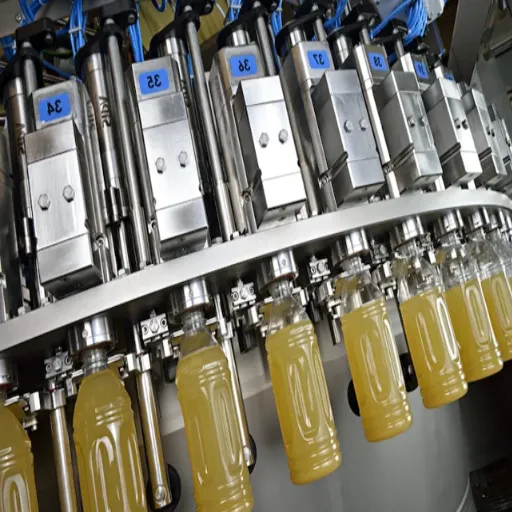
A PET bottle filling machine is a specialized filling machine meant to quickly fill beverages or liquids into PET (polyethylene terephthalate) bottles. These machinery find use occasions, such as in beverage manufacturing, pharmaceuticals, and personal care, because of their ability to handle large operations with precise and hygienic consideration. A modern-day PET bottle filling machine might include designs optimized for productivity by way of an automatic monitoring system, a precision filling mechanism, and energy efficiency considerations. They are equipped to handle carbonated drinks, juices, water, and other viscous substances, filling bottles in volumetrically consistent terms with respect to filling levels, thus minimizing product waste. The machines are also designed for robust performance at high operational speeds, making them indispensable to meet the demanding needs of contemporary manufacturing environments.
Importance of PET in Beverage Manufacturing
Due to PET’s advantages, it has become a need of industry in beverage manufacturing. As PET containers are light in weight and sturdy in nature, they provide a safe and cost-effective method to store and keep beverages from reaching consumers. The product is protected via good barrier properties so that soft drinks and juices retain their freshness and flavor and carbonation. From an environmental perspective, PET is considered a “green” material because it can be recycled 100%, giving the manufacturer an opportunity to contribute towards sustainability efforts by way of reducing waste, promoting reuse, and carrying out recycling programs. Being transparent and versatile, PET packaging can be highlighted by innovative designs, thus supporting beverage companies in brand promotion. A good combination of practicality, sustainability, and adaptiveness have given PET a prominent role in today’s beverage industry.
Overview of Filling Technology
The filling technology has improved a big deal contributing to the efficiency, accuracy, and sustainability of beverage production. The latest generation of filling plants is equipped with automation and smart technology to the degree where these machines will always maintain the product’s quality with some variability. To cite one, currently in volumetric and gravimetric filling systems, real-time monitoring can be attained through sensors that allow measurements to be carried out very accurately, thereby reducing wastage and making optimum use of resources.
Likewise, hygienic design developments have contributed to the increased safety standards in their industrial properties. Cleaned machines with Clean In Place (CIP) have facilitated in-stop cleaning processes, thus avoiding long downtime soaring against rigorous health regulations. Also, with energy savings in mind, systems have been developed that interestingly minimize energy and water consumption during packaging, hence contributing to the overall world sustainability battle.
New filling techniques, ranging from aseptic filling to carbonation filling lines, are offered for beverages in ever-increasing options. Such technologies may maintain the delicacy of beverages, such as dairy or juices, or guarantee the highest carbonation levels for sodas. Along with the designs that are compact and save on space, and modular in systems, state-of-the-art filling technology will indeed re-model beverage production to acquire flexibility and scalability.
Types of PET Bottle Filling Machines

Gravity Filling Machines
In beverage preparation, gravity filling machines are extensively employed for their simplicity, productivity, and being suitable for many types of liquid products. These machines function by using the force of gravity to fill bottles with liquids of low or medium viscosity, for example, water, juice, and wine. This type of filling process is meant to ensure accurate volumetric filling and thereby reduce wastage accompanied by spills.
Modern gravity filling systems consist of features such as automated control of fill levels and hygienic design for food safety standards. They allow for scalability and hence suit operations ranging from small-scale producers to massive bottling plants. Today, many systems also favour quick changeover for different bottle sizes or types of products, an advantage that is critical in a fast-paced production environment. These features make gravity filling machines extremely reliable while adaptable to varying needs; hence, manufacturers use them to increase productivity without compromising on quality.
Volumetric Filling Machines
Volumetric filling machines are designed for high accuracy when dispensing exact quantities of liquid into containers. These machines provide high precision measurement and dispensing of products and are thus best suited in applications where repetitive measurements and portion control are critical. Volumetric fillers are widely used in industries such as food and beverage, pharmaceuticals, and cosmetics and can fill both low and high viscosity liquids varying from water to creams or pastes. Very often, contemporary volumetric fillers give programmable controls and make automatic filling adjustments to allow producers a higher production rate without sacrificing accuracy. And because of their adaptability in different container sizes and filling needs, they now stand out as one of the most flexible options in the ever-competitive manufacturing arena.
Types of Bottle Filling Methods
Bottle filling methods vary based on the product type, viscosity, and production requirements, ensuring optimal efficiency and precision. Below are some of the most commonly used methods:
1. Volumetric Filling
The liquid is filled volumetrically into the containers, which means that an exact volume of liquid is dispensed into each container, regardless of minor variations in container shape or size. This method finds applications in industries like beverages, medicines, and cosmetics, where the equal amount of product needs to be put into each container. This improves the trust of the customer in the product as well as regulatory compliance. With automation developments, focus on higher speed and accuracy has turned volumetric filler into a preferred choice in high-output operations.
2. Gravity Filling
Gravity filling is a gravity-force action to pour the finish into the containers and, thus, is suitable for products of very low viscosity, such as juices, water, and wines. The working principle cuts down on any mechanical element, thus making maintenance cost much lower. Modern gravity fillers also come with variable flow rates and advanced sensors to ensure minimal product spillage and maximum line efficiency.
3. Pump Filling
Pump filling forms a dance comprised of highly variable viscosities-some from thin liquids to extremely viscous materials like gels or sauces. The pumps being used could have accuracy in any container size, product viscosities, among maybe gear-type, diaphragm-type, and peristaltic-type pumps. It’s an adaptable choice in the industries since there is a perfect compromise between speed and precision.
4. Overflow Filling
Overflow filling achieves the uniform fill height for containers, presenting the product with a pleasing or consistent display—these requirements are usually substantial for the beverage and personal care product industries. This method was most beneficial for the transparent containers so that each unit in sight on the shelf looks identical. Last, it was for those foaming liquids since overflow mechanisms can handle and maintain the required fill volume from that consideration.
5. Piston Filling
High in viscosity, this filling type is configured for some products like peanut butter, creams, or pastes. Operating on a piston-cylinder mechanism for exact product drawing and discharge, piston filling offers sturdy accuracy for consistently filling the hardest materials in foods and cosmetics.
6. Vacuum Filling
Vacuum filling applies a suction mechanism to draw products into containers, offering precision for delicate and low-thickness liquids such as essential oils or alcohol-based solutions. By creating a controlled vacuum, the system minimizes waste and ensures uniformity.
The appropriate filling method must be selected after weighing factors such as the product characteristics, container design, speed of production, and regulatory compliances. Modern filling methods integrate programmable settings, multi-nozzle systems, and quality control sensors so that the manufacturer can perfectly balance efficiency, accuracy, and cost.
Choosing the Right Bottle Filling Machine

Guide to Choosing the Right Filling Machine
In picking the most proper filling machine bottle, the choices have to be made considering operational costs and efficiency objectives. So first, evaluate the product characteristics; liquids with various degrees of viscosity-from-water-like to viscous syrups-might warrant the use of different filling technologies. For example, volumetric fillers are best for viscous products that demand accuracy, whereas gravity fillers suit lighter liquids.
Next, production capacity, and speed are considered. In high-speed environments, usually, multi-nozzle fillers are ideal to maximize throughput, minimize downtime, and meet large production targets. The container being used, whether it is bottles jars, or perhaps pouches, also affects the selection or choice of the machine. If possible, choose machines that will work with different container shapes and sizes so as to remain versatile across product lines.
Modern advancements in filling equipment have proven beneficial in precision, maintenance, and compliance. Machines built with programmable functions or sensors that perform quality control functions can reduce waste by stopping and correcting errors immediately. Compliance with industry regulations, such as food safety regulations or pharmaceutical standards, is also a must. Relevant certifications offered by the equipment ease the burden of compliance while adding to their credibility.
Lastly, remember the difference that scalability and ease of integration with current production lines make. Make sure the machine you pick will work with all the planned expansions in the future and any other existing systems, allowing for easy upgrading without major downtime. These are the very factors manufacturers should put into their prudent judgment to optimize cost and product quality.
Factors to Consider for Beverage Production
Production of beverages continues to rapidly evolve owing to technology and innovation being sought out by consumers. AI- and IoT-based machinery built with adequately robust techniques can perform real-time online monitoring of production. This ensures accuracy in production, wastes less, and improves efficiency. Hence, using data analytics tools manufacturers can optimize processes by identifying bottlenecks and predicting maintenance operations, thus reducing downtime.
Another growing trend is the shift toward sustainable production practices. Eco-friendly technologies like energy-efficient equipment and water reuse systems are gaining traction, helping manufacturers meet strict environmental regulations while appealing to eco-conscious consumers. This approach not only cuts operational costs but also strengthens brand reputation.
Production flexibility is the last condition one needs to make sure of. Consumer preferences keep changing, such as increased demand for functional and plant-based beverages. So for industries, adaptable systems that accommodate a variety of product lines in a split-second become very important. Investing in such technology allows manufacturers to compete; satisfy the market trend and effectively respond to the potential customer needs that are changing.
Energy-Efficient PET Bottle Filling Solutions
Energy-efficiency considerations have been rising in importance in the PET bottle filling industry due to alternative cost-cutting and environment-friendly measures being adopted. Modern closing-down filling units have been designed to seemingly enhance the aim for energy efficiency by implementing state-of-the-art designs such as servo-driven technology, conveyor systems designed for energy saving, and intelligent software for controls. The filling process through these innovative systems enjoys a very accurate filling control to minimize filling losses and ensure high throughput and product integrity.
Heat recovery systems were proposed to be installed for the purpose of capturing and reusing energy from various stages throughout the production processes such as the compressor and blower operations. These systems helped in reducing energy consumption overall as well as emissions, which was in line with sustainability goals. Lightweighting in PET bottle design also schools into energy efficiency in that it reduces the energy and material requirements during production and transportation.
Investing in state-of-the-art energy-efficient solutions allows manufacturers to achieve long-term cost savings, comply with stricter environmental regulations, and position themselves as leaders in sustainable manufacturing. With these systems, businesses can seamlessly address growing consumer demand for eco-friendly products and practices.
The Role of Blow Molding Machines in PET Bottle Production

Understanding Blow Molding Machines
Blow molding machines provide the essential method of creating PET bottles, through which efficient and scalable packaging that is durable and has a lightweight quality is offered to various industries. The blow molding process consists of heating and inflating the preforms (small test-tube-shaped pieces of PET) inside the mold to the shape of the bottle. Modern blow molding technologies have seen considerable evolution in the form of automation features for energy efficiency and precision control of dispensing materials in order to reduce waste and increase production rate.
Another chief innovation in blow molding lies in multi-cavity molds, which can create many bottles simultaneously, further increasing efficiency. In conjunction with extruding the plastic, whatever is being formed is checked by real-time monitoring for defect detection during production to maintain quality consistency. These improvements favor increased output production while environmentally sound manufacturing practices foster energy use among others and are also paramount to any consideration of material saving. Such advancements enable producers to cater for the soaring demand for sustainable packaging and cost-effectiveness in numerous domains such as beverage, healthcare, and personal care.
Integration with Filling Technology
The packaging industry saw monumental advances with the seamless integration of state-of-the-art inspection machinery into filling technology. When fine control is introduced into a high-speed filling system, manufacturers reach heights in product precision and quality felt for the first time. This merge between technologies yields moderate product wastage, gives maximum throughput efficiency, and diminished contamination risk by assuring right fill levels and identifying inconsistencies in real-time. Automated calibration and touchscreen interface are among other technological advances that allow these systems to best serve their operators and confer great utility in industries, food, beverage, pharmaceutical, and cosmetic included. This type of technology really points out the importance of having a good quality assurance program in synchronization with manufacturing to meet strict industrial standards economically.
Benefits of Using Molding Machines in Production
Molding machines are essential in the production optimization process across industries. Their high speed in producing complicated yet precise parts ensures consistency in quality and reliability of mass manufacturing. Through their superior repeatability, a molding machine cuts down on material wastage and optimizes resource utilization-efficiently! This was immensely important in keeping the operational costs low. With the advent of smart molding technologies, manufacturers can now erect automated monitoring and real-time feedback mechanisms. These advancements allow them to promptly identify and solve potential problems, thereby reducing downtime and increasing production. Carrying out operations in the automotive, packaging, or electronics industry through molding machines empowers scalability for great design work and earns products that create according to higher standards. Thus, these machines become a tool for companies offering that dark balance between innovation and efficiency.
Filling Techniques and Their Impact on Production

Overview of Liquid Filling Techniques
While making observations on liquid filling methods, I realized that changes in this field have in turn changed industrial packaging systems for liquids. One such gravity-filling method uses the force of gravity to fill the containers. It is better suited for thin free-flowing liquids without any particulates such as water, juices, or oils. It is efficient, inexpensive, and great for large runs where fill level uniformity takes priority.
Pressure filling has been embraced as another instance of popular technology for the food sector; this method works best for thicker liquids or products represented by a higher viscosity: sauces, syrups, or cream-type products. Pressure-filling nozzles provide adequate speed and sufficient guarantee of accurate filling, even in difficult product consistencies. A close related modification, vacuum filling, deals with perfumes or volatile liquids since it carefully fills containers without air bubbles from forming, thereby providing great improvements in ultimate product quality.
Modern volumetric and servo filling technologies have also caught attention. These methods apply advanced sensors and controls to diagnose and dispense accurate quantities of liquid, ensuring each batch receives the same quantity. On the other hand, such equipment can allow filling of a huge variety of container sizes and types, from small glass bottles to flexible pouches. By giving emphasis to accuracy and throughput, these systems reduce wastes and relatively increase production speed, which is vital for the company in order to stay relevant in today’s fast-moving markets.
Advantages of Different Filling Techniques
In my experience and understanding, one of the great benefits of modern filling techniques is that they can secure precision and adaptability at the same time. By using the latest technologies, such as automated fillers that are fitted with sensors and volumetric controls, the companies can attain the most accurate and controlled filling processes that still bear very low production loss. Therefore, the magnified precision results in better consistency which the companies can use as their main line of product quality control besides a base for customer trust building. Moreover, the broad-spectrum handling capability of the machines also comes as a big advantage because by using a single system or a set of similar ones the companies will be handling anything from a light, fluffy liquid to a denser one which will not budge or to a highly viscous liquid but in no event will there be any reduction in the accuracy of dispense or speed.
Another dominant benefit is the flexibility that contemporary filling systems provide to accommodate different packaging types. Be it glass bottles, aluminum cans, squeezable tubes, or biodegradable pouches, they are engineered to swiftly convert from one container style or size to another. This flexibility not only leads to faster productions but also assists a company to be creative in package design representation, in accordance with consumer trends and preferences.
Ultimately, in the speed-driven industries of today, efficiency has matched computation. Automation reduced labor costs and cycle times, and businesses can confidently make high-density production demand with minimal downtime. Combined with sanitization and hygienic setups-e.g., in food, beverage, and pharmaceutical industries-these filler methods meet safety regulations and corresponding productivity levels. Having all these advantages, businesses can improve their operations and just look to reduce costs and capital to stay ahead in an even more competitive market.
Optimizing Production Volume with Correct Techniques
From my perspective, deciding on the practical volume of production depends on a strategic utilization of the latest technology combined with efficient workflow designs and continuous monitoring. Upgrading to automated filling machines is deemed the best means of scaling operations. These machines speed up the production pace while maintaining precision, reducing wastage, and maximizing output. Further integration of these technologies with smart IoT devices and sensor technologies provides real-time production tracking for swift action in fluctuating demand cycles while assuring quality and efficiency.
Another important matter concerns training and collaboration within its workforce. Its teams must be provided with the knowledge to properly operate the machinery, and coordination must ensure smooth relations across departments. Lean manufacturing operations, by their focus on waste elimination and value addition, could also play a role here. For instance, pursuing Six Sigma approaches finds bottlenecks within a process and allows for their elimination so that flow and improvements can resume steadily.
Finally, an ultra-rigid maintenance schedule for equipment must be in place. Tools operating at optimum efficiency drastically reduce breakdown time, ensuring unhampered production runs. Predictive maintenance, on the other hand, can be somewhat capital intensive; it uses AI and machine learning to predict equipment breakdowns, and hence, prevent losses from delays. When all these factors align, they set up a disciplined environment capable of production at very high volumes to meet high market demands efficiently.
Reference Sources
What are the benefits of using a PET filling machine – Discusses key advantages like increased efficiency, reduced labor costs, and improved accuracy.
What Are The 5 Benefits of Automatic Water Bottle Filling – Highlights the speed, consistency, and reliability of automatic filling systems.
PET Filler Machines: Features, Benefits, and How They Improve Production – Explores how PET filler machines enhance production efficiency and reduce human error.
PET machine for edible oil bottle packaging and more – Focuses on the versatility of PET filling machines for various products, including beverages.
Bottle Filling & Packing Machine Manufacturer – King Machine – Provides insights into advanced liquid filling machines and their applications in the bottling industry.
Frequently Asked Questions (FAQs)
What are the types of bottle filling machines available for pet bottles?
There are several types of filling machines for PET bottles. They are gravity filling, volumetric filling, and pressure filling. Each type works for the different purposes based on the viscosity of the liquid to be filled and the production volume required. Gravity filling works well with thin liquids, while volumetric filling is suitable for more exact measurements. The filling processes need to be addressed when picking a filling machine for your production requirements.
How to choose the right machinery for filling pet bottles?
Just to list the few factors that need to be considered for the selection of the right machinery for filling pet bottles: for one, see the filling speed required for the production line. Depending on the size of bottles, different packing machines may be used; hence be sure that the filling machine you choose can handle whichever specific bottle shape and size you intend to work with. Another important factor is the type of liquid being filled; where thicker liquids are concerned, more advanced filling machines may be required. Also, ensure that machine selection is made to an extent that assures product quality and efficiency in the entire bottling process.
What is the filling process for a water bottle filling machine?
Typically, the water bottle filling process encompasses a number of sequential steps. First, empty bottles are fed into the filling line, then they are washed and sterilized. The filling machine fills every bottle with accurate quantities of water using filling nozzles that provide precise filling operations. After filling, the bottles are sent to the capping machine to have caps securely placed on them. This hard automation specializes in providing high throughput, with consistency in product quality, which are precursors for high-output manufacturing.
What are the energy-efficient pet bottle filling options?
Energy-saving filling equipment for pet bottles are machines made to save on energy consumption without compromising high performance. These modern filling machines typically use some advanced technology, which simplifies the filling process and minimizes wastes such as water, air, or electricity. Depending on the adequate filling machine characteristics being chosen, these may include automatic shut-off, variable speed drives, and efficient pressure filling systems; most of those features conserve energy and, at the same time, contribute to the production line’s efficiency, with possible cost earnings down the road.
What types of filling methods are used in pet bottle filling machinery?
These methods vary with the filling machinery for plastic bottle filling. These considered filling methods may include gravity filling, pressure filling, and vacuum filling systems. Gravity filling is used for light liquids, pressure filling for carbonated drinks so as to keep the level of carbonation, vacuum filling for thick liquids so that the fill level remains true. One should understand these types of filling methods to choose the correct type of filling machine for their production requirements.
What should I look for in automatic machines for pet bottle filling?
These methods vary with the filling machinery for plastic bottle filling. These considered filling methods may include gravity filling, pressure filling, and vacuum filling systems. Gravity filling is used for light liquids, pressure filling for carbonated drinks so as to keep the level of carbonation, vacuum filling for thick liquids so that the fill level remains true. One should understand these types of filling methods to choose the correct type of filling machine for their production requirements.

DU
Articles: 45
Trending now