Get in touch with Victorystar

A Comprehensive Look at The Ultimate Guide to Tubular Sterilizer Advancements

Contents
show
The food and beverage industry is ever-changing, technological innovation being a key factor in guaranteeing quality and safety. Tubular sterilizers and advances thereto are one of the most profound developments in this field for ultra-high temperature processing. But why is this innovation so important, and how does it change the standards of food safety? This article studies the profound impacts that tubular sterilizers wield in contemporary food production, preserving methods, product uniformity, and regulatory compliance. Whether trying to understand the advances in the industry or reducing production time, this guide highlights the current trends, challenges, and benefits in tubular sterilizer technology and what they imply for food safety and efficiency.
Introduction to Tubular Sterilizers
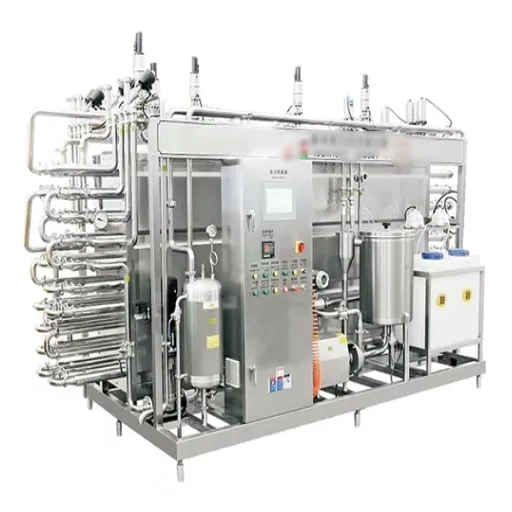
What is a Tubular Sterilizer?
A tubular sterilizer is an advanced heat processing system designed for sterilizing liquid or semi-liquid products by heating to a high temperature for a specified period. Such a process will ensure the elimination of harmful microorganisms, as well as the retention of nutritional values, texture, and flavor of the product. The main heat transfer technology used is that of tubular heat exchangers. This allows for very good heat transfer and temperature control and therefore works well in the food and beverage plants, dairy plants, and pharmaceutical plants. Tubular sterilizers combine ruggedness with energy efficiency and thereby extend shelf life of perishable products as well as ensure compliance with regulations in big production units.
Importance of Sterilization in Food Processing
Sterilizers are therefore very important in safeguarding food, enhancing the shelf life, and retaining quality standards within the processing industry. The sterilization treatments restrict foodborne diseases and contamination due to bacteria, yeasts, and molds. Consumers expect sterilization to retain the taste and texture of food products while treating the food from a quality and food safety regulation perspective.
Sterilization has, however, been made even easier with technological advances such as the invention of a modern tubular sterilizer that offers proper temperature and time control, allowing for uniform treatment without affecting product integrity. Sterilization also reduces food wastage by greatly enhancing the shelf life of the packed goods, which is so very important when it comes to distribution and supply chain. Thus industries that have accepted sterilization as part of their food processing can successfully combine the issues of safety, sustainability, and mass production, thereby catering to requirements posed without having to struggle to gain acceptance from the market or regulators.
Overview of UHT Sterilization Technology
(Ultra) High Temperature (UHT) sterilizing technologies represent the very front line of sterilization methods, working to enhance safety and extend the shelf life of liquid food and beverage products. UHT treatment entails heating of the product up to a temperature of 135°C and 150°C for 2 to 5 s; this short exposure period to high temperature kills the spoilage organisms within a few seconds while retaining and therefore maintaining the nutritional and sensory properties. Being exposed to heat for such a very short time keeps the natural flavors, colors, and the essential nutrients of the product unchanged-a matter of great concern for the consumer as well as the manufacturer.
One of the chief advantages given by UHT sterilization is producing shelf-stable products that need no refrigerating. This cuts into storage and transportation costs tremendously. UHT products, thus, have great importance in places where the cold chain infrastructure is either lacking or markets entirely depend upon distance global distribution. On the other hand, modern UHT technology has provided some newer, more-energy efficient systems that employ high-performance heat exchangers and aseptic processing equipment to bring down energy consumption and environmental impact.
By now, putting together fine engineering with modern technology, UHT sterilization has become a must-have method for manufacturers following stringent food safety laws and catering to consumer needs for convenience and sustainability. As of today, the technology finds use in processing milk and milk substitutes, plant-based beverages, and liquid foods such as soups and sauces–speaking of versatility and efficacy in the domain of modern food processing.
Understanding UHT Sterilization
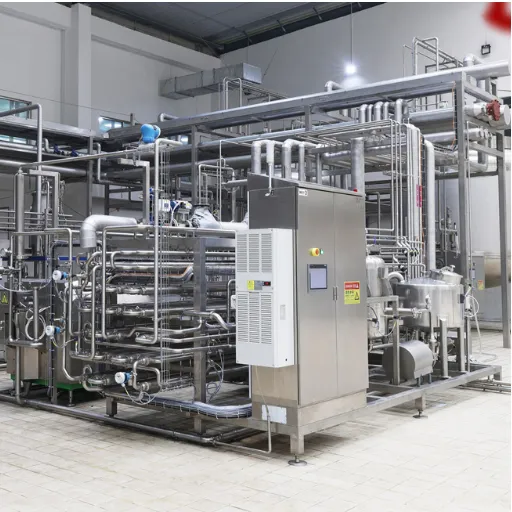
How UHT Sterilization Works
Through ultra-high-temperature sterilization, liquids are sent to the heating chamber, passing through a chamber with temperatures ranging between 135° and 150°C (275° and 302°F), and retained there for only 2-5 seconds before being cooled down rapidly. This brief exposure of high heat greatly eliminates infective microorganisms and pathogens, with minimal destruction of nutritional value and preservation of product taste, texture, and quality.
The process is carried out in specialized equipment designed for both direct and indirect heating methods:
- Direct heating involves injecting steam directly into the product or spraying the product into a steam-filled chamber, ensuring rapid and uniform temperature distribution.
- Indirect heating employs heat exchangers to warm the product without direct contact with steam, offering precise temperature control and energy efficiency.
In both cases, sterilization is achieved without affecting the integrity of the liquid food, or beverage. Following sterilization, the UHT-treated product is poured into an aseptic package, which prevents any form of external contamination and prolongs shelf life to a large extent-even when stored at room temperature. The seamless interfacing between rapid heating, cooling, and sterile packaging is a testimony to the modern engineering of UHT, giving manufacturers a good option to ensure safety, quality, and efficiency.
Benefits of UHT Sterilization for Liquid Foods
Besides providing long shelf life as an obvious advantage, UHT gives liquid food products other critical benefits as well. It ensures that beverages and liquid foods are safe for consumption by killing the harmful microorganisms through high-temperature, short-time heating, and without refrigeration. Being mindful of high temperatures during the sterilization process, this technology preserves the nutrients and flavours of the product; hence it tastes and looks the same as the original product.
✓ Key Benefits
- Extended shelf life without refrigeration
- Preservation of essential nutrients and flavors
- Reduced dependency on cold chain logistics
- Lower storage and transportation costs
- Global market distribution capability
The follow-on processes of aseptic packaging prolong shelf-life stability of a product, making the UHT treated form a convenient product for distribution into global markets with an inherent risk of spoilage. Additionally, from the manufacturer’s side, the technology reduces reliance on cold chain logistics, which in turn reduces storage and transportation costs. With these advantages, UHT sterilization duly becomes a must for present-day food propulsion, giving importance to consumer satisfaction and industry efficiency.
Comparison of UHT and Traditional Sterilization Methods
Each sterilization method comes with its own merits and concerns when food and beverage production is concerned. The heating step longer than a few of seconds and at a temperature above 135°C (275°F) has been considered to be UHT treatment. The high temperature, though for only 2 to 5 seconds, destroys all microorganisms and spores so that the product kept retains flavor, color, nutrient balance, and taste, ensuring a long shelf life onward. The rapid nature of the UHT procedure is what brings in greater stability without refrigeration, being more energy-efficient than the drying process that is required in most traditional methods.
Traditional sterilization method, such as batch retorting, runs with much less temperature, generally about 121°C or 250°F, but longer time, sometimes more than fifteen minutes. Although it sterilizes a product well, nutrient degradation and change in flavor might take place in the process because of long exposure to high heat. The other drawback is that much power is consumed during the sterilization process with some products requiring an extensive cold-chain storage facility.
On the operational front, UHT sterilization supports modern production lines with high output intent on serving global demand economically. Older methods could be apt for smaller production or if the product, perhaps, benefited on some sensory level from that slower processing. Usually, the choice of sterilization method–traditional or UHT–depends on product type, shelf life, and logistics. These ever-developing technologies, therefore, aid in shaping food safety and consumer satisfaction among different markets.
Aseptic Tubular UHT Sterilizers
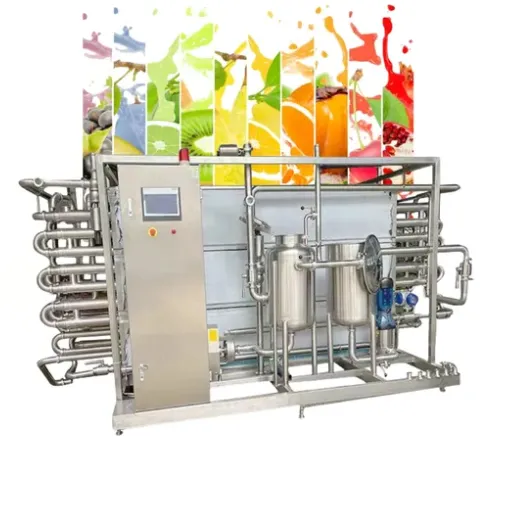
Features of Aseptic Tubular UHT Sterilizers
Featuring newest generation technology, aseptic tubular UHT sterilizers ensure maximum safety and efficiency during processing, and incubation of liquid food substance and beverages, thereby ensuring their preservative qualities. These systems are constructed with modular frameworks, carrying a degree of flexibility for achieving configurations that may be required by differing product types or production-scales. High heat transfer efficiency is attained, tubular heat-exchangers assured, sterilization is uniform, thereby consumption of lesser energy.
🔧 Advanced Features
- Modular frameworks – Flexibility in configurations for various product types
- Advanced temperature control systems – Precise adjustments during processing
- CIP (Cleaning-In-Place) protocols – Maintain operational hygiene without extensive downtime
- Automation and digital monitoring – Real-time performance tracking
- High heat transfer efficiency – Uniform sterilization and reduced energy consumption
Advanced temperature controls make for on-the-fly processing adjustments to prevent overprocessing, thereby preserving sensory and nutritional characteristics of the product. These sterilizers also offer powerful cleaning capabilities, such as CIP (Cleaning-In-Place) methods, against hygiene standards, ensuring that little or no downtime exists. With the help of automation and digital monitoring integration, it becomes possible to evaluate performance in real time, ensuring product-level consistency and reducing human input. All these factors make aseptic tubular UHT sterilizers the best choice for manufacturers seeking efficiency, reliability, and the highest-quality outputs in competitive markets.
Applications in the Food Industry
Aseptic tubular UHT sterilizers are of utmost importance in nearly every food and beverage processing operation. These sterilizers are mostly suited for handling liquid products such as milk, plant-based beverages, juices, soups, and sauces that require long shelf life and product safeguarding. By way of ultra-high temperature sterilization, they are capable of destroying pathogenic microorganisms that may be present while maintaining the nutritional value, flavor, and texture of the product.
Dairy Products
Milk, cream, yogurt drinks
Beverages
Plant-based drinks, fruit juices
Liquid Foods
Soups, sauces, ready-to-eat meals
Moreover, their ability to process materials with high viscosity makes this type of CFH machine very adaptable to ever-evolving consumer demands with such trends as ready-to-eat meals and gourmet beverages. Investment in these systems has also shown advantages in measurable terms, including reductions in process time, energy consumption, and consistency in product characteristics all significant factors for any enterprise seeking to optimize production time and simultaneously improve the appeal of the product.
Advantages of Aseptic Technology
Aseptic technology is important in modern processing of foods and beverages since it enjoys several advantages. It mainly imparts extended shelf life to perishables with no refrigeration, hence enabling producers to distribute farther into markets and lessen cold chain logistics. It ensures quality products while the nutritional content, taste, and texture of foods and beverages are retained even during long retention times.
Core Advantages of Aseptic Technology
✓ Extended Shelf Life
✓ Superior Product Quality
✓ Reduced Contamination Risk
✓ Minimized Waste
✓ Sustainability Alignment
✓ Premium Product Capability
Aseptic processing and packaging will further minimize the chances of contamination; hence, a safer and cleaner work environment is secured. The processes offered by this method minimize wastage, with minimal levels of product spoilage and better utilization of resources. For businesses emphasizing sustainability, these aseptic systems promote green goals by lowering the energy consumption and hence allowing for recyclable materials in the packaging.
Another key advantage lies in catering to the growing demand for added-value products bearing innovation, such as fortification of beverages, plant-based beverages, and imported functional foods. Being highly versatile, aseptic technology can be used for processing such high-valued products, maintaining consistency and quality-highlighted by combined efficiency, safety, and flexibility-as very crucial innovations needed by producers for staying competitive in a fast-moving market.
Key Components of a Tubular UHT Sterilizer
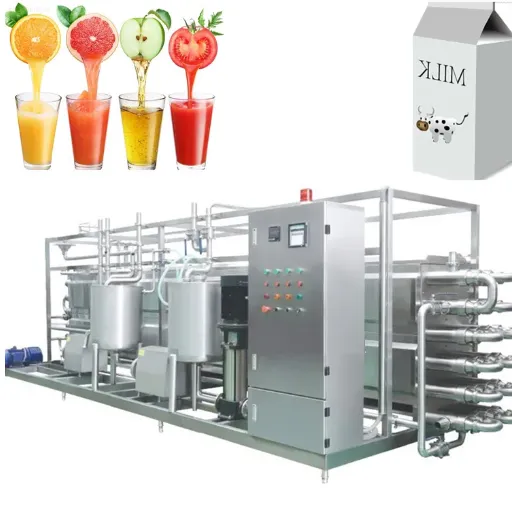
Flow Rate Considerations
Depending on product viscosity, heat distribution, and holding time, the optimal flow rate of a tubular UHT sterilizer shall be selected. Products with high viscosity usually require slower flow rates to optimize the heat transfer process for the entire sterilization procedure. On the other hand, liquids with lesser viscosities can endure faster flow rates, so throughput can be optimized without the product’s acceptance being jeopardized. Calibration of exact flow rates will enable sterilization at a level sufficient to guarantee microbial safety while maintaining the nutritional and sensory properties of the product. By quickening specific control systems, an operator is able to control the flow rate movement on the fly to ensure productive real-time production.
Temperature Control Mechanisms
Product safety, together with quality assurance, depends upon effective temperature control during processing. High-level temperature controls use very fine monitoring equipment to ensure that temperature remains at ideal conditions throughout the manufacturing process. It guards from overheating that endangers the quality of the product and underheating that endangers safety standards. Hence, with today’s technology of automated feedback mechanisms and thermal sensors, operators can make the right measurements and maintain constant temperature levels that fit the requirements of the products involved. This consistency maintains nutritional value, texture, and taste, while also conforming to microbial safety efficiency requirements on an industrial level.
Safety Standards and Compliance
Working within the food production thinking of compliance with safety standards is important. Manufacturers must, of course, proceed according to stringent regulations specified by global and regional food safety authorities such as FDA or EFSA, thus ensuring the quality of their products and food safety. Such regulations include the microbial count parameters, process validation, and contamination prevention. Many of these regulations can trace their roots back to automated monitoring systems and data analysis. They analyze operations’ performance so that any deviation is detected beforehand, avoiding production impacts. Businesses, therefore, have an opportunity to attain these high standards while building consumer trust and reducing recall risks and exposure to litigation by employing these modern technologies with safety guidelines.
Choosing the Best Tubular Sterilizer
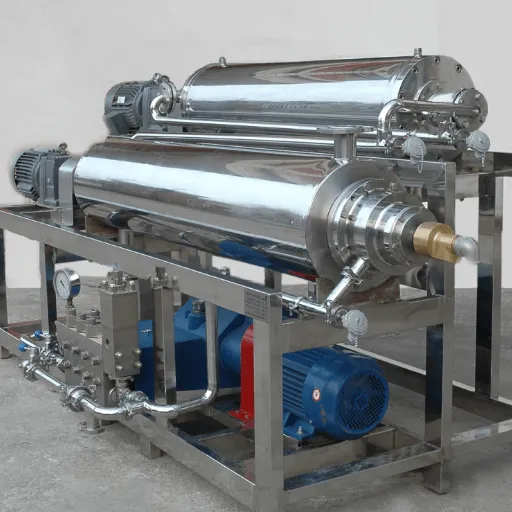
Factors to Consider When Selecting a Sterilizer Machine
Tubular sterilizer machines are many in nature, and selecting the correct one requires you to analyze your specific processing needs. The capacity of the machine should be the first consideration; next would be energy efficiency and, finally, the compatibility of the specific type of application. It should be capable of handling throughput volumes without compromising sterilization quality. Energy efficiency is another major concern so that energy cost does not become prohibitive; it also advances sustainability goals.
Key Selection Criteria
- Machine Capacity – Must handle required throughput
- Energy Efficiency – Reduces operational costs and supports sustainability
- Product Compatibility – Works with varying viscosities, temperatures, and pressures
- Maintenance Requirements – Impacts long-term reliability
- Ease of Cleaning – Critical for hygiene standards
- Advanced Control Systems – For monitoring and fine-tuning processes
The adaptability of the machinery should also be analyzed with regard to working at different viscosities, temperatures, and pressure levels. One also cannot overlook the maintenance concerning sterilizer cleaning procedures as they will tremendously impact the long-term reliability of the sterilizer and the ability of the sterilizer to maintain required sanitary standards. Usually, in a state-of-the-art sterilizer, such a system exists that monitors and adjusts the sterilization process to obtain precise results and operational safety. By concentrating on those features, you are well on your way toward selecting a sterilizer that works optimally, meets industry standards, and suitably supports your production requirements.
Top Brands and Models of Tubular UHT Sterilizers
When researching the top brands and models of tubular UHT sterilizers, I found several industry-leading manufacturers that consistently deliver high-quality equipment designed to meet the rigorous demands of modern production facilities.
Tetra Pak
Featured Model: Tetra Pak® Tubular Heat Exchanger
Key Strengths: Precise temperature control, optimal product sterilization, energy efficiency, low maintenance requirements. Widely trusted in dairy, beverage, and prepared foods industries.
GEA
Featured Series: GEA Ecoflex Series
Key Strengths: Compact design, flexible configurations, outstanding heat recovery efficiency, user-friendly interfaces, advanced automation features, robust build quality for high-volume manufacturers.
SPX FLOW
Featured Model: APV Cavitator
Key Strengths: Cutting-edge technologies for enhanced heat transfer and homogenization, consistent processing of sensitive products, sustainability focus, cost efficiency, long-term operational savings.
Tetra Pak being a brand worth a mention, is well known for the sturdy and efficient tubular UHT sterilizers like the Tetra Pak® Tubular Heat Exchanger. The systems are designed for precision with temperature, so the product gets sterilized with the best possible retention of taste and nutritional value. Users find Tetra Pak solutions very energy efficient and very low in maintenance. Hence the name will be in the minds of dairy, beverage, and prepared food industries.
Another very well-rated brand with a tubular sterilizer type for various UHT productions is the GEA. Among other designs, the GEA Ecoflex Series is known for its compact size, great flexibility in its configurations, and exceptional heat recovery ability. A noteworthy adjective connected with GEA machines describes their easy-to-use interfaces, advanced automation, and high build quality- the best choice for large volume manufacturers who want to squeeze out maximum performance with minimum resource use.
Lastly, SPX FLOW also provides innovation with reliability when it comes to their products. APV Cavitator is one such product that incorporates the latest developments in heat transfer and homogenization technologies to process even the most delicate of products. These products intend to consider sustainability and cost-effectiveness for those companies who focus on long-term operational savings and being environmentally responsible. Getting to know these top brands and their models will lead you closer to identifying the right tubular UHT sterilizer meeting your production objectives and industry requirements.
Cost Analysis and ROI for Sterilization Technology
The cost analysis of a sterilization technology, in this case tubular UHT sterilizers, involves taking into consideration the investment cost and operational savings in later periods. The investment costs are normally associated with purchasing equipment, installation charges, and some upgrades to the facility. Hence actual prices vary widely from $50,000 to above $500,000 or so, according to the model and capacity. Yet, modern systems might bring marked savings in utility costs because of their greater efficiency and reduction in energy consumption. Newer sterilization units are capable of utilizing energy better and generate less waste, thus lowering utility bills and operating costs.
Now, from the ROI view, looking at production scaling and quality enhancements, the advantages offered by these systems become very apparent. Yield is enhanced, and very expensive recalls due to contamination are prevented by losing fewer products in heat transfer-a perfect prevention technique for contamination. Some models further implement intelligent monitoring systems that allow for real-time operation status updates, minimizing downtime and maximizing reliability. Depending mostly on productivity improvements and long-term reduced maintenance costs, most companies can recoup the capital cost in about 3-5 years.
Furthermore, furthering environment-friendly measures such as energy-efficient tubular UHT sterilizers would allow the businesses to achieve their sustainability goals, which are increasingly becoming decisive in consumer markets. Tax incentives, grants, and decreased penalties imposed on environmental concerns for practicing sustainable activities further enhance ROI. From a standpoint of cost-benefit analysis, it is in the best interests of industry to invest in modern sterilizer facilities balancing the expenditure involved with long-term savings in energy, labor, and product quality for profit as well as sustainability.
Reference Sources
Smart Solutions, AI & Scope Forecasts 2033 – Discusses technological advancements in tubular sterilizers, including automation, real-time monitoring, and energy-efficient designs.
Tube-in-tube Sterilizer Market Report – Provides insights into the global market trends, growth projections, and innovations in tube-in-tube sterilizers.
Tubular Sterilizer for UHT & Pasteurization – Highlights features and applications of tubular sterilizers, focusing on heat-sensitive products and advanced designs.
Frequently Asked Questions (FAQs)
❓ What is a Tubular Sterilizer and How Does It Work?
A tubular sterilizer is an advanced sterilization machine used for liquid food products under the ultra-high temperature method. The sterilization process involved rapidly heating the liquid to a high temperature in order to eliminate microorganisms and thus ensuring food safety and extended shelf life. Depending on design, tubular sterilizers typically allow for efficient heat transfer and almost zero downtime in the production line. Temperature control is tightly maintained during the sterilization process through the use of a control system, which ensures product quality. This technology is very important for industries involved in dairy, juices, and other liquid food products.
❓ What Are the Benefits of Using UHT Sterilizer Technology?
The UHT sterilizer technology has an extensive range of advantages in food processing, especially in the dairy and beverage sectors. Essentially sterilizing a product without any need for consideration of preservatives maintains the natural flavor and quality of the liquid goods. Another excellent benefit is the reduction in spoilage rate during drying and longer shelf lives for food and beverage items. An aseptic tubular UHT sterilizer also meets international food safety standards and thus ensures the final product is fit for human consumption. Lastly, sterilization by this technique is often more energy efficient than traditional methods.
❓ How Does Tubular UHT Sterilization Ensure Food Safety?
Tubular sterilizing UHT sterilization technique basically brings food security into its realm by killing the microorganisms that cause spoilage to foods as well as foodborne illnesses. Upon applicable high-temperature conditions, it occurs in rapidly sterilizing all pathogens and viruses. As the design of a tubular sterilizer allows heat to reach the product so that it can be sterilized at the necessary temperature, if operating properly, the tubular sterilizer should satisfy the food safety requirements. Further sanitation aspects have to consider all the sterilization process equipment to be taken into account for the sterilization process. This would be done with a CIP (Clean-In-Place) system. This technology fulfills international food safety standards, thus, food, and beverage manufacturers prefer using it.
❓ What Are the Key Features of Aseptic Tubular UHT Sterilizers?
Aseptic tubular UHT sterilizers incorporate sterilization technology that maintains the integrity of liquid food products during processing. Some important features include a robust control system that allows accurate temperature settings since temperature is crucial for sterilization. These sterilizers also possess a heat recovery system that saves energy, thus reducing the carbon footprint of the production line. The design also offers high flow rates, hence giving large volume liquid products treatment with respect to product quality. Further, such machinery is best advanced to have very low downtime, that is, much conducive to efficiency in beverage processing.
❓ What Is the Role of Temperature Control in the Sterilization Process?
The control of temperatures is one of the key parameters governing the sterilization process, especially in tubular sterilizers for liquid food products. A sterilization temperature that is sufficiently high would kill the microorganisms but may adversely affect the product. Thus, strict temperature control is necessary to retain the viscosity of the beverage or dairy product. Also, the control system of sterilizers nowadays provides adjustment and monitoring during production, thereby assuring that food safety standards are met. Such stringent control is advantageous to both food safety and production line efficiency.
❓ How Do Tubular Sterilizers Impact Shelf Life of Food Products?
By eliminating to almost 100% spoilage-causing microorganisms, the tubular sterilizers considerably increase the shelf life of food products. The high-temperature treatment in UHT processes ensures that the products, such as UHT milk and fruit juices, stay fit for consumption over a considerable span without refrigeration. The system of sterilization also aids these machines in maintaining the quality and the nutritive value of the liquid products. Also, from an advertising perspective, one must not forget to emphasize the fewer preservatives used in the resultant products: another factor for consumers concerned about health-related issues. Consequently, product recalls far less frequently bed, and manufacturers glean greater goodwill for the food and beverage industry.

DU
Articles: 45
Trending now