Get in touch with Victorystar

Exploring The Ultimate Guide to Pineapple Juice Processing Line for Beginners

Contents
show
One might think that processing pineapple juice must be complicated, but provided with the right set of instructions, a beginner can grasp the basic knowledge of the steps and technology involved. The idea of this Great Guide is to help demystify a pineapple juice processing line so that it remains a little bit more friendly toward those who are new in the field. From learning about the pertinent machines to understanding the quality control checkpoints, this article intends to take you through the fundamental elements involved in the making of fresh, best-grade pineapple juice. The knowledge contained here can either be a venture-launching tool or just simple understanding of the process behind producing something down the beverage industry. Staying on with us will enlighten you about the systematic workflow, core considerations, and best practices that constitute an efficient pineapple juice production.
Understanding Pineapple Juice Production

The Importance of Pineapple Juice in the Beverage Industry
Because of its unique taste profile, its high nutritional value, and its extreme versatility, pineapple juice has carved a niche in the world’s beverage market. It appeals to health-conscious persons who desire functional beverages for healthy living. It is considered rich in enzymes, with the most important being bromelain, which assists in digestion and potentially has anti-inflammatory reactions, thus adding to its attraction.
The development in the tropical fruit-based beverage industry has positioned pineapple juice in the front line for fresh and processed products in the new phase. The latest shifts in pineapple processing are ultra-pasteurization and aseptic packaging that extend shelf life, give quality retention, and unlock greater potential for commercial trade and market growth. Alongside, being joined with other juices and entering smoothies and cocktails confirms the versatility of pineapple juice with respect to the ever-changing demands of consumers toward the more trendy and taste entertaining kind of beverages. As such, pineapple juice becomes a must in health-related markets and gives a chance to further diversify and enrich profitability within the beverage sector.
Key Nutritional Benefits of Pineapple Juice
Pineapple juice is highly oblatory of a well-balanced diet since it is loaded with all essential vitamins and minerals along with being filled with antioxidants. Vitamin C here is provided in abundances and it acts to help in the functioning of the immune system, in collagen synthesis, and in wound healing. Also, manganese is provided, which is a very essential mineral for bone formation, energy metabolism, and antioxidant defenses.
The bromelain enzyme, unique to pineapples, is endowed with anti-inflammatory attributes and has been researched as a possible digestive aid by virtue of its protein-breaking action. These phytonutrients bear the potential to protect from oxidative stress as a result of which they become more suitable for long-term cellular health. In addition to boosting energy by way of natural sugars and hydration, such an option is quite suitable for people engaged in physical activity. Together, these reasons underscore the nutritional importance of pineapple juice and highlight another way it contributes to the greater good.
Overview of the Pineapple Processing Lifecycle
The lifecycle of pineapple processing is divided into a multi-stage elaborate procedure intended to uphold the highest level of product quality, reduce wastage, and manufacture the product for efficient global distribution. The process begins with the harvesting: the mature pineapples are selected carefully to ensure uniformity of size, ripeness, and quality. Post-harvestin,g there is thorough cleaning of the fruit to remove any impurities: dirt, pesticides, or anything capable of staining the fruit’s skin.
After cleaning, pineapples are sorted and graded according to size, weight, and texture for assignment to particular categories such as fresh exports, juice extraction, or canned products. During peeling and coring, apparatus is used so that the outer skin and fibrous core of the fruit can be removed efficiently, leaving unaffected the firmer edible flesh of the fruit. The fruit is mashed and pressed using extractors (mechanical/hydraulic) to extract the juice. The juice is filtered and pasteurized to remove residues and enhance the shelf life.
The processed fruit is then packaged according to its intended market, ensuring adherence to strict food safety guidelines. Quality control is an integral component throughout the lifecycle, with continuous monitoring and testing to maintain compliance.
Pineapple Juice Processing Line Components

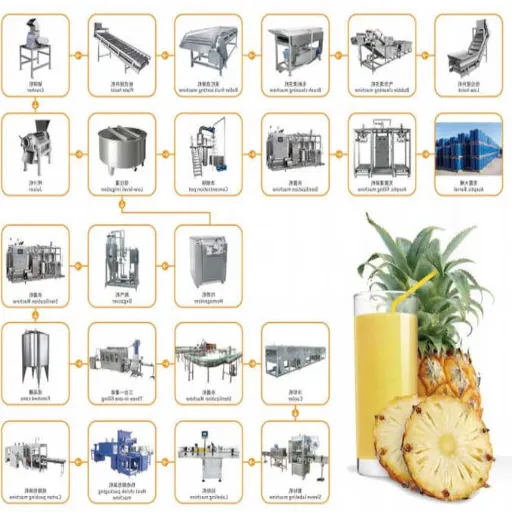
Essential Machinery for Pineapple Juice Processing
Fruit Washing Machine
A fruit washing machine is critical for removing dirt, pesticides, and other contaminants from the pineapples’ surface. This step ensures the raw material is thoroughly cleaned before further processing. Most systems use high-pressure water sprays combined with brush mechanisms to achieve optimal cleanliness.
Fruit Sorting Machine
Sorting machines are designed to grade pineapples based on size, weight, and quality. This step helps eliminate damaged or unripe fruits, ensuring only the best pineapples advance to juice production.
Peeling and Coring Machine
Pineapple peeling and coring machines automate the process of removing the tough outer skin and fibrous core, thereby preparing the fruit for extraction. These machines are highly efficient, minimizing waste while maximizing productivity.
Grinding and Crushing Equipment
Once peeled and cored, the pineapple is passed through grinding and crushing equipment. This machinery efficiently breaks down the fruit into smaller particles, increasing the surface area for juice extraction.
Juice Extractor
The juice extractor, often a screw or hydraulic press, separates the juice from the pulp. Advanced systems are designed to maximize yield while maintaining the nutritional quality and flavor profile of the juice.
Pasteurization Unit
A pasteurization unit is employed to heat the juice to specific temperatures, effectively eliminating microbial contaminants and extending the product’s shelf life. This step is critical for food safety compliance.
Clarification and Filtration System
To achieve a clear and visually appealing juice, a clarification and filtration system is utilized. These systems remove suspended particles and sediments while retaining essential nutrients.
Filling and Packaging Machine
Filling and packaging machines ensure the processed juice is securely packed into bottles, cans, or cartons based on market demands. Advanced packaging systems incorporate sterilization processes to maintain juice quality during storage and distribution.
Quality Control Equipment
Quality control stations are integrated throughout the production line to test parameters such as pH, sugar content, taste, and microbial presence. Ensuring compliance with regulatory standards is paramount in professional operations.
Key Insight: By leveraging these specialized components, pineapple juice production lines can operate at optimal efficiency, delivering high-quality products that meet industry standards.
Types of Systems for Effective Pineapple Juice Production
Juicing and Extraction Systems
Modern juicing systems have been created to maximize yield and preserve the natural flavor profile of pineapples. Generally, advanced crushing, pressing, and centrifugal extraction technologies are applied to maximize juice yield from solids. Certain configurations involve an enzymatic pre-treatment that helps to break down cellular structures so that extraction rates become higher, maintaining product integrity.
Pasteurization Systems
Microbial safety and shelf life of pineapple juice can be assured through thermal processing systems. One major widely-used way is high-temperature and short-time pasteurization wherein the juice is heated and cooled rapidly to destroy harmful microorganisms, keeping department nutrients, and retaining fresh flavor.
Filtration and Clarification Systems
Particulate matter, pulp, and haze are removed from the juice by means of a good filtration system or ultrafiltration or microfiltration. These enhance clarity and aesthetic appeal of the product while providing uniformity to its appearance. Moreover, such filter membranes permit high throughput without the slightest compromise on quality due to advanced optimization methods.
Automated Filling and Packaging Systems
These high-end packaging systems assure efficient filling, capping, and sealing of pineapple juice into containers, with strict hygienic conditions maintained throughout. These systems are usually integrated with inert gas flushing so as to prevent oxidation and keep the taste intact during the time of storage.
Cleaning-in-Place (CIP) Systems
CIP systems represent an essential aspect of good plant hygiene, minimizing plant downtime and observing food safety regulations. Such automated systems are able to clean the equipment by making use of accurately formulated cleaning agents, while employing specified rinsing cycles, achieving high efficacy, and doing so without dismantling the equipment for cleaning-interference.
The interconnected systems allow pineapple juice bottling plants to streamline operations, increase production, and deliver products that meet the standards of the industry and the satisfaction of the end consumer. From workflow automation to system integration, optimization is always provided for quality and profit.
Food-Grade Processing Equipment Requirements
Food-grade processing equipment has to pass through very stringent safety and hygienic standards in order to uphold the health of the consumer and the integrity of the end product. Such requirements are under the purview of organizations like the FDA (Food and Drug Administration) and USDA (United States Department of Agriculture), with further guidelines coming from international organizations such as the European Food Safety Authority (EFSA).
Other designs often work with materials that are toxic with corrosion resistance and could contaminate the product during processing or resist strength cleaning. All those surfaces from the equipment coming into contact with foodstuff ideally have to be smooth, non-absorbent, and easy to sanitize to avoid bacterial metabolism and biofilm formation. Microorganisms are attracted to any seam; hence, the smoother and the fewer sharp corners, the better.
Moreover, Clean-in-Place (CIP) systems are being increasingly integrated with contemporary food-grade equipment to maintain sanitation standards while simultaneously reducing manual labor. Validation, calibration, and maintenance of equipment are, on the other hand, performed on a regular basis to guarantee consistent performance and adherence to regulatory specifications. Compliance with such requirements will lead to manufacturers ensuring the safety and quality of the product while meeting industry standards.
Automation in Pineapple Juice Processing
Benefits of Automated Systems in Juice Production
Considerable benefits are accrued through automation processes as they make production operations more efficient, maintain product uniformity, and increase safety in the workplace. Automation assures tight parameter control of essential processes such as temperature, pressure, and mixing speed, imparting a vanishing degree of variability into the final product quality output of the process. The automated procedures reduce the dependence on human power, thereby eliminating human error, human contamination, and manual handling processes in peeling, juicing, and packaging. In addition, advanced monitoring and data logging provide real-time process measurement data, enabling the implementation of predictive maintenance. This increases the output and prohibits downtime. Thus, automation systems help operate juice production factories with greater mechanization, reduced operating costs, and high compliance with permitted standards.
Types of Automation Technologies Used in Processing Lines
The automation technologies available in processing lines for an array of modern systems and tools serve to provide maximum efficiency, consistency, and quality assurance for products. Included among these are Programmable Logic Controllers, which act as the backbone of the control units to control the machinery and bring in timing-specific operations. Meanwhile, robotics dominates applications associated with sorting, packaging, and materials handling, incorporating high-speed operation with little human interfacing.
These have traction for quality control-a set of applications in which vision systems search for defects with cameras, analyze alignment, or maintain product consistency. On the other hand, SCADA software front-ends ensure centralized control and monitoring, with capabilities for real-time data visualization and analytics to facilitate better decision-making.
The newer technologies of Artificial Intelligence (AI) and Industrial Internet of Things (IIoT) take the automation further. AI-powered algorithms are used for performing predictive maintenance, which enables manufacturers to foresee equipment problems and correct those before actual failures occur. IIoT-connected devices fill this need for inter-networking ecosystem in machinery and sensor communications, providing total data collection avenues and process optimals. In line with this, these technologies form a strong framework that better the operational and competitive qualities of the current processing lines.
Setting Up a Pineapple Juice Processing Plant

Key Considerations for Designing a Processing Line
In pineapple juice processing line design, utmost consideration should be given to obtaining the highest efficiency, best product quality, and compliance with food safety standards. Hence, the layout of processing lines should promote a smooth flow of materials to avoid cross-contamination and bottlenecks in production. Multifarious pieces of equipment are to be chosen, conforming to the requirements of various processes: peeling, crushing, and pasteurization. Materials must all be food-grade and resistant to corrosion from acidic fruit juices.
It is basically automation that is the heart of modern processing line design, allowing the precise functioning of a process with minimum manual interventions being granted. Sensors are integrated, along with PLCs and real-time monitoring mechanisms to ensure that output is consistent, also capable of picking up when there are inefficiencies or requirements for maintenance on the system. Additionally, by employing energy-efficient equipment and intelligent waste disposal systems, the processing line can perhaps be aligned on sustainability goals, addressing its environmental impact as well as operational cost.
Ultimately, food safety matters across borders. Thus, the establishment of food laws and regulations will shape every step involved in producing safe food. Accordingly, some cleaning methods must meet the CIP standard. It also demands meticulous record-keeping to provide documented evidence of the implementations. A successful processing line works through state-of-the-art technology, the best engineering practices, and strict intersection with relevant codes to ensure a quality and safe end-product for the consumer.
Choosing the Right Processing Equipment for Your Needs
Contracting processing equipment involves a very specific requirement, such as the product type; production capacity; and, in some cases, higher-level regulatory approval. All these elements should be considered during the selection process: compatibility with the materials to be processed, durability, energy efficiency, and ease of maintenance. Byward options are the systems utilizing driver’s advanced automation for efficiency and consistency in product manufacturing and labor cost savings. Moreover, with modular design, these machines can be easily upgraded or reconfigured whenever production requirements are varied, rendering them more flexible. Lastly, it would be best if you considered equipment suppliers with dependable after-sales support, including training, spare parts availability, and technical assistance, that would continuously sustain the good performance of the equipment.
Compliance and Food Safety Regulations for Juice Production
As a matter of critical concern in ensuring consumer safety, that is to say, product quality, and regulatory approval, industries relating to juice require the strict observance of standards of compliance and food safety. The international-level standards of food safety essentially include the Food Safety Modernization Act (FSMA) of the United States and the General Food Law Regulation of the European Union that set out hygiene and quality standards. Juice producers along HACCP lines are to identify, assess, and manage any risks along the production chain of juices. These hazards include microbial contamination, chemical hazards, and physical contaminants.
Critical compliance areas comprise establishing traceability systems for tracking raw materials and finished products through processes along the chain. Testing of microbiological origin and validation of the pasteurization or sterilization processes to meet standards required for microbial safety are to be enforced. All food-grade material will be used for contact surfaces of equipment in order to prevent contamination, and cleaning/sanitizing shall follow GMPs.
In ensuring compliance, any declaration regarding ingredients, nutritional values, and allergen information must be accurate in accordance with regulatory guidelines. A continued training of their staff for food safety requirements and periodic audits will be an assurance for compliance and also for keeping consumer trust. Non-compliance may have huge financial penalties and reputational damage; hence, juice manufacturers have to ensure that their operative practice is in full alignment with the latest regulations and advances in industry practices.
Challenges in Pineapple Juice Processing

Common Issues Faced in Pineapple Juice Production
1. Enzymatic Browning
Based on my experience, one of the most persistent problems that are faced in the production of pineapple juice is enzymatic browning. The discoloration that occurs is caused by the polyphenol oxidase activity when the fruit is exposed to oxygen in processing. Preferring fast processing over enzymatic browning after the slicing and peeling of the fruit and keeping antioxidants such as ascorbic acid or sulfur dioxide will help preserve the desirable qualities of the juice with regard to appearance and nutrition, thus, essential for consumer acceptance.
2. Microbial Contamination
A factor of equal concern is microbial contamination which can negatively affect the product’s safety and life. Pineapples are naturally bearing microorganisms on their surface, which, if not well sanctified, might contaminate the juice during processing. Thorough washing, maintenance of hygiene standards, and application of pasteurization serve as perfect barriers in controlling microbial activities, thereby complying with food safety laws.
3. Inconsistency in Juice Quality
Additionally, inconsistency in juice quality presents a big problem, often due to variations in raw material supply. Variations in sweetness, acidity, and flavor profiles come in whatever combination from fruit ripeness, seasonal changes, or management-level practices on the harvesting side. To remedy this, cooperative efforts should be given among suppliers to keep the fruit quality as standardized as possible, while on the other hand, blending processes should be further improved to achieve consistency from raw juice to finished product, serving exactly the consumer’s demand.
Strategies to Overcome Production Challenges
To effectively surmount production challenges, the first priority should be the adoption of advanced technological solutions and stringent checks on product quality. One method calls for the deployment of real-time monitoring all along the production line, with sensors and AI-powered analytics keeping an eye on temperature, pressure, or ingredient composition sufficient to keep the deviations in check and ensure an immediate correction. The application of such smart technologies goes a long way in ensuring efficiency, improving consistency, and mitigating errors from human stoppage.
The supplier collaboration should be strong. I take the initiative in forming long-term alliances to ensure that sourcing practices are transparent and the quality of raw materials is maintained consistently. These procedures involve providing clear specifications for raw materials and conducting regular audits to determine if these specifications are indeed met. I also leverage predictive analytical tools to foresee swings in supply and demand so as to maintain better control over inventory and reduce interruptions in the production process.
The final P is training. The more adept you are at training your workforce-along the lines of providing them with the latest knowledge and skills required for handling advanced machinery or working according to standardized procedures-the smoother will be the entire production process. Combining these measures, I can tackle all challenges in my path and ensure the production of high-quality goods that meet standards set by the industry and demand of the end consumer.
The Future of Pineapple Juice Processing Technology
The development of pineapple juice processing technology is governed by twin forces-a greater technocratic efficiency and a proclivity toward green methodologies, with a complement of product internecine culture from among the technocratic brilliance. Pineapple juice brought about by the use of modern treatments like high-pressure processing (HPP) and advanced filtration techniques would have an inherent flavor that’s not subjected to pasteurization by traditional means and would retain nutrient content as well as freshness. HPP is ideally suited as a non-thermal approach to keeping nutrients intact while maintaining shelf life longer, according to the consumer who wants the product free of additives and having that fresh taste.
Automation and digitalization thus lead the way ahead. With a layer of smart technologies—Internet of Things (IoT) sensors, predictive analytics—above the processing lines, I can watch every single step of production and control it with precision. These technologies allow for adjustments in real time, reduce waste, and optimize energy usage, thus creating a process that is sustainable and cheaper to run. What more is there to optimize by incorporating AI and machine learning in juice processing? These two provide potential for an almost unlimited number of improvements in quality control and operational streamlining, thereby working towards enhanced efficiency.
Finally, emphasizing sustainable practices is undoubtedly critical. Minimizing the environmental footprint of pineapple juice production must incorporate generating energy out of renewables and recycling water within factory operations. The packaging solution can be really advanced, in keeping with global efforts to curb plastic waste and advocate for biodegradable solutions. Incorporating these technology-based and eco-friendly trends will give me the opportunity to ensure that pineapple juice processing technology will remain futuristic and will evolve in accordance with developing industry parameters and consumer preferences.
Reference Sources
- High Quality Pineapple Juice Complete Production Line For You – Tico Machine
This source provides a detailed workflow of the pineapple juice processing line, including equipment and steps. - Pineapple Juice Processing Line and Equipment – Juice Making Machine
A comprehensive guide to the entire process of making pineapple juice, from sorting to juicing. - Flow Chart for Pineapple Juice Production – Fruit Turnkey
This article outlines the step-by-step flow chart for pineapple juice production, including washing, peeling, and juicing. - Pineapple Juice | PDF | Juice | Diet & Nutrition – Scribd
A document detailing the production line for pineapple juice, from fruit reception to aseptic packaging. - How Many Steps to Extract Pineapple Juice? – Tico Machine
This source explains the key steps in pineapple juice extraction, including sorting, peeling, and sterilization.
Frequently Asked Questions (FAQs)
What are the key components of a pineapple juice processing line?
A usual line for processing pineapple juice contains some essential equipment, which typically include pineapple peeling machines, fruit sorting machines, and juice-extracting equipment. The processing of pineapple juice is designed to extract maximum juice while the end product quality is upheld. Along the line, sterilization and pasteurizing units are also part of the machinery to ensure good juice safety standards. Proper processing machinery ensures smooth operations against increased manual labor and production efficiency. On the other hand, the complete line can include automated packaging systems that package the juice for distribution.
How does pineapple juice extraction work?
Extracting juice from pineapples goes through several steps, starting with raw fruit preparation. The first step would be pineapple peeling: this would mean taking off the outer skin by specialized equipment. After the peeling process, the pulp of pineapple is sent to a machine for juice extraction. The actual extracting process is somehow contingent upon the types of juicers with use or preference; however, modern methods do often go in favor of high juice yield. Then juice filtration takes place against any fibrous material and smooth consistency for packaging.
What types of processing equipment are used in pineapple juice production?
In the production of pineapple juice, many types of processing machines are required to intervene at different stages of the production process. Such machinery is handling equipment for peeling, cutting, and juicing pineapples. Also, juice-processing equipment (pasteurizers, sterilizers, etc.) ensures that the end product is safe for human consumption. Automation in these machines is exceedingly high and helps in minimizing labor requirements whilst ensuring uniform quality standards. Other cleaning systems must be implemented too-for hygiene and maintenance of equipment- including brush and spray-type cleaning machines.
What factors contribute to high juice yield in pineapple processing?
The parameters that impact juice yield in pineapple processing include the quality of the raw fruit and the processing/extraction methods applied. A proper equipment setup for pineapple sorting ensures that only the best fruits enter the processing stage and better yield is achieved. The design is crucial since a juice machine that is custom-built for fibrous fruits such as pineapple will yield better results. Proper maintenance of the processing machinery and frequent reviews and optimization of the production line process can significantly improve juice yield.
What safety measures are important in pineapple juice processing?
The quality and safety of pineapple juice have always been utmost during its processing. The use of materials and objects that are food grade, such as 304 stainless steel, in processing machinery allows prevention of product contamination. The act of sterilization is binary, allowing the removal of all pathogens that could potentially infect the juice coming from a contaminated fruit. Cleaning the brush and spray cleaning machine irregularly, as well as maintaining equipment, is essential for hygiene. A waste management alternative creates a clean working environment for production, which later ensures the safety of the juice.
How does automation improve the efficiency of pineapple juice processing lines?
Automation provides great impacts on pineapple-juice-processing-line efficiency. For one, with automated systems, various tasks such as peeling, sorting, and juicing are handled with very little human interaction. In this way, the work of a person is minimized; thus, the whole process is fast-tracked, leading to an increase in output in record time. Moreover, automation with a high degree of consistency gives more uniform product quality since machines ensure less human error. Automated systems may also be utilized to optimize process operations by such means as adjusting extraction pressure in the interest of maximizing juice yield, making them an indispensable latest addition in juice production units.

DU
Articles: 45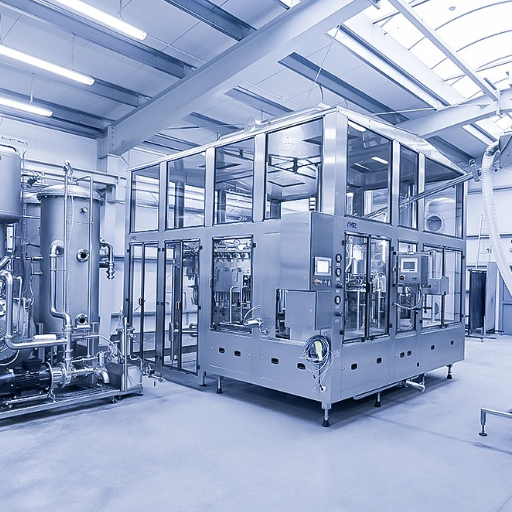
Trending now