Get in touch with Victorystar

AI & Automation: Transform the Food and Beverage Industry by 2026

Contents
show
The food and beverage industry is on the doorstep of the technological revolution that the advancements in artificial intelligence (AI) and automation are bringing at an unimaginable pace. By the year 2026, these technologies will entirely reframe the industry, from processes of production and distribution to means of consumer interface and sustainability. AI is directing business in having a more optimized state, thus minimizing waste and enhancing the satisfaction of the customer. One of the best improvements, automatic systems help in reducing the manual requirements of operations efficiently. This article focuses on the grand change AI and automation are to bring forth in the industry, and offers insight as to the fostered innovations, the benefits, and the turmoil that follows. It’s forward-thinking: painting landscapes for how the innovativeness and efficiencies impress the future of food and beverages.
Key Takeaway
By 2026, the convergence of AI, IoT, and robotics will shift the food and beverage industry from reactive manual processes to proactive, data-driven ecosystems that prioritize sustainability and precision.
Introduction to AI and Automation in the Food and Beverage Industry
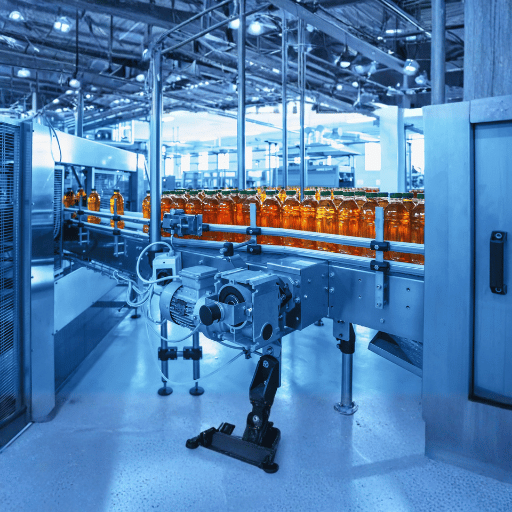
Artificial intelligence (AI) and automation are revolutionizing the food and beverage industry in a way that informs effective decision-making and implementation of optimization processes capable of enhancing product quality and preserving operational efficiency. AI generates precise demand forecasts to slash waste, thereby ensuring uniform supply. Automation equips businesses to coordinate the multitudes of repetitive tasks such as sorting, packaging, and quality control in common production lines, arresting errors that otherwise could result from human error in the process and boosting productivity. Therein lies a highly practical solution addressing issues of labor shortages, food safety, and escalating operational expenses, which offers sustainability and scalability in due course.
Overview of AI and Automation
AI and automation technologies have put a perfect row down the industries where inefficiency was sucking the growth blood, thereby achieving the promised precision. AI algorithms are thus bringing predictive analytics in place of supply chain operations and real-time data in the operation of decision-making while at the same time automation is replacing manual operations with systematic operations, hence reducing the labor rates and offering some higher scalability. These two, combined by what they perform, help to see a company increasing its productivity, catering to the escalating needs, and preparing and surviving challenges such as labor constraints and financial constraints, leading to ultimate sustainability and competitive advantage.
Significance of 2026 in Industry Forecasts
In 2026 there is expected to arrive a moment of truth for most other industries, as the exponential growth of technology and changing global dynamics all converge. The use of AI alongside advanced robotics and IoT-based systems will redefine the operational landscape across industries, creating unforeseen efficiencies and innovations. Furthermore, it is hoped that by the year 2026, the most pressing policies and sustainability initiatives will have embraced actions to influence regulatory compliance and motivation for sustainable practices. The confluence of technology and policy will fashion competitive landscapes—turning 2026 into the litmus paper for assessing industrial adaptation, growth strategies, and market positioning.
💡
Pro Tip
Early adoption of IoT sensors in production lines provides the historical data necessary for AI models to achieve peak accuracy by the 2026 benchmark.
Impact of IoT on Beverage Production
The incorporation of IoT into beverage production offers unique advantages with regard to operational efficiencies, quality control, and supply chain management. Manufacturers use IoT sensors and devices to monitor critical production parameters real-time which have a massive role to play in maintaining the quality of the product and reducing waste significantly. Predictive maintenance in the light of IoT analytics minimizes downtime and optimizes production innovations. Moreover, besides all these benefits, integration of IoT technologies into the industry’s operations encourages main visibility on the supply chain and thereby helps to track almost every action starting from raw materials, thereby responding quickly to demand fluctuations alongside ensuring compliance with regulatory processes. This massive step in technology adoption is what the industry needs to move into data-driven and sustainable practices of manufacture.
Current Advancements in Automation Technologies
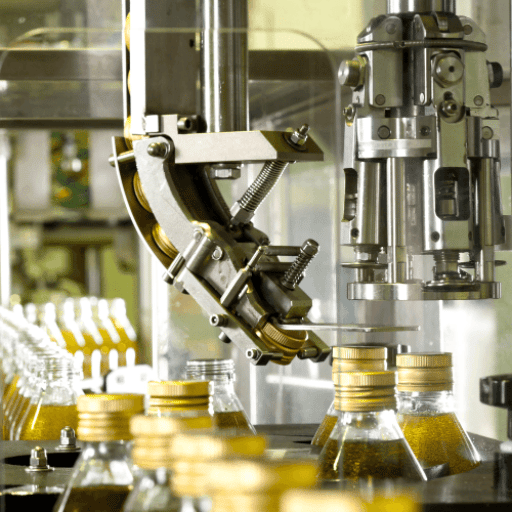
In the modern world, automation tech does wonders: in efficiency, in precision, and for adaptability. The advances in robotics brought up machine learning, the use of which for self-optimizing of processes within real-time systems is increasing. Also, cobots (collaborative robots) are an ongoing trend for utilizing precision automation while combining some supervision by human operators to ensure safety and performance. The use of automated cameras driven by AI for quality detection gives a cutting edge for detecting extremely minor defects. The cloud-based automation platform is also gaining momentum to assist in data integration and monitoring over several production sites. Together, they enhance the efficiency and the time-to-market for performance and cost-effectiveness across all corporate sectors.
Emerging AI-Powered Solutions
Emerging AI-wielded solutions are currently reshaping the industrial and operational landscapes in terms of precision, efficiency, and adaptability. There are the very advanced predictive maintenance systems that work using machine learning models for predicting equipment failures and hence minimizing downtime and cutting down on maintenance costs. Autonomous robotics powered by AI algorithms are performing complex functions with little human intervention for maximizing productivity and operational scalability. Also, sophisticated natural language processing systems are heralding a major transformation in customer service with cleverly designed chatbots and smart communication tools, cutting the time to respond and satisfying user interests. This exemplifies the potential of AI in solving current difficulties faced by the wider fields.
Robotics in Beverage Manufacturing
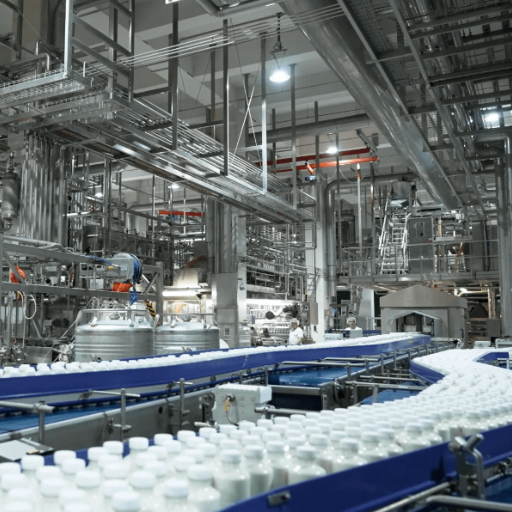
Robotic applications have boosted productivity, accuracy, and consistency in beverage manufacturing. They perform various tasks, including bottle filling, labeling, packaging, and quality control; these tasks, handled by automation technologies, result in minimal human error and increased production speed. Robotics advanced applications linked to sensors and computer vision systems are used to improve overall operations by continuously identifying defects while maintaining high-tier product quality. The processes streamline the fabrication flow and allow the manufacturers to meet increasing demands by diminishing scraps and cuts in operational costs.
Integration of IoT in Production Processes
IoT has made a grand entry into revolutionary operations where vital information is available simultaneously and in real time. When embedded within these machines, sensors have been getting accurate measures of their performances, maintaining cost-effectiveness and keeping the downtime at a minimum to ensure extended life-spans. The immense profitability generated amidst these colossal benefits backs its notion. The seamless connection presented between machines and various systems with IoT infrastructure has consolidated the establishment of data-driven decision-making. Thanks to this hyper-connection, production lines are optimized, bringing inefficiencies to light, correcting them, and adjusting workflows to ensure uninterrupted product quality and operational efficiency at less cost.
Applications of AI and IoT in Beverage Production
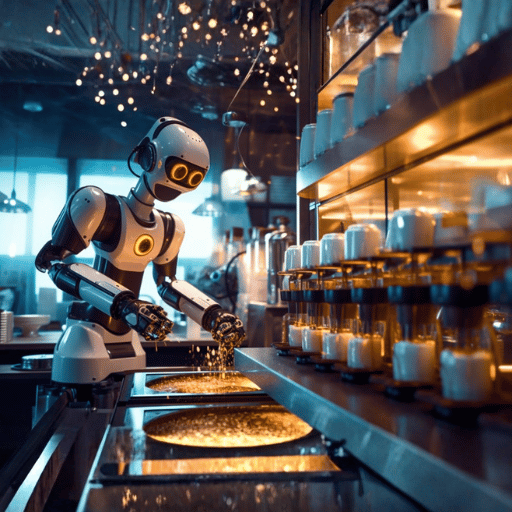
Regarding beverage production, AI and IoT technologies have changed normal functioning and quality control. Through AI-assisted systems’ predictive analysis, production timelines are optimized at the expense of delivering synergy in downtime and loss avoidance, while IoT-based devices ensure real-time monitoring of machinery and environmental conditions. This also helps with enhanced inventory management: automatic replenishment for the stock, thus reducing on-hand excess inventory. By using AI and IoT in synergy, the industry has been led to advanced functioning, improving resources, and ensuring consumer satisfaction.
Smart Supply Chain Management
To create highly integrated and responsive logistics frameworks, smart supply chains use cutting-edge technologies, such as artificial intelligence, the Internet of Things (IoT), big data analytics, and blockchain-enabled technologies. These innovations make it possible to have real-time visibility across a supply chain from one end to the other, while optimizing routing and resource allocation and enhancing forecast accuracy. By the automation of processes and improving the high transparency of data, businesses can minimize operational inefficiency, manage risk, deliver products faster, and attune for higher profitability and customer satisfaction.
Quality Control Through AI
Artificial intelligence (AI) has brought a shift in quality assurance for detecting defects marked by great precision, absolute consistency, and extensive possibilities for scaling. AI’s advanced computer algorithms undertake an extensive dataset analysis of every nuance, finding faster patterns and anomalies much more accurately compared to traditional inspection systems. Constant learning ensures an ever-improving performance capacity of AI-fitted techniques and adherence to changing production environments. AI integration in quality control helps greatly in the reduction of waste, decrease of errors, and steady enhancement of overall product quality, providing a competitive edge.
Operational Efficiency Gains
Within organizational processes, AI facilities offer significant efficiency gains by automating redundant functions, optimizing resource utilization, and streamlining procedures. Large swaths of real-time data can be processed fruitfully by efficient algorithms. Demand forecasting, inventory management, and production planning are calculated much more effectively, leading to less downtime and lower operational costs. Efficiency would be developed for more, while enhancing product quality. AI-based operations help organizations to dynamically scale and instantly respond to market pressures, enduring productivity and profitability.
Benefits of Leveraging AI in the Beverage Industry
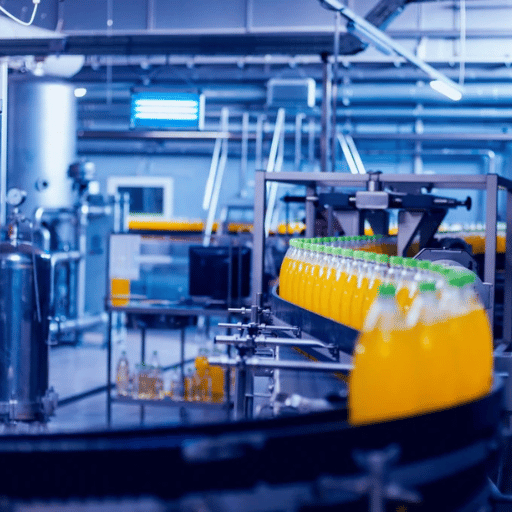
AI is about enhancing production and operational precision in the beverage industry, leading to significant measurable progress. Key benefits include:
- ✓
Increased Production Efficiency: AI systems optimize manufacturing workflows through real-time assessment of data, helping to alleviate bottlenecks. - ✓
Quality Control: AI monitoring tools detect defects and provide assurances about beverage consistency and customer confidence. - ✓
Demand Forecasting: Advanced AI spins market predictions by harnessing consumer behavior, transforming inventory planning into a direct science. - ✓
Cost Efficiency: Through predictive analytics, savings reach new levels by correcting imbalanced resource allocation and production inefficiencies. - ✓
Customer Personalization: Analysis of preferences leads to customized marketing campaigns, fostering brand loyalty and catalyzing sales.
Increased Efficiency and Productivity
For the beverage industry, AI helps increase efficiency and productivity by managing main processes like inventory management, demand forecasting, and production scheduling. By understanding raw sets of real-time data, AI ensures careful utilization of resources and avoids downtime everywhere while resolving the complexities of process automation. An AI-driven predictive maintenance system can reduce equipment breakdowns, and machine learning streamlines the supply chain functions, resulting in shorter time-to-market and lower operational expenses. This leads the organization toward maximum output and maintained quality.
Enhanced Product Quality and Consistency
AI-driven technologies critically improve product quality and consistency through advanced analytics and precision control. Machine learning algorithms find patterns or exceptions in the production process so that adjustments can be made in real-time to fabricate consistently with quality standards. AI-vision-based systems are able to perform machine quality controls with accuracy surpassing human ability, detecting microscopic defects. Such innovations promise that the products replicate commitment requirements and instill trust. The AI-integrated setting ensures smoother workflows and fewer deviations, pushing manufacturing performance to excellence.
Cost Reduction and Resource Optimization
AI technologies help in operational streamlining and ineffectiveness management, cutting down costs and optimizing resources. AI-backed predictive analytics enable organizations to foresee maintenance requirements, minimizing downtime and extending equipment life span. Moreover, AI-based demand forecasting ensures accurate inventory management, reducing waste and avoiding overproduction. Such systems also help reduce energy wastage by analyzing consumption patterns and introducing smart controls. AI streamlines resource allocation by removing repetitive tasks and enhancing decision-making, creating operational efficiency and financial benefits.
⚠️ Important Note
While AI offers massive efficiency gains, the transition requires a robust cybersecurity framework to protect industrial IoT networks from potential breaches.
Reference Sources
- Beverage Daily: We take a look at CPG automating manufacturing process.
- CRB Group: AI-driven techs change the way food and beverages go from the idea to the restaurant.
- Prime Source X: Points out how AI is altering everything from production through distribution and waste.
- Loftware: Explores the application of AI and cloud technology to sustain and monitor the entire operation.
Frequently Asked Questions (FAQs)
| Question | Answer |
|---|---|
| What do we mean by “Drink factory automation”? | It is the use of sophisticated technologies like AI and IoT for more orderly, efficient, and quality product development. |
| How can AI benefit drink manufacturing? | AI helps in the optimization of production processes, prediction of maintenance needs, minimization of waste, and data-driven decisions. |
| What are the top trends in automation? | Trends include the Internet of Things (IoT), smart sensors, predictive experience, and AI-based quality control. |
| How does automation improve quality? | It reduces human error, increases consistency, and bridges the gap through precise control of production parameters. |
| What are the financial benefits? | Automation lowers work expenditures, reduces waste, accelerates production, and fosters energy savings, spurring measured ROI. |

Candy
Articles: 37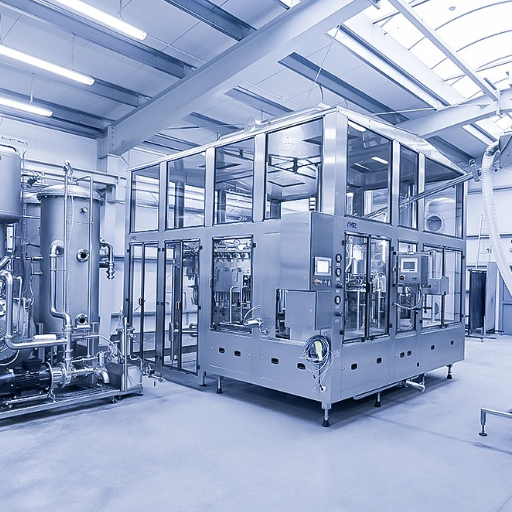
Trending now