Get in touch with Victorystar

Apple Juice Processing Line & Juice Production Equipment

Contents
show
Producing high-quality apple juice requires precision, efficiency, and the right ensemble of advanced processing equipment. The apple juice modern-day processing line is developed to make each and every step smooth, from washing and chopping the fresh apple to extracting, filtering and filling of the aftermath. This article shall be taking readers on the road of exploring state-of-the-art apple juice production equipment, helping them understand how these systems have further cemented product quality and operational efficiency. If you are a manufacturer whose production line would never see you win, or an eager learner about what’s new to the industry in processes and given to gathering huge depth of knowledge about achieving exemplary apple juice production, see this altered part of apple juice production excellence journey.
Overview of Apple Juice Production
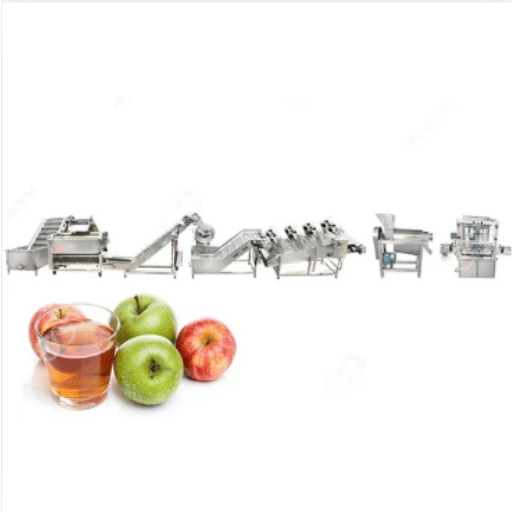
Apple juice production is a process that carries on to extract, clarify, and preserve the juice’s qualities while preserving flavor in the juice. The process begins with selecting and washing apples to remove impurities. Once the apples are clean, they are crushed to dissolve their juice. These crushed apples are then pressed to separate the juice from solid particulates. The juice is then clarified and pasteurized to maintain its safety and increase its shelf life. Finally, the juice is aseptically packed to prevent contamination and preserve freshness. Each treatment was conceived to elevate the efficiency and product quality.
Importance of Juice Processing
Why Juice Processing Matters
Juice processing stands out as tremendously important for the safety, quality, and shelf-life of the product. Pasteurization removes harmful microorganisms and filtration eliminates impurities to guarantee a better safety profile of products for consumers.
The process also helps maintain product flavor, increase nutrient retention, and stabilize the product, thereby facilitating the juice to meet regulatory requirements and consumer quality expectations. It acts as an enabler for the production of juices on a large scale (at an efficient rate) for distribution to buyers around the world according to the yearly season.
Global Market Trends for Apple Juice
📈 Current Market Dynamics
The global apple juice market sees steady growth mostly driven by the heightened consumer demand for healthier and organic beverage alternatives. A notably major trend is that most companies have embraced the cold-pressed juice process to maintain most nutrients as well as the natural flavors of the apple, which fit well with the consumer’s demand for minimally processed products.
- Significant growth in developing countries due to increasing disposal incomes
- Dietary habit changes driving market expansion
- Sustainability practices adoption by manufacturers
- Environmentally friendly packaging initiatives
- Carbon footprint reduction during production
Types of Apple Juice Products
Different types of apple juice can be broken down according to the method of production. The apple juice categories mostly categorize clear apple juice, which has been filtered to remove the pulp, and thus becomes quite see-through, and cloudy apple juice, in which small particles of suspended apple juice that have not been filtered remain in suspension creating a natural, unfiltered characteristic.
| Product Type | Description | Key Characteristics |
|---|---|---|
| Clear Apple Juice | Filtered to remove pulp | Transparent appearance, smooth texture |
| Cloudy Apple Juice | Unfiltered with suspended particles | Natural appearance, richer flavor |
| Concentrated Apple Juice | Water extracted for storage and transport | Extended shelf life, reduced shipping costs |
| Not-From-Concentrate (NFC) | Bottled with minimal processing | Fresh flavor, premium quality |
| Organic Apple Juice | Made from organically grown apples | No synthetic additives, certified organic |
Market Impact: This variation, therefore, should be in line with diverse consumer preferences and dietary considerations and also be expected to continuously stimulate the apple juice market.
Key Manufacturers of Apple Juice Processing Lines
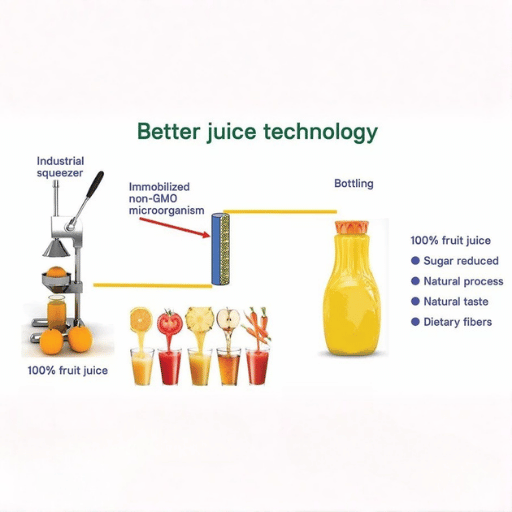
Several key players in the industry offering apple juice processing lines are specialized in bringing to market machines and technologies that are advanced thus providing for efficient outputs with high quality. The major manufacturers in this industry are:
🏭 Bucher Industries
With key fruit processing technologies on offer, Bucher provides comprehensive solutions for juice extraction, filtration, and pasteurization.
🏭 GEA Group
As a global leader in food processing systems, GEA designs customizable equipment to ensure quick production of the juice and its coverage.
🏭 Krones AG
Renowned for automation and precision, Krones is there for the benefit of the juice-processing plant with incidentally integrated processing and packaging lines.
🏭 Tetra Pak
The aseptic processing and packaging and such devices are excellently delivered by Tetra Pak with great care for maintaining juice quality and safety.
🏭 FENCO Food Machinery
FENCO is known for specializing in turnkey fruit-processing lines, as it provides reliable equipment tailored for juice extraction and processing.
Industry Excellence: They stand out for their technological advances, sturdy machinery concepts, and global service networks, accommodating both big and small fruit juice developing firms.
Leading Global Manufacturers
The global giants in the industry have continued to deliver cutting-edge solutions for the juice industry. They also excel by blending innovation with trust. Their equipment and technologies are all about increasing productivity, delivering quality results, and meeting the stringent food safety requirements. Powered by their knowledge and substantial service networks, they cater to the myriad needs of producers—be they high volume or rather specialized—thus establishing themselves as the most relevant allies in the universe of juices.
Regional Leaders in Juice Production
Juice industry leaders in the region are known for their superior manufacturing processes, complying with the required ISO standards, and staying abreast of the evolving changes in consumer preferences. With advanced process equipment, the leading players are able to derive competitive advantage from innovation, green sourcing, and a wealth of attractive offerings in their branded product lines. In addition, they focus on economies of scale, improving quality, and supply chain logistics to meet the requirements of domestic and international markets efficiently. They respond to market expectations from their know-how, which provides for a continued delivery of high-quality juice products that further develop the global juice industry.
Comparison of Equipment Providers
Several key elements must be reviewed to ensure that they meet production objectives and provide operational reliability while comparing various equipment providers in the juice industry. A decision should then be made on evaluation criteria and the emphasis should be placed on technological advancement of equipment, durability, and ability to handle huge production transactions.
Advanced companies provide made-to-measure designs and include automated functionality for accuracy and decreased wastage. Similarly, providers who exhibit good energy-savings and conform to standards determine the buyers’ choice. Besides, the attributes such as cost considerations, ease of maintenance, and efficient after sales support further differentiate praiseworthy suppliers from market competitors. This detailed overview by the means of these principles enables companies to choose among best-liked suppliers for one’s specific processing exigencies.
Technological Innovations in Juice Processing
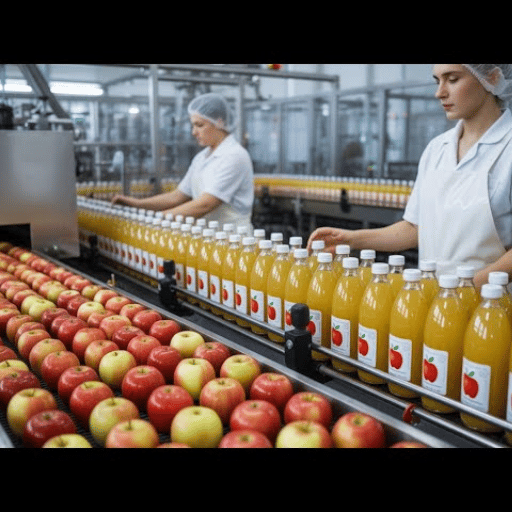
Technological advances in juice processing are focusing more on productivity, product quality, and sustainability. Some of the significant innovations include improved cold-press technology which extracts juice without heat, thereby preserving nutrients and flavors, and the employment of membrane filtration for clear clarification and concentration.
🚀 Key Technological Advances
- Continuous Pasteurization: Ensures consistent microbial safety while keeping the fresh taste
- Automated Processing Lines: Integrated with IoT for real-time monitoring
- Increased Production Accuracy: Decreased downtime and far less waste
- Industry Direction: Progressively driving towards efficient and sustainable production
Cold-Press Extraction Techniques
In cold-pressing, essential oils are extracted directly from the plants through both hydraulic presses and screw presses, literally with no heat processing which otherwise denatures heat-sensitive nutrients of the oil or juice. During cold-pressing, components (for instance, nuts or fruit) create mechanical pressure,-formed using a range of equipment for no solvent use.
It is a highly controlled process that checks oxidation and protects the original flavor of natural ingredients and the nutritional presence, which makes it attractive to many producing high-quality products.
Industry Trend: The cold-press method comes at a time when the industry is moving more toward trends and standards in production that have a “clean label and sustainability.” This suggests that the cold-press technique will make it more and more desirable to manufacturers investing in ultra-modern practices.
Automated Filtration Systems
Automated filter systems provide a specific, efficient and consistent method to remove impurities across different production processes. These systems are designed to eliminate as much manual input as possible, thus increasing the accuracy of operation and reducing downtime. This, in turn, enhances overall productivity. Therefore, with such advanced sensors and real-time monitoring, together these filters continue to ensure their highest levels of performance while minimizing waste and energy usage. It is of critical importance in the these industries that require high-quality output (e.g., food and beverages, pharmaceutical enterprises, chemical manufacturing) through adherence to the highest standards of quality and compliance.
Advancements in Sterilization Methods
| Method | Technology | Benefits |
|---|---|---|
| Vapor-Phase Hydrogen Peroxide (VHP) | Gas-phase sterilization | High-speed decontamination, minimal chemical residues |
| Electron-Beam Irradiation | Radiation-based treatment | Fast processing, no thermal effects |
| Plasma-Based Systems | Low-temperature plasma | Sensitive application compatibility, precision control |
Modern Applications: These methods are particularly beneficial in sensitive applications like medical device manufacturing and aseptic packaging sites, where precision and following strict regulatory standards are critical. Additionally, digitalization and automation in sterilization devices are increasing efficiency and helping to ensure accurate, consistent, and compliant results in compliance with rigorous industry standards.
Essential Factors for Selecting Equipment Suppliers
1. Product Quality and Reliability
Assure that the material goods and products presented by the supplier abide by industry standards and display consistent performance under operational conditions.
2. Compliance with Standards
Always validate whether or not the equipment accurately adheres to the best regulatory and quality standards, such as ISO badges or rules that are inherent within the specific industry.
3. Technological Capabilities
The reliability of the supplier in adopting and tailoring modern technology to provide the most advanced for efficiency, automation, and scalability; the strength and potential of the supplier in adapting to future evolutions in technology will also be assessed.
4. Service and Support
Assess the availability of resources and services, including technical support, maintenance, repair, and replacement parts, to ensure minimal operational disruptions caused by nonavailability of alternatives, assistance, or maintenance.
5. Cost-Effectiveness
Assess the tangible benefits, including cost balance in initial pricing, sustainable operational efficiency, and sustainable durability of machinery, and weigh both aspects carefully to get a maximum return on percentage value.
6. Reputation and References
Investigate the reputation of your supplier in the industry, and collect comments or testimonials from known clients that are convinced.
Selection Outcome: All these stepping stones taken together lead to the choice of a supplier mapping to operational requirements and long term business aims.
Compliance with Food Safety Standards
To be food safe would take stringent detailing under the guard of the food safety standards lemon for resilience to any regulations that might come by as best practices to have some regards to implementing Hazard Analysis Critical Control Point (HACCP) principles, documentation for traceback, and auditing to assure line-to-line security compliance.
Complemented with training for employees, quality assurance, and investment in hygienic infrastructure encourage compliance. This ensemble of interventions then helps control securing consumer health, against any contamination threats, and hence endorses the agency’s deterministic establishment as a leader in the industry by sustaining its qualified privilege.
Importance of After-Sales Support
Why After-Sales Support Matters
After sales support is quite important to ensure that customer satisfaction is maintained and brand loyalty is fostered. The it helps ensures that any problem faced by a customer post-purchase is solved with due diligence, thus preserving product performance and extending its life cycle.
- Effective customer service practices utilizing after-sales programs
- Support, maintenance, and warranties reveal company’s commitment to quality
- Strong support enhances brand reputation
- Encourages customers to buy again
- Facilitates valuable feedback to improve the product
Evaluating Energy Efficiency of Equipment
Evaluation of the energy efficiency of equipment requires some key performance assessments such as energy consumption per operational cycle, power-to-output ratio, adherence to some kind of energy efficiency norm like ENERGY STAR or ISO 50001, etc.
Detailed assessments usually include monitoring of energy use trending patterns under varying operational loads, calculating payback period of energy-efficient upgrades for comparing baseline consumption with optimized configurations.
Professional Approach: These evaluations will not just drive down energy costs but also coincide in respect to sustainability goals and regulatory requirements. A professional-looking approach to the matter would be the use of certified energy auditors and specialized inspection tools which guarantee compliance and continuous improvement.
Apple Juice Production Line Equipment

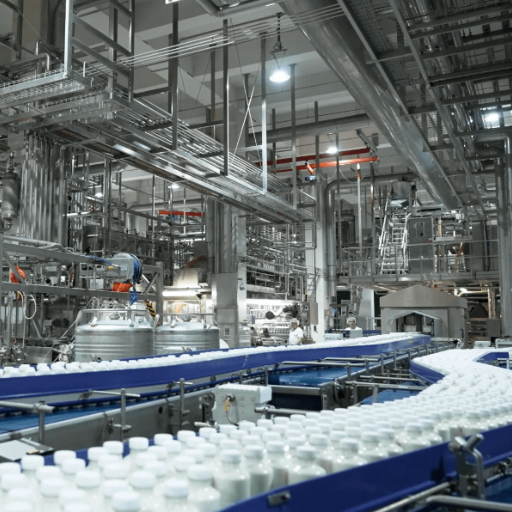
Equipment used in apple juice production lines plays a crucial role in ensuring efficient and high-quality manufacturing processes. The main components typically include the following:
| Equipment | Function | Purpose |
|---|---|---|
| Fruit Washer | Removes dirt, pesticides and impurities | Ensures clean apples before processing |
| Crusher | Grinds apples into pulp | Prepares apples for juice extraction |
| Juice Extractor | Separates juice from fruits by pressing or centrifuging | Maximizes juice yield from pulp |
| Pasteurizers | Heats juice to kill microorganisms | Extends shelf-life while preserving nutrient value |
| Filling and Packaging Machines | Bottle filling with exact measurement | Prevents spillage and ensures consistency |
Production Excellence: Together, thus, these machines create huge demand essence for a sleek, hygienic, and consistent production of apple juice.
Overview of Processing Machines
🚿 Washer/Cleaner
Efficiently extracts dirt and other contaminants while ensuring the cleanliness of the raw fruit before processing.
🍎 Juice Extractor
Gives full leverage for pressing or centrifugation to fetch very high yields while preserving the natural flavor and nutritive value of the juice.
🔥 Pasteurizer
Uses carefully controlled-heat techniques for mineralizing harsh microorganisms while retaining fundamental nutritional heritages.
📦 Filling and Packaging Machine
Keeps sealed and fresh products that ensure contamination does not find way in by accurate controlled portioning with every run.
Integrated System: These machines were in looking of a system to be integrated in order to produce a final end product of high quality, safety and consistent.
Filling Line Technologies
Filling line technologies involve cutting-edge systems engineered to enhance the efficiency, precision, and cleanliness of the filling and packaging processes. Filling line technologies are automated with various types of control systems to guarantee consistent fill volumes, minimal waste, and compliance with strict sanitary standards. They are used for liquids with different viscosities and container types, so that they fit nicely with different product lines. State-of-the-art technology may offer real-time monitoring and quality assurance protocols that can provide excellent reliability and regulatory compliance.
Turnkey Solutions for Juice Processing Plants
Complete Production Solutions
Turnkey solutions for juice processing plants are aimed towards the design, installation, and commissioning of integrated systems for the fulfilment of industry-specific requirements. These solutions include a wide variety of equipment-from fruit washers to extractors, pasteurizers, and filling machines-all of them tailored to efficiently produce using high-quality methodologies.
Their embargoing on the right automation and up-and-about integration, turnkey systems can help fasten up the setup times and simplify the operational complexities, resulting in maintaining the safety standards of food products.
Business Impact: This helps the manufacturers to consider the right scaling in terms of production, as well as profitability, and rely more on the technical and operational expertise of their professional partnerships.
Reference Sources
📚 Mordor Intelligence – Global Apple Juice Market
Offers a view of the apple juice market growth trends and industry forecasts.
📚 Data Bridge Market Research – Global Apple Juices Market
Focuses more on market size, growth forecasts, and trends of apple juices globally.
📚 Market Reports World – Apple Juice Concentrates Market
Does it give an analysis of the apple juice concentrate market, with the distribution of regional market shares and capacities for processing?
📚 Montezuma Orchard Restoration Project – Business Plan For Apple Juice Production
Presents a business plan for apple juice production, such as target customers and goods that can be processed.
📚 Credence Research – Apple Juice Market Size and Growth Trends
Discusses the size of the apple juice market, trends, and previsions up to 2032.
Frequently Asked Questions (FAQs)
What are the machines available in an apple juice processing line?
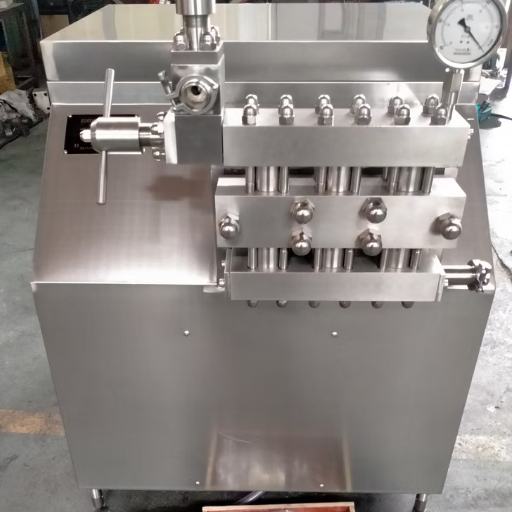
A simple processing line would have a washer, a peeler, a shredder, a juice extractor, a pasteurizer, a homogenizer, and a packager.
Can the process line handle any other fruits apart from apples?
In principle, the process line could be used for several different types of fruits, e.g., pears, peaches, and grapes, and require minimum changes.
What are some certifications required for apple juice processing equipment?
Various certifications include ISO, CE, and FDA-compliance certifications to ensure the equipment complies with quality and safety standards.
What is done in maintenance for this equipment?
Proper cleaning, lubrication, and inspection of the machines on a regular basis are required for the effectual performance and proper functioning of the equipment.
What are the current trends in apple juice processing technology?
Some of the other trends in apple juice processing technology are automation, energy-efficient systems, the use of aseptic processing, and designs of equipment for sustainable and eco-friendly production.
🍎 Conclusion
The apple juice production line represents a comprehensive integration of advanced machinery, precise processing techniques, and quality control systems. From initial fruit washing to final packaging, each component plays a vital role in delivering high-quality, safe, and nutritious apple juice to consumers. As the industry continues to embrace technological innovations, cold-press extraction methods, automated systems, and sustainable practices, manufacturers are better positioned to meet evolving consumer demands while maintaining superior product standards. The selection of reliable equipment suppliers, compliance with food safety regulations, and implementation of efficient production processes remain critical factors for success in the competitive global apple juice market.

Candy
Articles: 37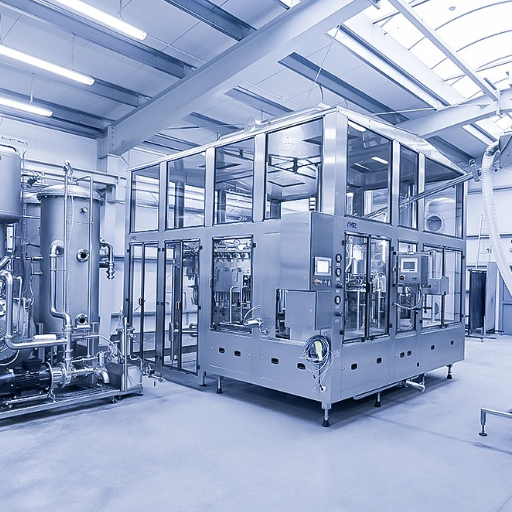
Trending now