Get in touch with Victorystar

What Is UHT Processed Milk?

Contents
show
Milk is an item that most families consider indispensable in their kitchens no matter where on the globe they live, but if at all you could imagine how it stays fresh for weeks or even months without refrigeration in some spots? The solution is UHT (Ultra-High Temperature) processed milk. UHT processing is a fantastic method that takes the milk and converts it into a longer-lasting product while simultaneously retaining the vitamins, nutrients, and taste. But what is the secret of this procedure, and what makes UHT milk distinct from the other milks? In this post, we are going to examine closely the scientific underpinning of UHT processed milk, its benefits, and some of the misconceptions around it. If you are a customer who wants to learn more or is just trying to make the right decisions for your family, this article will provide you with all the knowledge required regarding this innovative milk solution.
Understanding UHT Milk
Definition of UHT Processed Milk
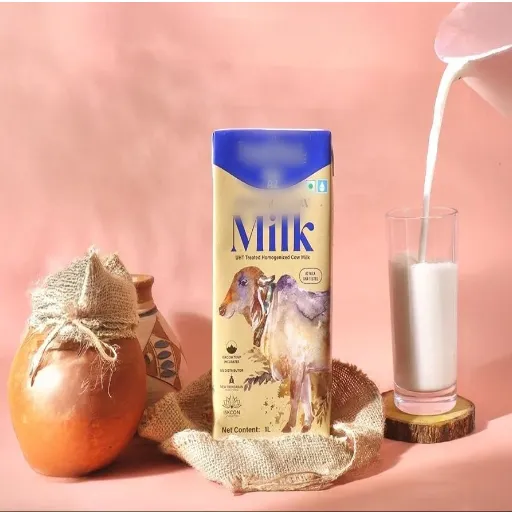
Ultra-High Temperature (UHT) processed milk is a type of milk that has undergone heating at super high temperatures, practically between 135 and 150 degrees Celsius (275 and 302 degrees Fahrenheit) for a very short time, that is 2 to 5 seconds, and the process would be a two-step giving the good out-come of milk treatment through the two steps of killing all the harmful bacteria and microorganisms present in the milk and retaining the milk’s nutrients and extending the milk’s shelf life at the same time. UHT milk is clearly different from milk to which the pasteurization process has been applied and that needs to be refrigerated and has a short shelf life in terms of UHT milk being controlled in a manner that it is allowed to stay at room temperature for months if unopened. Hence, it is really a great choice for both households and factories, especially in regions where there is no common refrigeration.
Differences Between UHT and Pasteurized Milk
UHT (Ultra-High Temperature) milk and pasteurized milk are mainly differing in their heat treatment methods and the duration of shelf life which is respectively the consequence of the treatment methods. UHT milk is rapidly heated to 275°F (135°C), though it is a very high temperature, and then held for only 2 to 5 seconds, which practically all microorganisms including spores are killed. This ultra sterility enables UHT milk to be stored at room temperature for 6 months or more if unopened under proper conditions and without refrigeration. In contrast, pasteurized milk is treated to a temperature lower than 161°F (72°C) for 15 seconds (in the case of high-temperature short-time pasteurization). Unlike UHT, this process would lead to a 7–10 days shelf life of milk when refrigerated because it kills almost all the bad bacteria but does not remove all spores.
Key Distinctions:
- Taste Profile: UHT milk might taste slightly “cooked” because of high temperature, while pasteurized milk maintains a flavor closer to that of raw milk
- Nutrient Impact: UHT processing could cause a negligible loss of some heat-sensitive vitamins such as Vitamin B12, while pasteurization usually does not have much effect on the nutrient profile
- Usage Preferences: UHT milk is preferred in places with little refrigeration and for long storage needs, while pasteurized milk is often chosen in areas where fresh dairy is part of the local diet
Characteristics of Fresh Milk vs. UHT Milk
Fresh milk and UHT (Ultra-High Temperature) are totally different types of milk when it comes to processing, shelf-life, taste, and nutrients. Fresh milk is generally pasteurized using the low-temperature method that helps to keep the natural taste and nutrient content intact. On the other hand, it has to be refrigerated all the time and has a very short shelf life of only about a few days after buying. This is the reason why in areas where good refrigerator facilities and grocery store access are available, fresh milk is considered the best for daily consumption.
In contrast to this, UHT milk goes through the thermal process where it is exposed to higher temperatures for a few seconds which not only sterilizes the milk but also gives it a shelf-life of up to six months or even more if the carton is unopened. The UHT process takes away certain enzymes and a few heat-sensitive nutrients along with imparting slight changes in taste and mouthfeel the reason being fresh milk. Nevertheless, the prolonged shelf-life and the ease of storage make UHT milk more widely used in regions lacking refrigeration or for those consumers willing to take the chance of spoilage-free extended use.
📊 Consumer Trends
At the end of the day, the call between fresh and UHT milk rests on personal taste, nutrition, and such matters as storage capacity. Fresh milk and UHT both supply your body with essential nutrients such as calcium and protein; however, fresh milk is still more popular for its taste and nutrient retention while UHT provides unmatched convenience. Recent trends in search data indicate that UHT milk has become more popular among consumers, especially in areas with infrequent access to grocery stores or as a response to the need for stocks of emergency food.
The UHT Process Explained

How the Ultra-High Temperature Processing Works
Ultra-High Temperature (UHT) processing is one of the sterilization techniques which involve heating the milk and other liquid food products to a temperature around 135–150°C (275–302°F) for a very short time of 2 to 5 seconds, or even less. The process of rapid heating and cooling makes sure that any bacteria and microorganisms that are dangerous are killed and at the same time the product’s nutritional value is preserved and the shelf life is extended. The secret is in the very short time exposed to the heat, which allows no major changes in taste or nutrient loss. After that, the UHT milk is packed in sterile vacuum-sealed containers so that the product remains fresh and does not get contaminated.
🌱 Growing Demand
Recent data from search trends has revealed that there is an increasing demand for UHT milk which is characterized by people searching for its durability and small refrigeration requirements. This is in line with the trend of consumers becoming more concerned about the convenience of products and their role in reducing food waste, especially in places with restricted access to fresh milk. The mix of advanced UHT technology and the practicality of long shelf life makes UHT milk very appealing for use in households worldwide.
Temperature and Duration of UHT Treatment
Ultra-high-temperature (UHT) treatment provides the basic technology for the sterilization of milk and is characterized by heating the milk until it reaches about 135–150°C (275–302°F), and kept at that temperature for a time not longer than 2 to 5 seconds. The rapid heating process is immediately followed by cooling. The exact temperature and time combination are very important because they not only guarantee the killing of harmful microorganisms but also the preservation of milk’s bioactive components and taste to the greatest extent. Based on the latest data from search engines, these parameters are tuned to optimize between increasing the milk’s shelf life to up to 6–9 months without refrigeration and upholding quality. It reflects the change in the consumer market who are looking for options that are not just healthful but are still convenient and long-lasting.
Scientific Principles Behind Sterilization
Thermodynamics and microbiology are the main principles sterilization is based on, to get the elimination of microbes to the desired level. Processing at high temperature efficiently changes cell membranes and interferes with metabolic activities of the microorganisms down to the level of just inactivation or total killing. To illustrate, the UHT (Ultra High Temperature) method heats milk to 135–150°C (275–302°F) in an incredibly swift way and in a few seconds ruins the pathogens and organisms responsible for spoilage. The rapid heating and cooling also result in nutrient loss being very low and flavor being preserved.
💡 How Does UHT Extend Shelf Life?
According to search engine data, the most common consumers question is: “How does UHT processing extend shelf life without refrigeration?” The improvement of the answer lies in the aseptic packaging which is applied after the sterilization along with the sterilization method. After UHT treatment, the milk is bottled in containers that are sterilized and thus do not let air or pathogens in. This joint operation will help the milk to maintain its safety for room temperature storage for months and still provide the customer with convenience and nutritious product.
Advantages of UHT Milk
Disadvantages of UHT Milk
Flavor Profile Modifications
One of the biggest UHT milk drawbacks is its change of taste compared to fresh milk. Its high-temperature processing for long shelf life may lead to a very slight “cooked” or caramelized taste that may be unappealing to some consumers. The data from search engines indicates that consumers are indeed aware and curious to find out the differences in taste between UHT milk and fresh milk since they’re asking questions about it.
For some people this most unappealing feature is the only reason for which the milk has not lost its appeal in areas of limited storage and long shelf life products being the only option. The data though indicates that UHT milk, despite being a different flavor, has still a very important role in the market as the main feature of that need for convenience and less spoilage is very much more important than those sensory drawbacks to a lot of consumers.
Nutritional Content Impact
Looking from the nutritional aspect, the ultra-high-temperature milk processing has little effect as most of the important nutrients are not reduced at all. By and large the main vitamins that get diminished are Vitamin C and some of the B vitamins. The recent data from search trends suggests that consumers are especially worried whether UHT milk has the same health benefits as fresh milk. In this regard, scientific evidence assures that UHT milk is usually on a par with its fresh counterpart as far as nutritional value goes, and being the latter, it is an everyday source of dietary needs, especially so in the places where fresh milk is hard to come by.
Consumer Perception and Acceptance
The latest data from search engines shows that consumer perception of UHT milk is influenced by factors such as where consumers live, how accessible the products are, and how much they understand the products. Many search users are still concerned about whether UHT milk has the same advantages as fresh milk. Research says UHT milk, however, only loses a small fraction of its nutritional value, with the most important proteins, calcium, and vitamins still present in significant amounts. But, the factors like taste and freshness still rank higher than price among many people’s choices. Though UHT is usually not the first choice, it has become widely accepted where the long shelf life and ease of use are real great benefits and in such case, UHT is the only solution that can help reduce waste and availability in hard-to-reach areas. So, it may happen that the only differences between UHT and fresh milk are their taste and texture but still, UHT milk is a nice option to meet the dietary needs.
Nutritional Impact of UHT Processing

Effects on Vitamins and Proteins
UHT (Ultra-High Temperature) processing technique brings the milk to high temperatures (roughly 135-150°C) for a very short duration thus making it possible for the milk to be stored for many months without spoiling. This, however, does not mean that all the nutrients in the milk have been fully removed; rather it has had an impact on them, especially on the vitamins and proteins. It has been reported that most of the vitamins such as Vitamin B2 (riboflavin) and A are still more or less preserved but on the other hand, heat sensitive vitamins like C and some B-group vitamins (mainly B12) could undergo slight reduction.
Nutritionally speaking UHT milk still has its protein content as mainstay, especially since the essential amino acids are not lost at this point. Though the protein may undergo structural changes like denaturation and such, it is still unclear whether these changes have any effect on the digestibility or the overall functionality of the protein. Nonetheless, UHT milk is still a good source of nutrition with both vitamins and proteins sufficient for a vast majority of people. Findings indicate that UHT processing has upheld its claims of both prolonging the life of the product and retaining the vital nutrients for a good diet.
Texture and Taste Characteristics Compared to Fresh Milk
UHT milk has a few characteristics in texture and taste when compared to fresh milk that can affect consumer preference. The high-temperature treatment UHT milk is said to have a slight creamy and thick texture. This is because during processing some of the proteins and fats are broken down, and the mouthfeel of the milk is changed only slightly.
When it comes to the taste, UHT milk can be said to have a “cooked” or caramelized flavor caused by the Maillard reaction taking place as the product is heated. This flavor is stronger than in fresh milk which has a less pronounced, lighter, more traditional dairy taste. Although, the different features of UHT milk are welcomed by some consumers, the others prefer the soft and fresh character of the pasteurized milk.
🔍 Consumer Curiosity
Recent data indicates that consumers are continually curious about the sensory differences of UHT milk, as reflected in search trends which mainly revolve around the issue of whether these changes have an impact on the dietary value or the overall appeal of the product. Meanwhile, the scientific evidence points to the opposite end of the spectrum as it claims these changes are trifling and that UHT still holds its nutritional value while serving a wider clientele that appreciates the ‘convenience and longevity’ aspect in their dairy products.
Balancing Nutritional Value and Shelf Stability
The consumers still doubt whether the treatment method UHT (Ultra-High Temperature) has a significant impact on the milk’s nutritional value, and indeed, the studies and data disagree. New research indicates that UHT and pasteurized milk are almost identical in their nutritional contents. The latter is only a little bit poorer in some heat-sensitive vitamins like C and B12; however, the main macronutrients, protein, fat, and carbohydrate are almost completely unaffected. The search queries point out that there is an increasing interest in the understanding of these minor differences, which reveals the demand for information among health-conscious consumers. Ultimately, UHT milk is a perfect combination of nutrition and long life; it is able to meet the needs of the present day, which is characterized by a preference for convenience, without making significant dietary losses.
Comprehensive Comparison Table
UHT Milk Selection Checklist
✓ Factors to Consider When Choosing UHT Milk
- ✓
Check the expiration date and ensure packaging is intact with no damage or swelling - ✓
Verify storage conditions – unopened UHT milk should be stored in a cool, dry place away from direct sunlight - ✓
Consider your household’s milk consumption patterns – UHT is ideal for irregular or low consumption - ✓
Evaluate taste preferences – try different brands to find one that suits your palate - ✓
Review nutritional labels to ensure adequate protein, calcium, and vitamin content - ✓
Assess refrigeration availability in your home or workplace - ✓
Consider purchasing UHT milk for emergency preparedness and travel purposes - ✓
Once opened, refrigerate immediately and consume within 3-5 days - ✓
Compare prices – UHT milk may be more economical for reducing waste in low-consumption households - ✓
Look for reputable brands with quality certifications and safety standards
Advantages vs. Disadvantages Analysis
✓ Advantages
- Extended Shelf Life: Up to 9 months at room temperature without refrigeration when unopened
- Convenience: Perfect for travel, emergencies, and areas with limited refrigeration access
- Food Safety: Eliminates harmful bacteria and microorganisms, including spores
- Waste Reduction: Longer shelf life helps minimize food waste from spoilage
- Energy Efficiency: Reduces energy consumption by eliminating constant refrigeration needs
- Nutritional Value: Retains most essential nutrients including proteins, calcium, and vitamins
- Distribution Benefits: Easier transportation and storage for retailers and consumers
✗ Disadvantages
- Altered Taste: May have a slightly “cooked” or caramelized flavor compared to fresh milk
- Texture Differences: Can be slightly creamier and thicker than pasteurized milk
- Vitamin Loss: Minimal reduction in heat-sensitive vitamins like B12 and C
- Consumer Preference: Some consumers prefer the traditional taste of fresh pasteurized milk
- Initial Acceptance: May require adjustment period for those accustomed to fresh milk
- Limited Availability: Less common in some regions where fresh milk is preferred
- Packaging Dependency: Quality relies heavily on intact, sterile packaging
Frequently Asked Questions (FAQ)
Practical Tips for UHT Milk Usage
🏠 Storage Best Practices
Store unopened UHT milk in a cool, dry pantry away from direct sunlight. Avoid areas with temperature fluctuations. Once opened, treat it like regular milk and refrigerate immediately.
🚗 Travel Companion
UHT milk is perfect for camping, road trips, and travel where refrigeration is unavailable. Pack individual servings for convenience and portion control.
🍳 Cooking Applications
Use UHT milk in cooking, baking, and coffee preparation. The taste difference is less noticeable in prepared foods and hot beverages.
📦 Emergency Preparedness
Include UHT milk in your emergency food supply. Rotate stock regularly and check expiration dates to maintain freshness.
💰 Budget-Friendly Option
Buy in bulk when on sale since UHT milk has extended shelf life. This reduces shopping frequency and minimizes waste from expired products.
🔍 Quality Checks
Always inspect packaging before purchase. Avoid containers with dents, swelling, or damage. Check for unusual odor or texture when opening.
Key Takeaways and Summary
🎯 Essential Points to Remember
Revolutionary Processing: UHT milk undergoes ultra-high temperature processing at 135-150°C for just 2-5 seconds, eliminating harmful microorganisms while preserving essential nutrients and extending shelf life up to 9 months at room temperature.
Safety and Convenience: The combination of rapid heat treatment and aseptic packaging creates a safe, shelf-stable product that eliminates refrigeration needs until opening, making it ideal for travel, emergencies, and areas with limited cold storage.
Nutritional Integrity: Despite the high-temperature treatment, UHT milk retains most vital nutrients including proteins, calcium, and the majority of vitamins, with only minimal losses in heat-sensitive vitamins like B12 and C.
Taste Considerations: UHT milk may have a slightly “cooked” or caramelized flavor due to the Maillard reaction during processing, which differs from the fresher taste of pasteurized milk, though many consumers find it acceptable or even preferable.
Global Adoption: UHT milk is particularly popular in Europe and regions with limited refrigeration infrastructure, reflecting growing consumer demand for convenient, sustainable, and waste-reducing dairy options.
Practical Applications: Once opened, UHT milk requires the same refrigeration as pasteurized milk and should be consumed within 3-5 days, making it an excellent balance between convenience and traditional dairy consumption patterns.
🌍 Global Perspective
UHT (Ultra High Temperature) treated milk is a great example of food technology that has made a major breakthrough and has dealt with food safety, waste, energy, and the necessity of universal availability as different challenges. The evolution of consumers’ preferences is directed towards convenient products that are still nutritious, so UHT milk is very attractive for the modern family. Among the various uses of UHT milk, one is emergency supply stocking, another is camping, and then there are people who want to cut down on their food waste and energy consumption. UHT milk is there with a nutritious, reliable choice. The technology that makes UHT processing possible demonstrates how scientific innovations can make everyday products better while still keeping up with quality standards and meeting the diverse needs of customers in different regions and lifestyles. Knowledge of UHT milk’s pros and cons together with its characteristics gives the power to the consumer to choose wisely as per his/her preferences, nutritional needs, and practical situations.
Reference Sources
- US Dairy
This article explains UHT milk as ultra-pasteurized milk heated to 138°C or higher for at least 2 seconds, making it nearly sterile and shelf-stable for over 6 months.
- Dairy Nutrition
Provides insights into UHT milk, describing the combination of ultra-high temperature processing and sterilized packaging that produces shelf-stable milk.
- Tetra Pak
Offers a detailed FAQ on UHT milk, explaining the rapid heating process and its benefits for sterilization and shelf stability.

GW
Articles: 39

Trending now