Get in touch with Victorystar

The Ultimate Guide to UHT Milk Processing Line: Advanced Techniques

Contents
show
The soaring global demand for long-shelf-life dairy products has indisputably established UHT milk as one of the main products in the world markets. Its safety and quality have positioned it among the daily necessities everywhere from Europe to Asia. The factor that will determine the producers’ success among the competition is the quality of their products, and thus the companies that will survive are those using advanced techniques. Winning in this industry means that the entire UHT milk processing line will have to be optimized for efficiency and quality while at the same time promoting sustainability.
This manual reveals the advanced techniques that are applying changes in the production of UHT milk. We will first provide a comprehensive description of the UHT process and explain the necessary parts of a processing line in detail. Even more so, we will be examining the innovations in sterilization, filling technology, and quality assurance that make the top producers different from one another. Welcome to the Ultimate UHT Milk Processing Line Guide, created to equip you with an extensive understanding of the methods that lead to triumph.
📊 Industry Overview
- Shelf Life: 6-9 months unopened at room temperature
- Processing Temperature: 275°F – 302°F (135°C – 150°C)
- Processing Time: 1-2 seconds
- Energy Recovery: Up to 90% through regenerative heating
How UHT Milk Processing Works

Ultra-High Temperature (UHT) processing, a food preservation technique, involves the sterilization of liquid food, mainly milk, by exposing it to high temperature for a short time. The main goal is to destroy all microorganisms and their spores making the product commercially sterile. This process allows the milk to be kept for several months at room temperature without any changes in quality, which is a major advantage over traditional pasteurization methods.
⚡ The UHT Process in Action
The UHT procedure consists of quickly bringing the temperature of the milk to between 275°F and 302°F (135°C to 150°C) for one to two seconds. The intense heat is then immediately followed by rapid cooling. The main advantage of this treatment is that it makes the product microbiologically safe while at the same time keeping the chemical changes, such as browning or flavor alteration, to a minimum, unlike in prolonged heating. The method allows the milk to be free from harmful germs and spoilage bacteria thus it can last for six to nine months unopened.
Essential Components of a UHT Processing Line

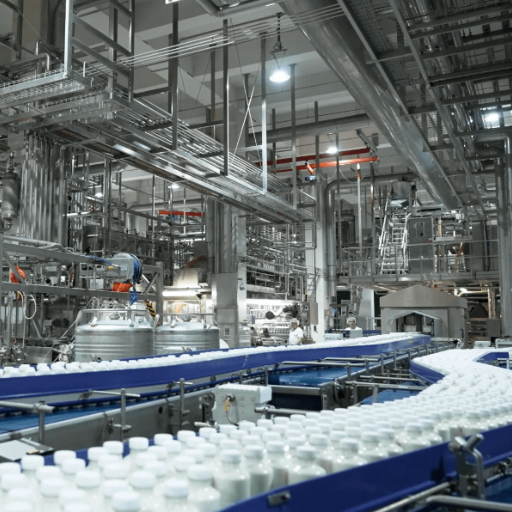
A state-of-the-art UHT milk processing line is a sophisticated, interconnected system, where every component has its own crucial part in offering a safe and top-notch product. Knowing these parts is a prerequisite to understanding the whole functioning. Despite some specific line configurations, the majority of production lines are composed of a basic set of machines for sterilization, homogenization, and packaging.
🔥 Sterilizers
The core of the system, employing either direct steam injection or indirect heating through plates or tubes to achieve sterilization temperatures rapidly.
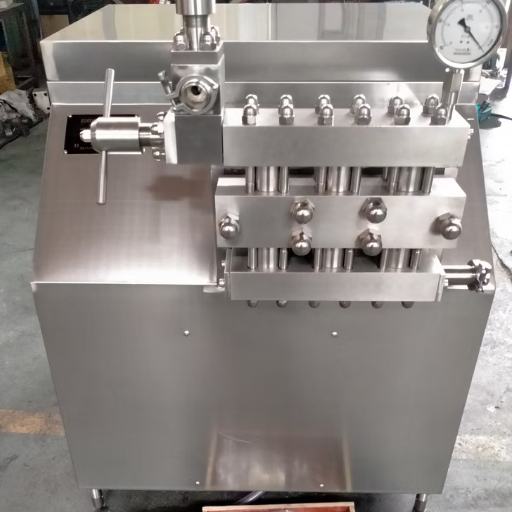
⚙️ Homogenizers
Large-scale machines that break down fat globules to microscopic size, ensuring no cream separation and consistent smooth texture.
📦 Aseptic Fillers
Fill processed milk into sterilized containers in a sterile environment, preventing contamination and ensuring product integrity.
🎓 Expert Insight
“The integrity of the aseptic storage and packaging stage is as critical as the sterilization; a breach here negates the entire process.” — Dr. Phillip S. Tong, Dairy Processing Specialist
Advanced Techniques in UHT Processing

To get ahead in the market, current dairy producers are applying sophisticated methods to their whole milk processing line. Mainly, these innovations aim at making the process more efficient, product quality higher and costs lower. The idea is to abandon the common and yet difficult practices and to apply the technologies that are the best in performance and reliability.
1. Energy-Efficient Sterilization
One of the most important innovations is the shift to sterilization that uses less energy. Many factories now apply the technique of regenerative heating instead of the old systems. In this method, the outgoing hot sterile milk is used to pre-heat the incoming cold raw milk. This very simple heat exchange can reclaim as much as 90% of the thermal energy and consequently, operating costs are reduced to a considerable extent.
2. Advanced Aseptic Filling Technology
Aseptic filling technology improvements have made fillers that are not only faster and more accurate but also product loss-free and contamination risk-free. The modern filling machines are equipped with cutting-edge robotics and vision systems for perfect performance.
3. Real-Time Quality Monitoring
The integration of immediate supervision for quality assurance has changed the entire process control. Sophisticated sensors and IoT (Internet of Things) devices are always monitoring critical parameters like temperature, pressure, and flow rate. This information goes into control systems that can proactively modify the process to keep the conditions at their best, thus making sure every carton of milk is up to very high quality and safety standards without any lapse.
💡 Key Innovation Benefits
⚡
90% Energy Recovery
🎯
Zero Product Loss
🔍
Real-Time Control
Ensuring Quality in UHT Milk Processing

One of the biggest challenges in the production of UHT milk is the maintenance of consistent quality. If the sterilization process is not managed properly, the high temperatures may affect the milk’s sensory and nutritional properties. New technical processing lines are already equipped with certain tactics to counteract such impacts and realize a splendid product as a result.
🔬 Quality Assurance Process
- Continuous Monitoring: Real-time tracking of critical parameters
- Automated Sampling: In-line testing before product exits the plant
- Laboratory Analysis: Thorough microbial safety verification
- Shelf-Life Testing: Studies under different environmental conditions
Sustainability in UHT Milk Production

Sustainability has become a significant factor in all types of manufacturing, and the production of UHT milk is no different. Dairy manufacturers are going green more and more to lessen their environmental impact, which is a move that very often leads to better operating efficiency and financial savings as well.
💧 Water & Energy Reduction
Regenerative heating systems reclaim up to 90% of thermal energy. Modern Clean-in-Place (CIP) systems use less water and chemicals while maintaining effective sanitation. Rinsing water is often recycled for initial cleaning cycles.
♻️ Eco-Friendly Packaging
Many producers are shifting from multi-layer cartons to fully recyclable or plant-based material options. New packaging solutions maintain the aseptic barrier while meeting consumer demand for sustainability.
🌍 Sustainability Benefits
- Reduced Carbon Footprint: Through energy-efficient processing
- Lower Operating Costs: From resource optimization
- Consumer Appeal: Meeting demand for environmentally friendly products
- Regulatory Compliance: Staying ahead of environmental standards
Conclusion
The Ultimate Guide to UHT Milk Processing Line indicates that the success of the industry relies on the implementation of modern technologies. The whole process begins with sterilization that uses less energy and continues with creative aseptic filling machines then finally comes to the invention of real-time monitoring. All these innovations go together with low-cost production and less environmental pollution. By varying the heat treatment processes, producers can save more vitamins and finally get a product that is tastier than before.
The ongoing changes in the international market will determine the UHT milk processing lines of the future to be characterized by more automation, data integration, and sustainability even more than now. The manufacturers who will take the most advantage of these cutting-edge techniques will not only be able to keep pace with the increasing demand for UHT milk but also be the ones who set the highest standards in quality and efficiency. For any producer who intends to survive, it is no longer a choice to adopt these technological advancements but a must.
Frequently Asked Questions (FAQ)
❓ What is the main benefit of a UHT milk processing line?
A UHT milk processing line’s main benefit is the capability of producing milk with a far longer shelf life than milk obtained through conventional pasteurization. The elimination of all harmful bacteria and spores is the reason for shelf-stable milk. Consequently, UHT milk can be kept in a cupboard for months before opening and this reduces the amount of refrigeration that is needed during the distribution and retail; hence, it helps with global trading and less food wastage. Moreover, the modern UHT lines include advanced methods for quality assurance that ensure the final product is safe and has the desired flavor.
❓ What are the ways that advanced techniques improve UHT milk processing efficiency?
The UHT milk processing line benefits from advanced techniques like energy-efficient sterilization, regenerative heating, and real-time monitoring. Facilities can greatly reduce their energy consumption and operating costs by recovering heat from the outgoing milk. Quality control is further automated by real-time sensors which immediately flag any deviations in temperature, flow, or pressure and allow for adjustments to be made on the fly. With the help of these innovations, continuous large-scale milk production is possible without compromising the integrity of the product. All in all, such improvements are vital for the dairy industry’s competitive advantage.
❓ What are the necessary pieces of equipment for a UHT milk processing line?
Sterilizers, homogenizers, and aseptic fillers are the main components of a UHT milk processing line. Sterilizers bring the milk to the sterilization temperature required by either direct heating or indirect heating quickly. The product then goes through homogenizers which break the fat globules under high pressure yielding a uniform texture, and aseptic fillers pack milk that has been processed in sterile conditions to avoid contamination. Besides, the integration of automation and real-time monitoring provides more precise control and consistency throughout the process, thereby supporting both efficiency and product safety.
❓ How do UHT milk processing lines help with sustainability?
Modern UHT milk processing lines consider sustainability as a primary concern. Innovations like regenerative heating, optimized Clean-in-Place (CIP) systems, and eco-friendly packaging help to minimize the amount of water and energy consumed. By applying these methods, the plants not only reduce their carbon footprint but also save money in the long run. Besides, switching to recyclable or plant-based packaging resonates very well with consumers who are increasingly looking for and willing to pay a premium for environmentally friendly products. These developments enable the dairy industry to produce milk in a more environmentally friendly and efficient way.
❓ Are there problems with nutrient retention in UHT milk processing lines?
One of the major challenges in UHT milk processing is the heat-sensitive nutrient preservation and, hence, the loss of some vitamins such as B12 and folic acid. The heat for the sterilization process can cause the loss of some nutrients but at the same time, modern processing methods such as precisely timed and controlled heating lead to significant minimization of nutrient loss. Rapid cooling and automated systems also contribute to maintaining the milk’s nutritional quality. The producers have to strike a careful balance between sterilization and nutrient preservation in order to provide a milk that is both safe and healthy for the consumer.
📚 Reference Sources
- Dairy Processing Handbook (Academia.edu) – This handbook provides a detailed reference for understanding dairy processing fundamentals and the latest industry practices
- Source
- Outlines of Dairy Technology by Sukumar Dey – A comprehensive resource covering technical and general terms in dairy processing, including UHT milk production.
- Source
- Dairy Processing Handbook (Academia.edu) – This handbook provides a detailed reference for understanding dairy processing fundamentals and the latest industry practices.
- Source

GW
Articles: 39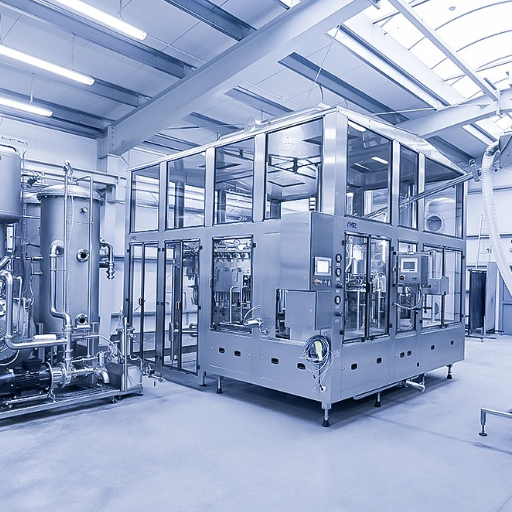
Trending now