Get in touch with Victorystar

The Ultimate Guide to High-Pressure Processing Machine

Contents
show
High-pressure processing (HPP) paves the way for the food and beverage industry, introducing an innovative method to preserve products through delivering safety and retaining quality, all without the use of excessive heat or chemical additives. However, the question that arises is—what is a high-pressure processing machine really, and how does it function? Throughout this article, we will cover the most important aspects of these devices. You will discover what they are, the way they work, and their wonderful benefits which can be shared across different industries. Whether you are a professional from the food industry trying to maintain the freshness and safety of your products or simply a person curious about the technology revolutionizing modern food processing, this all-inclusive guideline will provide you with the right understanding of HPP machines’ strength. Keep following us to reveal the specifics that have made these devices a huge breakthrough in manufacturing and beyond.
Introduction to High-Pressure Processing
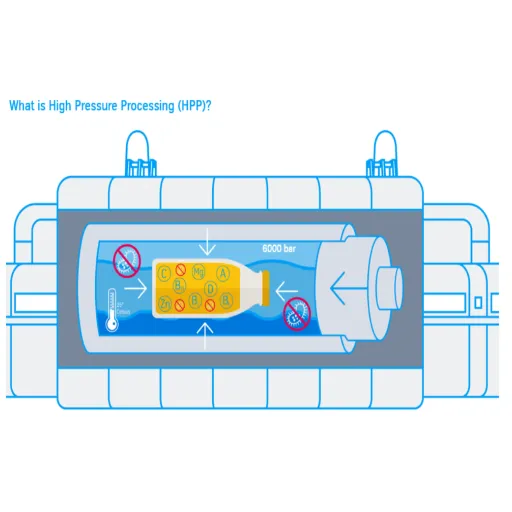
What is High-Pressure Processing (HPP)?
High-Pressure Processing (HPP) is a natural way of food preservation that is considered to be an upscale and non-thermal method. By applying extremely high water pressure, it is able to destroy pathogenic bacteria such as Salmonella, Listeria, and E. coli without heat – an important aspect of the non-thermal nature of this process. The HPP procedure involves immersing the food in a chamber filled with water and then applying enormous pressures of up to 87,000 psi (pounds per square inch). The processing not only eradicates the bad bacteria and spoilage microorganisms but also retains the food’s original flavor, texture, and nutritional value. Besides, if the said process is strictly followed, the product will have a longer shelf life and will not have to undergo standard preservation therefore it will be the case that the product meets the high demand for fresh, lightly processed food perfectly.
✓
Key Applications
- Fruits and vegetables
- Ready-to-eat meals
- Seafood products
- Dairy products
These applications make HPP an indispensable and revolutionary method for safe food handling and quality assurance.
Benefits of High-Pressure Processing
High-pressure processing (HPP) has a bunch of benefits that are perfectly suited for both the industry and consumers. Let’s explore these advantages in detail:
Enhanced Food Safety
HPP destroys several kinds of pathogens without compromising product quality. Inactivation of bacteria—like Listeria, E. coli, and Salmonella—is accomplished while preserving the natural qualities of the product.
Extended Shelf Life
Waste reduction occurs due to longer shelf life which HPP provides, along with broad distribution acceptance at the same time, cutting down on concerns about freshness.
Clean-Label Support
HPP grants support to the clean-label trend, fulfilling the increasing need for less processed, non-preservative goods that consumers actively seek.
Consumer Trends: The latest statistics illustrate a slow but steady increase in health-conscious customers’ inquiries and interests regarding nutrient- and flavor-preserving HPP. This strengthens the marketing side of the product even more, as its importance has already been proved in the changing conditions of healthy eating habits, transparency, and eco-friendliness. The HPP technology is the one that connects the innovation and the consumer, consequently making it a vital part of future food processing.
Overview of Pressure Pasteurization
High-pressure processing (HPP), which is also known as pressure pasteurization, is one of the major food industry processing methods today that utilize extreme pressures for deleting pathogenic microorganisms and prolonging the shelf life of products without changing their original quality. The market for HPP technologies is receiving a great deal of attention mainly from the people who choose the health-conscious and nutrient-rich types of food.
The question that arises is what has made HPP so popular? The answer lies in HPP’s unique capability to meet the modern day consumers’ needs—to be safe, fresh, and green—without the addition of synthetic chemicals or the use of high temperatures that can cause nutrient loss and alteration of flavors. Furthermore, HPP keeps the natural goodness and therefore it is very attractive to both manufacturers and consumers. The health-conscious consumers looking for clean-label food products are already aware of these advantages and thus consider HPP as an important contributor to the future of food processing.
Understanding High-Pressure Processing Technology

How HPP Works
HPP is a food processing technique that relies on high pressure to kill bacteria, viruses, and yeasts. The processing method involves several carefully orchestrated steps:
- Sealing: Food products are sealed in flexible containers to protect them during processing.
- Pressure Application: The sealed products are placed in a water-based environment where hydrostatic pressure reaches 600 megapascals (MPa) or more.
- Pathogen Inactivation: The microorganisms causing foodborne illness are rendered inactive through pressure alone.
- Quality Preservation: The process remains at non-heating temperatures, so sensory properties and nutrients are kept intact, unlike traditional heat-based methods.
Industry Insight: Recent data indicates that minimally processed and preservative-free foods have become the focus of consumer research throughout the industry. HPP, being one of the major contributors to technology and food safety, has become the manufacturers’ choice to meet this need and provide products with longer shelf life. The merging of high-tech and changing consumer habits indicates that HPP is an essential part of food production in the present day.
Process Parameters in HPP
One of the critical factors in High Pressure Processing (HPP) is the use of specific processing parameters, which include pressure, temperature, and holding time. Understanding these parameters is essential for optimal results.
Best Suited Products: HPP is particularly suitable for juices, guacamole, and ready-to-eat meals due to its ability to process at low temperatures.
Market Demand: The data obtained from search engines reveals that an increasing number of consumers are interested in “sustainable food processing methods” and “preservative-free food options.” The high demand for clean-label products can be traced back to the fact that HPP is capable of preserving food without synthetic additives therefore, the dairy industry has been gradually changing its processing methods to align with these trends. HPP has become a trusted solution in resolving contemporary food processing issues because it not only meets the consumers’ need for purity and sustainability through its accuracy in process parameter control but also provides them savvy about the process.
HPP vs Thermal Pasteurization
HPP and Thermal Pasteurization represent two different approaches to food preservation, each with their own pros and cons. Understanding these differences helps manufacturers make informed decisions.
Consumer Preference Trends:
Recent data showcases that people are looking up more frequently topics like “nutrient retention in food processing” and “fresh-tasting preservatives.” This indicates that consumers are actively seeking minimal processing with the natural qualities they prefer in foods. HPP supplies this demand more effectively than thermal pasteurization, as it has the ability to kill bacteria while retaining the sensory attributes of food. Moreover, online comparisons have revealed that HPP’s capability of extending shelf life without preservatives is increasingly appreciated among clean-label seekers. While the costs and scalability of thermal pasteurization have made it widely used in some applications, HPP represents the next-generation solution where quality and consumer perception are crucial for luxury food products.
Key Components of HPP Machinery
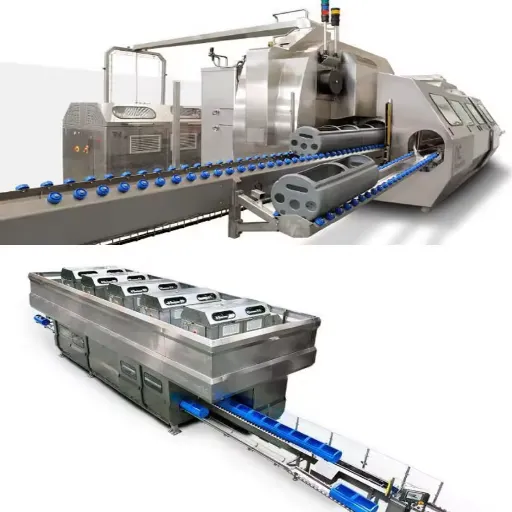
Essentials of HPP Equipment
High-pressure processing (HPP) equipment guarantees safety and quality of processed products throughout the entire production phase. The HPP machinery consists of three main components working in harmony:
1
High-Pressure Vessel
This is the vessel where foodstuff, usually in flexible packages, is subjected to high pressure. The pressure is equally applied throughout the V-shaped water-filled chamber. The high-pressure vessel is made strong enough to survive numerous pressure cycles required for the pasteurization process.
2
Pump System
The pumping mechanism applies the desired pressure, which can sometimes reach as high as 87,000 psi. A performing pump system is essential for the consistency of microorganism elimination during treatment and for the productivity of the whole process.
3
Control Systems
Today’s HPP devices are equipped with the latest control boards and monitoring tools for pressure adjustments, time, and temperature. These systems provide accuracy and reproducibility, making operations easier and safer while meeting efficiency standards.
🚀 Latest Technological Advancements
Online searches have revealed recent technological advancements in HPP technology that highlight the increasing use of automation and data analytics. Performance diagnostics monitored remotely along with predictive maintenance are among the innovations being adopted to cut down on equipment downtime and increase operational efficiency, making HPP machines the most effective and reliable of all times. Manufacturers view these developments as crucial to scaling operations without compromising product quality and shelf-life advantages.
Types of High-Pressure Processing Machines
High-pressure processing (HPP) machines are differentiated according to their design and usage in the food and beverage sector. The major groups consist of in-pack and in-bulk HPP systems, each serving distinct manufacturing needs.
In-Pack HPP Machines
These systems process products in their final packaging, including vacuum-sealed pouches or plastic containers. This approach is a perfect match for consumers as it secures the freshness and shelf life of products—such as ready-to-eat meals, juices, and other perishable goods—with no additional handling or contamination risks post-processing.
Ideal For: Ready-to-eat meals, packaged juices, deli meats, seafood products
In-Bulk HPP Machines
These machines are designed for processing liquids or semi-liquids such as juices, purees, and soups in larger amounts before packaging. The systems improve processing efficiency and provide ease for different packaging designs. Manufacturers are taking advantage of the fact that these machines are easily scalable and have a good return on investment, making them increasingly affordable.
Ideal For: Bulk juice production, purees, soups, liquid beverages
Innovation Spotlight: The latest advancements indicate that newer generation HPP systems are becoming more automation- and IoT-enabled. Such features provide real-time monitoring, predictive maintenance, and faster processing which together assure a truly fruitful mix of high productivity and rigorous food safety standards. These innovations rank HPP among the key players in satisfying consumer needs for fresher, cleaner-label products.
Choosing the Right Equipment for Your Needs
Capacity, efficiency, and technological capabilities should all be weighed carefully to ensure that the appropriate high-pressure processing (HPP) equipment for your application is selected. Here are the key factors to consider:
<h4style=”color: #667eea; font-size: 20px; margin: 0 0 20px 0; border-bottom: 2px solid #e0e0e0; padding-bottom: 10px;”>📋 Key Factors to Consider When Selecting HPP Equipment
- Production Volume Requirements
Assess your current and projected production needs to determine the appropriate machine capacity. Consider peak demand periods and growth projections. - Available Space
Evaluate your facility layout to ensure adequate space for equipment installation, operation, and maintenance access. - Automation & IoT Integration
According to the latest trends, companies are increasingly opting for automation and Internet of Things (IoT) enabled equipment. These advancements allow for instant monitoring and maintenance with prediction, resulting in reduced downtime. - Long-Term Goals
Consider your strategic business objectives and how HPP technology aligns with your future product development and market expansion plans. - Speed for Processing
Evaluate the processing speed based on operational demand to ensure efficient throughput and meet production schedules.
Evaluating your production volume needs, available space, and long-term goals will help you find solutions that not only satisfy present consumer demands for fresh and clean-label products but also adapt to any future changes in the industry.
Operational Considerations in HPP

Best Practices for Operating HPP Systems
It is vital to observe best practices if one wants to achieve High-Pressure Processing (HPP) systems that perform at their best and maintain peak efficiency. Here are the essential practices every operator should follow:
🔧
Routine Maintenance
Regular maintenance of all system components is imperative to prevent unexpected downtime and prolong device lifespan. Include scheduled inspections, cleaning cycles, and timely part replacements according to manufacturer recommendations.
👥
Staff Training
Proper staff training is a key factor. Operators should know all safety measures, the system’s operation, and troubleshooting procedures to handle any situation effectively.
📊
Data Monitoring
Monitoring and documenting important information such as pressure levels and cycle times allows for tracing and ensures that food safety laws are complied with.
🎯 Advanced Operational Strategies
The latest statistics point out the necessity of including automated monitoring systems into the whole process to enable real-time reporting and issuing of alerts, empowering operators to quickly react to problems. Additionally, the application of predictive analytics can help in anticipating the need for maintenance and maximizing energy efficiency, thus cutting down the total costs of operation.
The merging of these practices with adherence to technological progress and industry trends will lead to maximization of HPP investment and keeping a competitive position in the fast-changing market.
Common Challenges and Solutions
Adopting High-Pressure Processing (HPP) systems can present certain challenges, but there are smart ways to address each one. Here’s a comprehensive guide to overcoming the most common obstacles:
1
High Initial Investment Costs
Challenge: One of the primary factors that discourage investment in HPP technology is the recurrently high initial capital cost. Many producers want to see proof of a quick return on investment before committing to an HPP capital outlay.
Solution: Companies can make use of various methods to cover their initial outlay, including loans from financial institutions, government grants, or partnerships with dealers providing leasing or pay-per-use models. Additionally, the argument of long-term cost savings through a reduction in spoilage and an increase in shelf life can be a strong justification for the investment made.
2
Limited Knowledge and Expertise
Challenge: Not having an intimate knowledge of HPP and its subtleties will make it difficult for a company to operate the technology, and implementation will become slow.
Solution: If a company wants to close this knowledge gap, then it should opt for broad training, have experienced vendors as partners, and participate in industry workshops or seminars. Another option is to work with industry consultants who may assist manufacturers in the process of HPP optimization.
3
Product Compatibility Concerns
Challenge: There is a risk that certain products might be adversely affected by HPP treatment, manifesting in changes to their texture, taste, or appearance.
Solution: It is wise to execute extensive compatibility testing with different product formulations to determine the most favorable processing parameters. Often, equipment manufacturers will be able to assist with pilot testing of recipes so that they comply with HPP standards.
4
Integration with Existing Operations
Challenge: The installation of HPP systems in active production facilities will test planners’ logistical skills.
Solution: Meticulous planning of the facility layout in conjunction with the optimization of workflow will be a huge step towards easing the integration process. Having automation specialists on board who can smoothly link HPP systems to current production lines can lead to less downtime and greater production efficiency.
Strategic Recommendation: When manufacturers come up with concrete strategies to tackle these typical challenges and at the same time utilize the latest data and analytics tools, they can successfully adopt HPP technology in their operations, thereby gaining an edge in the market through innovation and better business outcomes.
Safety Standards and Regulations
High Pressure Processing (HPP) technology is subject to strict safety standards and regulations to provide safe and quality products, ultimately winning consumer trust. Understanding and complying with these regulations is essential for successful HPP implementation.
🏛️ Key Regulatory Bodies
| Region | Regulatory Authority | Key Focus Areas |
|---|---|---|
| United States | FDA (Food and Drug Administration) | Maximum pressure levels, sanitation practices, labeling requirements |
| Europe | EFSA (European Food Safety Authority) | Food safety standards, processing validation, quality control |
✓ Compliance Requirements Checklist
- ✓ Set up robust quality control systems
- ✓ Conduct regular validation studies
- ✓ Prove compliance through documentation
- ✓ Stay informed on regulatory changes
- ✓ Invest in staff training accordingly
Industry Trend: Consumer preferences for minimally processed food and chemical-free products generate the drive for HPP technology, and according to the latest consumer trends, safety standards compliance will be more timely and urgent than ever. Regulatory bodies will keep on changing the rules, so manufacturers should make it a point to stay informed on the matter. Compliance with safety standards will not only make the company more trusted by customers but also put it in a good position to compete in the ever-expanding market.
Applications of High-Pressure Processing in Food Manufacturing
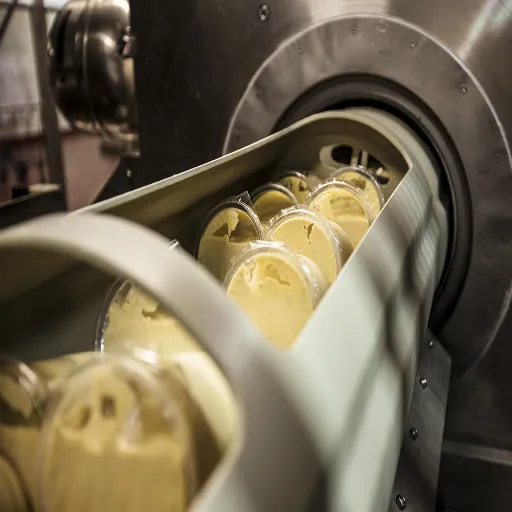
HPP Applications in Juice Production
High-Pressure Processing (HPP) is a method that has been widely accepted and even become the primary choice in fresh juice production, mainly because of its ability to prolong shelf life while preserving sweetness, nutrients, and color. HPP kills harmful microorganisms and pathogens by applying pressure without involving heat, thus saving the raw, fresh quality that consumers want.
🍊
Cold-Pressed Juices
Maintains fresh taste and vibrant colors
🥤
Fruit Smoothies
Preserves nutrients and texture
🍹
Vegetable Juices
Ensures food safety naturally
Market Insight: Data from the latest research shows a significant rise in consumer preference for cold-pressed and less processed juices, which in turn leads manufacturers to employ HPP technology. The method not only guarantees food safety but also caters to the increasing demand for natural and clean-label products, thus allowing companies to be competitive within the health-conscious beverage sector.
Use of HPP in the Beverage Industry
The realization of HPP technology within the beverage sector directly corresponds with the latest consumer patterns. More and more people are actively looking for beverages that are good for health, fresh, and made of natural ingredients.
📈 Trending Keywords in Beverage Searches
Cold-Pressed Juice
Natural Beverages
Clean-Label Drinks
Nutrient-Preserving
Health-Conscious Options
Natural Beverages
Clean-Label Drinks
Nutrient-Preserving
Health-Conscious Options
These keywords have been continuously indicating an upward pattern, reflecting increased consciousness about health and efficient choices.
By using HPP, producers can satisfy consumers’ demands by providing goods that are pure and natural with no artificial preservatives at all. This technology not only guarantees that drinks are in line with what consumers want but also provides them with a winning position in the market, especially one which is changing rapidly.
Impact of HPP on Food Preservation Techniques
High-Pressure Processing (HPP) has completely transformed food preservation by providing a process that is safe, extends the shelf life of products, and keeps them in their original quality. Based on the latest search trends, there has been a great rise in the demand for minimally processed and nutrient-preserving food products.
🔄 How HPP Transforms Food Preservation
Traditional Methods
Heat-based, preservatives, nutrient loss
→
HPP Technology
Pressure-based, no additives, quality preserved
- Destroys Microorganisms: Without the use of heat, maintaining texture and flavor integrity
- Maintains Nutritional Content: Vitamins and minerals remain intact throughout processing
- Preferred Method: Most favored in currently used food preservation techniques for clean-label products
This corresponds with HPP’s increasing significance in the food sector as it is one of the few methods that meet consumer demands for clean-label and fresh-tasting options. HPP destroys microorganisms without the use of heat, thus maintaining the texture, flavor, and nutritional content of foods, making it the most preferred method in currently used food preservation techniques.
Frequently Asked Questions (FAQ)
Q
Are there any disadvantages of using an HPP machine in food processing?
HPP has a number of drawbacks, one of which is the fact that it cannot be used for all kinds of food products. Additionally, the pressure destroys not only harmful microorganisms but also some beneficial ones and enzymes, which is why it is difficult to talk about complete preservation in this case. However, the shelf life of goods is prolonged, and the quality of HPP products is superior to that of products treated by traditional pasteurization. The latter seems to be the case as the technology not only prevents spoilage but also enhances the overall consumer experience by retaining original flavors and textures. Therefore, the introduction of HPP in food processing could lead to gaining market competitiveness.
Q
How does HPP compare to traditional thermal pasteurization?
HPP vs. traditional thermal pasteurization demonstrates significant differences in the way food is treated. The death of pathogens is accomplished by means of heating in thermal pasteurization, while cold pressure is employed in HPP, which leaves food taste and nutrition largely untouched or hardly affected. Thus, a larger palette of products becomes available for preservation without the danger of losing their properties. Also, heated products may change in appearance sometimes in an undesired way, while HPP does not alter the original food characteristics at all. This is the reason why many manufacturers are looking at HPP as a preferred route to go.
Q
What kinds of products are fit for HPP?
One of the most crucial elements for food manufacturers is to be aware of the kinds of products that can go through this processing technique. HPP is most suitable for juices, ready-to-eat meals, and deli meats. The use of pressure during the HPP process ensures that bacteria and enzymes that cause spoilage become inactive.
Important Note: Producers should consider the types of products they are processing, as not all items may be suitable for high-pressure treatment. Products with delicate textures may not be good candidates for HPP. Product characterization is a vital part of HPP systems implementation.
Q
What are the process parameters for HPP?
The process parameters ranging from capability in terms of pressure to the time spent on the process have a major impact on the success of the preservation technique. Pressures of up to 600 MPa are usually applied for different lengths of time depending on the product that is undergoing processing. These parameters set the conditions for providing a safe margin in treating food without putting its qualities at risk of being compromised. Monitoring these parameters is necessary for attaining desired results like food safety and product durability. Manufacturers should purchase appropriate HPP machines in order to be able to fine-tune these processes to fit their specific application needs.
Key Takeaways
- ✓ HPP is a revolutionary non-thermal food preservation method that uses high pressure to eliminate pathogens while maintaining food quality
- ✓ The technology preserves flavor, texture, and nutritional value better than traditional thermal pasteurization methods
- ✓ HPP extends shelf life without requiring chemical preservatives, supporting the clean-label trend
- ✓ Modern HPP equipment features automation and IoT capabilities for enhanced monitoring and efficiency
- ✓ The technology is particularly well-suited for juices, ready-to-eat meals, deli meats, and seafood products
- ✓ Consumer demand for minimally processed, nutrient-rich foods continues to drive HPP adoption across the food industry
Conclusion
The High-Pressure Processing (HPP) technology is a great breakthrough in the food and beverage industry by providing a modern solution to the everlasting problem of food safety and quality preservation. As we have seen in our in-depth guide, HPP equipment gives the manufacturers the right to disinfect the food by eliminating the bad organisms, bacteria, and viruses but at the same time keeping the natural taste, structure, and nutrition of the food products – all these without the application of heat or chemical additives.
Very quickly, the end-consumers’ persistent requests for clean-label, little processed food have put the HPP technology at the very forefront of the food industry as a must-have for the manufacturers with a fancier vision and thinking. Cold-pressed juices, ready-to-eat meals, deli meats, and seafood products are just some of the areas where the HPP applications are increasingly applied and the technological capability to expand shelf life, minimize waste, and the support of production sustainability makes it a priceless ally in conquering the food industry modern-day challenges.
Nonetheless, the introduction of HPP technology requires an in-depth analysis of the factors like the initial investment cost, equipment choice, staff training, and legal compliance, but still, the long term gain is far greater than these problems. The most recent breakthroughs in automated systems, IoT together with big data, and predictive analytics are making the HPP system not only more efficient and trustworthy but also more affordable than ever. By adopting this technology, the manufacturers are not only able to serve the ever-changing consumers’ tastes but also keep the edge over the competition in the high-quality market that is getting more and more quality-conscious.
High-Pressure Processing is a prime example of how the food industry can change into a more transparent, sustainable, and health-minded division by using innovative technology to connect consumer expectations to the realities of the manufacturing process. If you are thinking about implementing HPP in your production facility or merely want to grasp the concept of this revolutionary technology, the food preservation process of tomorrow is straightforward and it is pressurized.
📚 Reference Sources
High Pressure Processing: Changes in Quality Characteristics of Various Food Materials
Source: Academia.edu
This review explores the effects of high-pressure processing on food components and its role as an innovative food preservation method.
High Pressure Processing of Meat, Meat Products, and Seafood
Source: Academia.edu
Discusses industrial-scale high-pressure processing as an alternative to traditional thermal methods, focusing on meat and seafood applications.
Evaluation and Optimization of High-Pressure Processing for Protein Bioactivity and Bacterial Safety in Bovine Milk
Source: Oregon State University Library
This research evaluates high-pressure processing for milk, optimizing parameters for safety and protein bioactivity.

GW
Articles: 39
Trending now