Get in touch with Victorystar
Exploring What Is 5 Gallon Water Production Line and Its Key Components

Contents
show
Systemically, serving large amounts of water for packaging purposes, the 5-gallon water production line stands vastly efficient in catering to patron needs. Be that beverage provision or the setting-up of water delivery, locating how the almost undecipherable production line functions and which components render it workable would indeed help in operational efficiency, product quality, and commercialization standards. It launches much more into 5-gallon water production lines-a lowdown on 5-gallon water production lines about how these systems work and the core machinery and processes involved. So now, clearly, you understand why these systems are among the must-have modern water bottling systems.
Understanding the 5 Gallon Water Bottling Process
1Introduction to 5 Gallon Bottled Water
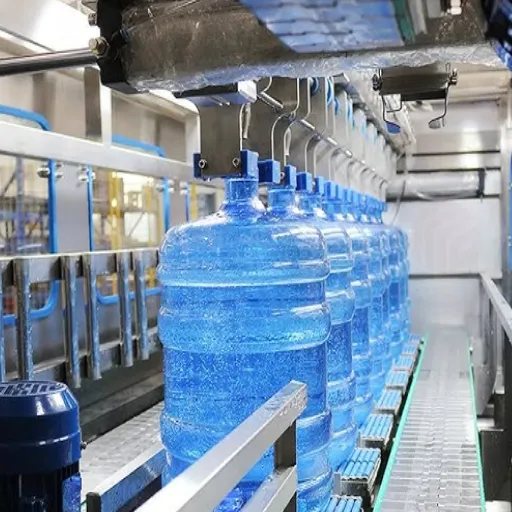
The 5-gallon bottle of water is an embodiment of convenience for contemporary homes and offices. Another attraction is the low price-way cheaper than other bottled water. A large container like this holds tons of water for drinking, hence doing away with any need to produce an enormous amount of plastic waste from the smaller ones. Water is strictly purged as one of the many measures in clean manufacture of 5-gallon bottled water, as the next stages would be cleaning of containers, filling, capping, labeling, etc-the whole process done with the use of advanced machinery, all conforming to industry set standards. Plus, reusability impacted the popularity of the bottles by encouraging eco-friendly practices to cut down single-use plastics.
2Key Components of a 5 Gallon Water Production Line
Water Purification System
At the core of the process is the water purification system, which ensures that the water meets stringent hygiene and safety standards. Advanced filtration methods, reverse osmosis, and UV sterilization are commonly employed to remove impurities, pathogens, and contaminants, providing clean and safe drinking water.
Container Cleaning Machine
Before filling, every bottle is subjected to thorough cleaning to maintain hygiene. Automatic bottle washers handle pre-rinse, alkaline wash, and sanitization using high-pressure nozzles and disinfectant solutions, ensuring each bottle is free from residue or bacteria.
Filling and Capping Unit
This integrated system manages the precise filling of purified water into the containers and securely seals them with durable caps. Automated technology allows for high-speed operations while maintaining accuracy to prevent spillage or contamination.
Labeling and Packaging Equipment
Once sealed, bottles are labeled with branding and product details. The labeling machines are designed for efficient application, enabling clear, professional presentation. Subsequently, bottles are packed in groups for secure transportation using shrink-wrapping or carton packaging systems.
Quality Control Mechanism
Throughout the production line, quality control systems monitor every step to ensure compliance with safety and operational standards. Sensors, cameras, and automated checks play a critical role in identifying and addressing defects during the process.
⚙️ Integration Benefits: By integrating these components, modern 5-gallon water production lines can deliver a reliable output of high-quality bottled water while optimizing efficiency and reducing environmental impact.
3Importance of Quality in Bottled Water
The aspect of assuring good bottled water is extremely important in public health and citizen trust. Drinking water quality can depend on various factors, starting from the source of the water, the type of treatment performed on the water, and followed by how it was bottled. There are certain quality standards to be observed that include measures which will prevent contamination by any observation of harmful microorganisms, chemicals, or any other pollutants. From the safest point of view, being compliant with regulatory standards may include the good practices of the National Regulatory Agency, FDA, WHO, ppm deviations, microbiology safety, among others so that the water is even tested to completely guarantee that it is safe and suitable for human consumption. Aside from health, inconsistent standards implicate brand reputation for a poor shampooing of brands and abuse of customers’ confidence in ways that can even be considered commercial losses.
Essential Bottling Equipment for 5 Gallon Water

Types of Bottling Equipment Used in Water Production
When producing 5-gallon water bottles, several types of specialized equipment are essential to ensure efficiency, safety, and quality in the bottling process. Below are the primary categories of equipment used:
???? Industry Impact: Utilizing state-of-the-art bottling equipment not only enhances operational efficiency but also ensures compliance with industry regulations and fosters consumer trust in the end product.
High-Speed Water Filling Lines
The high-speed water filling lines are important gadgets for a beverage production line; they are made efficiently without compromising the quality of the product. These lines are made up of servo systems and PLCs to fill bottles at a rate that is exact and consistent. Depending on the operation, high-speed lines could fill thousands of bottles per hour, so producers meet increased demand without bottlenecks.
Depending on the filling system, a reverse implementation of hygienic and safety aspects include contact-less filling valves, automatic cleaning cycles, preferably sterile environments, amongst others. Fillers are made flexible regarding bottle shapes and sizes and thus can considerably reduce downtime during product and format changes. An even better way to optimize these lines is to integrate them with data-driven monitoring systems that provide real-time performance analytics to operators for identifying and acting on potential issues. Hence, speeding high water-filling line could streamline manufacturing processes while meeting standards of the relevant industry.
Turnkey Solutions for Efficient Production
Turnkey solutions have been considered as an approach addressing all elements needed in a modern production setting, embracing the latest technology and streamlined processes to achieve production efficiency. Under these solutions, every aspect, from an initial project design to equipment installation, training to after-sales service, has been catered to so as to ensure smooth working flows from idea to operation. When it comes to productivity and operational costs, the incorporation of automation, data analytics, and precision engineering really helps. Real-time condition-based monitoring and predictive-maintenance capability walk hand-in-hand to shorten downtime and address equipment anomalies before they turn into costly failures. This type of garden-variety production optimization, being in accord with ever-evolving industry trends toward sustainability and innovation, is the very strategy aimed at competing in today’s very dynamic market scenario.
Water Treatment Processes in Production Lines

Overview of Water Treatment Plant Operations
From the standpoint of water treatment plant operations, paramount is the assurance of water quality and its sustainability for use in production lines. These facilities are employed for sedimentation, filtration, disinfection, or any number of processes to treat and hence remove impurities or contaminants in the water. More and more systems are incorporating such enhancements into water purifying systems: reverse osmosis and UV treatment. Wastewater management and recycling have, in fact, become operations in a modern setting, attempting to lessen the impact on the environment. A water treatment plant optimizes its operation through a sophisticated automated control system and monitors the performance continuously, a factor inhibiting operational effectiveness and meeting regulatory standards. This approach in particular helps in production but also pushes the envelope on sustainability initiatives, creatively contributing to resource management.
Techniques for Mineral Water Treatment
The processes involved in mineral water treatment encompass a slew of specialized techniques employed to purify and enrich water while preserving its essential minerals. Reverse osmosis is a common method for treating this water, highly advanced filtration that can remove impurities and contaminants detrimental to health while retaining the desired mineral content. Another is ultrafiltration, a technique whereby membranes can filter out bacteria, viruses, and other potentially harmful particles without modifying the natural composition of the water.
Ozonation is frequently employed in treating mineral water to disinfect it without any chemical residues being left. This ozone gas destroys microorganisms and removes odors and tastes that may be present. UV radiation treatment is another environmentally friendly process, which disinfects water by exposing it to ultraviolet light without altering the mineral content of the water.
Remineralization is equally vital, where minerals such as calcium and magnesium are added to purified water for greater health implications and quality of taste. Advanced blending methods or adjustment of pH value then guarantees that the final product meets highest quality standards. By applying these modern amenities, mineral water treatment facilities aim at providing consumers with safe min-water that stands good by regulatory norms.
Ensuring Product Quality Through Treatment
To maintain the highest standards of product quality, mineral-water treatment facilities are engineering advanced filtration technologies. In these plants, multistage processes may include activated carbon filters, ultrafiltration membranes, and reverse osmosis units. Each of the filtration stages is designed to coarser matter with some thing particular-microscopic particles, organic compounds, and dissolved salts. Additionally, they have also utilized UV disinfection and ozone treatment to impart microbiological safety without affecting taste and compositional parameters of the water. By the following of these processes, the common industry consistently provides pure water that is safe and carries the essential minerals the consumer expects. Such innovations not only stand well with stringent health regulations but are also in aid of meeting the demand by the public for environmentally sound, quality hydration options.
Operational Efficiency in 5 Gallon Water Bottling Lines

Understanding the 1200bph Production Rate
Since 1200 bottles per hour formation is a hallmark of efficiency in modern 5-gallon water bottling lines, it is endowed with the needful machinery, streamline workflow, and automation techniques. Integrating the filling system with high-speed capability, capping accurately, and energy-efficient technology ensures uniform output with the rigid setting for quality. Besides, such monitoring tools also assist operators in observing performance metrics, identifying challenges with present-time, and with optimizing the operation. Hence, these innovations allow the plants to cope up with increasing demand with minimum downtimes, and resource utilization is incremented and thus more productivity and earnings.
Challenges and Solutions in High-Speed Bottling
⚠️ Key Challenges
The high-speed bottling processes face a number of challenges that include wear of machinery and contamination threats to the product, with, with stringent levels of quality control exercised, so to speak, at an “accelerated speed. High speeds at which a machine operates attract considerable stress on its components, throwing it out of commission oftentimes, so what makes matters worse on the downtime is the cost of maintaining it. Resistance to cleaning processes in sterility machines and products further increases due to an increase in the speed of manufacturing, thus reducing food and beverage safety.”
✅ Innovative Solutions
Such challenges are being addressed through the adoption of advanced solutions by manufacturers. Predictive maintenance technologies using IoT sensors and machine learning enable early detection of possible equipment failures, thereby minimizing downtimes and extending machine life. To reduce contamination risks, automated cleaning systems are installed in these plants, such as CIP-cleaning processes, allowing sanitation to proceed without defined lost-time for production. More precise inspection of every bottle is achieved with advanced vision systems and AI-driven quality controls that distinguish very fine defects in real-time, such as delivery fill-level issues or cap misplacement. This way, through these technologies, facilities can maintain optimized throughput levels that cater to tight regulatory and safety standards while guaranteeing product supply in conformity with quality standards at high speeds.
Maintaining Consistency in Production Quality
At one time, the advent of production technology had transpired to ensure consistent manufacturing process quality. Automation systems assisted by PLCs would give precise control to key production parameters, maintaining quality through every stage of manufacture. Additionally, predictive maintenance tools based on machine learning algorithms enable a facility to take care of equipment problems at a potential stage before losing much downtime and, thereby, quality; data analytics platforms also track and monitor in real time, granting traceability at any given time, and allow very detailed insight into every batch produced to give a full-view audit in adherence to quality standards. These technologies support efficiency and manufacturers to bring forth their products with increasing reliability and excellence.
Future Trends in 5 Gallon Water Bottling

Innovations in Bottling Technology
The bottling industry is experiencing an endless array of technical enhancements-from among which sustainability and automation stand recorded as paramount. Hence, modern bottling technology today always seeks to cut down on waste and energy consumption while increasing the operational efficiency. For instance, in the industry, lightweighting for plastic bottles has gained more recognition, whereby manufacturers make the bottles using less material without compromising their utility. This will solve a lot of environmental issues by cutting down on the raw material requirements for a product and making it easy to recycle. Furthermore, some companies are looking at other materials such as plant-based plastics or biodegradable options to reduce even further the environmental footprint of bottled water.
Another crucial innovation is automation. Advanced robotic systems and AI are incorporated in bottling lines to ensure the best balance of speed and precision. These installations fight human errors in the workplace, improve productivity, and quickly scale up under peak-or high-demand periods. For instance, AI inspection systems spot any defect in bottles or caps with a higher level of precision, assuring that only high-quality goods make it to the customers, while various smart sensors and IoT-enabled systems monitor the bottling process in real-time. The appropriate data from this monitoring process is then used to eliminate inefficiencies and foresee maintenance activities before actual disruption occurs.
Looking forward, I envision these technologies shaping not only the future of 5-gallon water bottling but the entire manufacturing system. Sustainability and digitalization are no longer options but rather must-haves in any industry wanting to stay competitive and meet changing consumer expectations. Through innovations, manufacturers would now be in a networking situation to deliver products that are more safe, sustainable, and of higher quality.
Sustainability Practices in Water Production
From my perspective, sustainability in water production is firmly tied to minimizing waste, conservation of resources, and stressing environmentally friendly measures in every production stage. Among the major methods is setting in place water recycling methods during bottling. This method, which collects and reuses process water, greatly reduces consumption. Secondly, renewable energy can be used with great effect to run production plants, thus limiting carbon footprint. Other than lowering the environmental impact, these measures also reduce production costs over time.
Right now, sustainable packaging is a buzzword people are throwing around everywhere. It’s a good thing as moving from conventional plastic bottles to biodegradable or recyclable materials would reduce tidal waves of harmful waste in rivers and estuaries on the industry end. On the other hand, lightweighting bottles and designing the packaging to reduce raw-material use while ensuring product integrity helps even more. Customers should join these programs for closed-loop recycling much to ensure packaging materials are reused, closing the sustainability loop.
Lastly, collaboration throughout the supply chain is fundamental to sustainability. Cooperating with suppliers who follow eco-friendly processes means that sustainability is taken care of at every step, beginning at sourcing materials and going till delivering the final product. Especially for 5-gallon water bottling, returnable and reusable jug systems provide one of the best ways of cutting down on waste and resource consumption. It is my view that such systems, along with transparency and creativity, could take water production toward fulfilling both environmental and consumer needs in the future.
The Role of Automation in Bottling Lines
Automation in a modern bottling line is an indispensable technical force that has transformed the industry by bringing efficiency meaning consistency, and safety into the production lines. An automated system manages operations from filling through capping, labeling, and packaging, freeing them from tens if not hundreds of manual steps. This will reduce human error and allow for greater production speeds so that supply can keep up with demand. I also consider automation a means to developing sustainability in the bottling industry. For instance, smart controls can limit water and energy waste while achieving precision in material handling.
On the other hand, the development of robotics and AI has accomplished another goal, adapting technology in the said field. The systems now adjust on their own to a different bottle size, material, or production requirement, thus offering great versatility. I greatly admire those predictive maintenance programs operating under machine learning that are eliminating downtime. By analyzing equipment data in real-time, these tools can detect fairly imminent failures and alert management just before they interrupt production in the very last moment, saving precious time and even costs.
In the eye of a forecast, the synergy with IoT devices can bear the brunt of automation’s supreme glory. Real-time monitoring and centralized data collection allow proper quality control and translate into insights useful for constantly adjusting an operation. To me, automation is a big word for the optimization of productivity-greater being optimization for intelligent, sustainable systems that realize current needs. Hence, with further investment in these technologies, the bottling industry may face any new challenge that unfolds with time and yet arrive at a solution that service environmental and economic concerns alike.
???? Key Takeaways
- ✓ 3 & 5 Gallon Bottling Equipment – Provides an overview of reusable 3- and 5-gallon bottling equipment for water production.
- ✓ A Guide to 5 Gallon Water Bottle Filling Machines – Explains the automation process of filling and sealing large-volume water bottles.
- ✓ What is a 5-Gallon Water Production Line? – Breaks down the key components of a 5-gallon water production line, including filling and capping machines.
- ✓ 5 Gallon Filling Machine Components – Details the components of a 5-gallon filling machine, such as washing, filling, and capping systems.
- ✓ 5 Gallons Water Filling Line – Describes the full process of a 5-gallon water production line, from bottle brushing to rinsing and filling.
- ✓ Find more info now.
Frequently Asked Questions (FAQs)
What is a 5 gallon water filling line?
A 5-gallon water filling line refers to a production system specially designed to bottle water into 5-gallon bottles. Various stages take place on this line: washing, filling, capping, and labeling. It is often equipped with fully automated machinery for increased efficiency and decreased labor cost. These lines usually consist of a water treatment system purifying the water to be bottled. Many lines use proven technology for high-speed production, making them ideal for large-scale production. Furthermore, these automated systems also prevent contamination during bottling.
How does the water production line ensure safe water?
Through physical filtration and purification, the line ensures safe water. Targeted water systems, including ozonation and filtration to eliminate impurities, treat the raw water before bottling. Additionally, the filling-capping machine is delimited to hygiene, and infection may not be introduced during bottle filling. Several types of systems include washing-filling-capping to integrate sanitization processes as well. To ensure the safety of the bottle water end-product for drinking, various health, and safety standards have to be checked and observed during the production. Further, regular maintenance and monitoring of all the equipment enhance the safety of the product.
What are the components of a fully automated 5 gallon water bottling line?
Behind a fully automated 5-gallon water bottling line are several machines that, through the process, work as one. Key components would include a bottle washer that sanitizes the bottles; a filling machine that dispenses water with utmost accuracy, and a capping machine that secures the bottles with a tight seal. Some lines also may include label applicators for branding and shrink wrap machines for packaging. The entire line is then supervised by a PLC to control its operations optimally. The faster the line and the more its automated state, the more output it produces in return for maintaining quality. Each of the machines is designed to operate in hard harmony with one another so that production runs smoothly.
What is the role of machinery in the 5 gallon bottled water production?
Machinery constitutes a vital factor in automating the key processes of 5-gallon bottled water production. From washing to filling and capping, the better the machinery, the more efficient it is and less prone to human error. For example, in bottling water, machines fill adequately while minimizing wastage. Specialized equipment such as bottle rinsing machines sanitizes each container before usage. The implementation of high-speed machinery increases production capacity, which is required to cope up with demand. Therefore, the use of high-quality machineries is indispensable for product quality and consistency in bottled water production.
What are the benefits of using a high-speed water bottling machine?
For any production facility, having a fine high-speed water bottling machine would be the greatest advantage. One main benefit is that it increases the capacity of bottled water, so that manufacturers can work against higher demand. Therefore, it lessens the unit production expenses, which gives more economic feasibility to it. Further, in some high-speed machines, automatic filling and capping are coupled to reduce work; they also function with greater reliability to minimize downtime and maintenance costs. Hence, their acquisition would help water bottling companies become more competitive in the market.
Can a 5 gallon water production line be customized?
Yes, to match specific operations, a 5-gallon water production line could be customized. Different installations can be chosen by producers based on the capacity of production on the plant, space restrictions under which they must fit, and the level of automation desired. For example, a company may want a water bottling machine to incorporate an additional filter as another stage of water purification. Other customization options may include packaging equipment such as shrink, labelling systems. A customized bottling line is meant to improve efficiency from a strictly technical point of view while standardizing the production process according to company brand standards. Also, a complete turnkey could be developed from scratch to meet the requirements of clients with a suitable solution.

DU
Articles: 45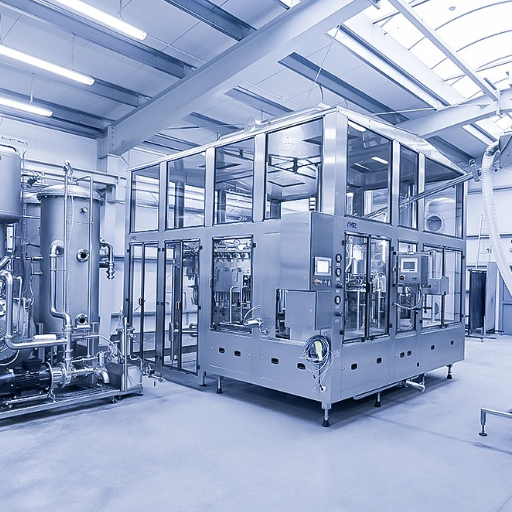
Trending now