Get in touch with Victorystar

The Ultimate Guide to Double Heads Aseptic Filling Machine for Sterile Packaging Solutions

Contents
show
In the food, beverage, and pharmaceutical industries, ensuring the safety of the product and prolonging its shelf life are the most significant concerns. Aseptic filling technology has always been the most reliable way to make sterile products without any preservatives or refrigeration. It is, therefore, the main machine in manufacturing technology to be free from contamination. The main features, mechanics, and benefits of aseptic filling machines were described followed by a brief case study of an aseptic filling installation at one of world’s largest food producers 牠_.configureTestingModule({craftMeaning .
Understanding Aseptic Filling Technology

What is Aseptic Filling?
Aseptic filling is an advanced manufacturing technique in which a commercially sterilized liquid product (such as milk, juice, or pharmaceuticals) is enclosed in a pre-sterilized container under sterile conditions. All stages of the process take place in a spotless surrounding to avoid the growth of any bacteria. This technique makes the final product safe for consumption and at the same time guarantees that the product’s quality, taste, and nutritional value are maintained for a longer period without the need for cooling.
The Importance of Sterility
The main aim of aseptic processing is to create a product which is commercially sterile. The sterility rules out the possibility of harmful bacteria, yeasts, and molds to be present and cause spoilage or illness. Manufacturers can achieve a number of key benefits by having a sterile environment present the whole way from product sterilization to the final sealed package:
- ●
Extended Shelf Life:
Products can last for months or even over a year at ambient temperatures. - ●
Enhanced Product Quality:
The rapid heating and cooling cycles used in aseptic processing are less detrimental to the flavor, color, and nutritional content compared to traditional methods like canning. - ●
Reduced Need for Preservatives:
The sterile nature of the process eliminates the need for chemical preservatives, meeting consumer demand for cleaner labels. - ●
Packaging Flexibility:
Aseptic filling supports a wide range of packaging materials and formats, including cartons, bags, and bottles, offering more lightweight and environmentally friendly options.
An Overview of the Aseptic Filling Process

Steps in the Aseptic Filling Process
The journey from raw product to a shelf-stable package involves a precise sequence of events. Here’s a breakdown of the typical steps:
1
Product Sterilization:
Product Sterilization:
The liquid product is quickly heated to a very high temperature, which is usually between 135 and 150 degrees Celsius (275-302°F), for a very brief time—sometimes just for a few moments. This method which is called flash pasteurization, properly sterilizes the product by killing the microbes without having product quality degraded to a great extent. The next step after heating is cooling the product down in no time so that it reaches an ambient temperature or common room temperature at which it will be convenient for the packaging to take place—in a sterile environment.
2
Equipment Sterilization:
Equipment Sterilization:
Sterilization of every single piece of equipment will be done before it touches the product. Be it pipes, tanks, or even the processing machine. It is commonly carried out using hot water under pressure, steam, or a blend of chemical sterilants and heat.
3
Packaging Material Sterilization:
Packaging Material Sterilization:
Right before the filling process, the packaging material (such as cartons, pouches, or bottles) is sterilized. One usual way is to dip it in a hot hydrogen peroxide solution first and then let it dry with hot air, or to expose it to an electron beam. This eliminates all microorganisms from the container, so no sterile product is compromised upon introduction.
4
Filling and Sealing in a Sterile Environment:
Filling and Sealing in a Sterile Environment:
The main part of the operation happens within the aseptic filler that is made a sterile zone by filtered, over-pressurized air. The filled product is placed in the sterilized containers and they are sealed in such a way that recontamination is prevented.
Common Challenges in Aseptic Filling
While the benefits are significant, aseptic processing presents several challenges that require careful management:
- Maintaining Sterility: The biggest challenge is ensuring that the entire system remains sterile throughout the production run. Any breach in sterility can lead to contamination of the entire batch, resulting in significant product loss.
- High Initial Investment: Aseptic filling lines require a substantial capital investment in specialized equipment and infrastructure.
- Complex Operations: The process is highly technical and requires skilled operators and rigorous monitoring to ensure everything functions correctly. Regular validation and verification are necessary to confirm sterility.
Best Practices for Aseptic Filling
To overcome these challenges, manufacturers should adhere to strict best practices:
- ✓
Comprehensive Training: Ensure all operators and maintenance personnel are thoroughly trained on the principles of aseptic processing and the specific equipment they use. - ✓
Rigorous Monitoring: Implement continuous monitoring of critical control points, such as temperature, pressure, and sterilant concentration, to detect any deviations immediately. - ✓
Regular Validation: Routinely validate the entire process, including product sterilizers, equipment, and packaging sterilization systems, to confirm their effectiveness. - ✓
Environmental Control: Maintain a clean and controlled environment around the aseptic filling line to minimize the risk of airborne contamination.
Hot Fill vs. Aseptic Fill: What’s the Difference?
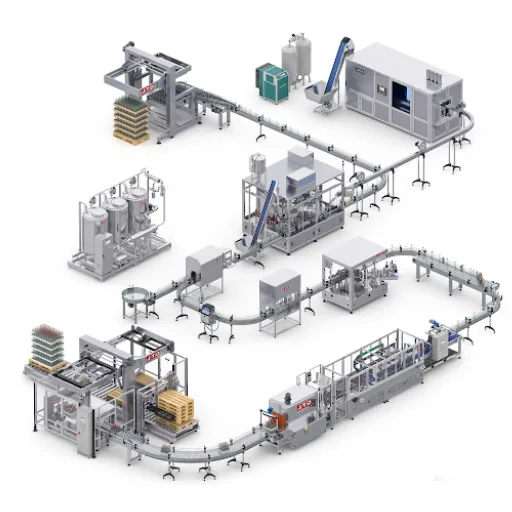
Advantages of Hot Filling
In the hot-fill procedure, the item undergoes the temperature-rais!ng to a high level (I.e., to approximately 85-95°C or 185-203°F) and only afterwards is poured into the container while still hot. The heat released by the product sterilizes the interior of the container and the cap when it is closed. The major plus points of that way of working are the rather simple and less costly aseptic system.
When to Use Aseptic Filling
Aseptic filling is the way to go if you are worried about the products that can not take a long time in the heat. The short-term heating in an aseptic processing does not affect the taste, color, or nutritional value of the product; hence, it is the best packaging method for high-quality juices, dairy goods, and plant-based milks.Additionally, aseptic filling allows for the use of packaging materials that cannot withstand the high temperatures of the hot-fill process, such as certain plastics and lightweight cartons.
Comparative Analysis
Key Components of an Aseptic Filling Machine

Machinery and Equipment Overview
A typical aseptic filling system includes:
- 🔧 Sterilization Module:
This system sterilizes the packaging material before it enters the filling zone. For cartons, this might involve a hydrogen peroxide bath and rollers, while for bottles, it could be a rinsing and sterilizing carousel. - 🔧 Sterile Chamber (Aseptic Zone):
This is the enclosed heart of the machine where filling and sealing take place. It is kept under positive pressure with sterile, HEPA-filtered air to prevent any contaminants from entering. - 🔧 Filling System:
This includes the filling nozzles or heads that dispense the sterile product into the containers. The design must be easy to clean and sterilize (Clean-in-Place/Sterilize-in-Place). Double-head systems improve efficiency by doubling the filling capacity per machine cycle. - 🔧 Sealing System:
After filling, this system hermetically seals the containers. Methods vary depending on the package type and include induction sealing for caps or ultrasonic/heat sealing for cartons. - 🔧 Control Panel (HMI):
A Human-Machine Interface allows operators to monitor and control all critical process parameters, manage recipes, and view alarms.
Innovations in Aseptic Filling
Technology in this field is constantly advancing. Recent innovations focus on improving efficiency, sustainability, and safety.
- Electron Beam (E-Beam) Sterilization: This method uses high-energy electrons to sterilize packaging surfaces instantly without chemicals or water, reducing environmental impact and operational complexity.
- Robotics and Automation: Increased automation and the use of robotics for tasks like loading and unloading packaging materials minimize human intervention, reducing the risk of contamination and improving efficiency.
- Smart Sensors and IIoT: The integration of advanced sensors and the Industrial Internet of Things (IIoT) allows for real-time data collection and predictive maintenance, helping to prevent downtime and ensure consistent quality.
How to Select the Right Aseptic Filling Solution

Principles of Selection
When evaluating different options, consider the following principles:
- Product Compatibility: Ensure the machine is suitable for your product’s viscosity, particulate size, and sensitivity to shear and heat.
- Packaging Format: The machine must be compatible with your desired packaging type, size, and material.
- Capacity and Speed: Select a machine that meets your current and projected production demands. Look at the rated output (e.g., containers per hour).
- Reliability and Support: Choose a reputable manufacturer with a proven track record of reliability and excellent technical support and service.
Integrating an aseptic filler into a larger production line requires careful planning.
- Upstream and Downstream Equipment: The filler must seamlessly connect with upstream equipment (like the UHT sterilizer) and downstream equipment (such as straw applicators, cappers, and case packers).
- Footprint and Layout: Consider the physical space required for the machine and ensure it fits logically within your facility’s layout to optimize workflow.
- Utility Requirements: Aseptic fillers have significant utility needs, including electricity, compressed sterile air, steam, and water. Confirm that your facility can support these requirements.
📚 Reference Sources
ASP100D Dual Head Aseptic Filling Machine – Details the use of dual head aseptic filling machines for products like fruit juice, dairy, and pharmaceuticals.
ASP100D Double Heads Bag in Box Aseptic Filling Machines – Focuses on double head aseptic filling machines for high-quality dairy and fruit juice packaging.
Single Head Double Heads Aseptic Filling Line With Automatic Filling System – Explains the efficiency and reliability of aseptic filling machines for sterile liquid packaging.
Aseptic Filling Machine by Dec Group – Highlights aseptic filling machines for various containers, ensuring high accuracy and sterile conditions.
Frequently Asked Questions (FAQs)
❓ What is the aseptic filling process?
The aseptic process in the filling is the method for the sterilization of both the product and the packaging material to avoid any kind of contamination during the filling procedure. The application of this method is crucial for the quality of products, especially in the pharmaceutical, food, and beverage sector. The typical procedure consists of the sterilization of the vials, the caps, as well as the filling machine, which are methods that often involve the use of hydrogen peroxide vapor. The product, when the process of sterilization is completed, is transferred to the container in such a way that the microbial contamination risks are minimized in sterile surrounding. This guide covers the aseptic process in its entirety hence ensuring the manufacturers’ compliance with the quality control and regulatory unit’s prerequisites.
❓ How does an aseptic filling machine work?
Aseptic filling machine firstly runs through the whole filing system sterilization including the filling nozzles and product pathways. Master dispatches accurate pump used for moving the product. Almost everything is done automatically to eliminate as much human involvement as possible but if necessary, human presence in the process is minimized further and the same amount of product is filled every time. In case the operator initiates an action that does not allow the machine to perform as pre-programmed, the operation ceases and the good material already in a container is rejected. Most often the sealing mechanism is an additional action by the machine. Its function may be either mechanical or by way of induction. Carefully filling and packaging output often available only when the machine designer is also the user and the product manager.
❓ What types of vial filling machines are available?
The diversity in vial filling machines includes the absolute piece of volumetric filling machines. .gravimetric filling machines as well as peristaltic pumps Each of these devices presents a specific set of advantages which first depend on the kind of product that is being filled, that is, if it is a liquid or a powder. The case for the former is that volumetric filling is typically applied for liquids, whereas the latter is suitable for powders. Still, there are some machines that can work at high speeds and are thus able to fill a lot of vials in a short time, so they are mostly used in the production of mass-production items. Manufacturers are thus in some way aided by the possibility of exploring the different types of vial filling machines as this process allows them to make the bests election for their needs.
❓ What is the importance of sterilization in aseptic packaging?
Sterilizing the packaging in a sterile environment packed is essential to remove any possible pollutants which would affect the safety and effectiveness of the product. The process consists of getting both the materials of the packaging and the product to be free of potentially harmful microorganisms. It is aloe acceptable to use typical sterilization methods steam, chemical, and radiation. Moreover, throughout the filling and sealing process, maintaining a sterile environment is necessary to ensure the product quality. This process is very important, especially in industries that require the highest levels of cleanliness like pharmaceutical production.
❓ Can automation improve the aseptic filling process?
Automation can greatly amplify the aseptic filling process by heightening the speed of production and at the same time, guaranteeing reproducibility and diminishing human errors. Automated setups can effectively oversee the filling and capping activities thus, guaranteeing precise filling and sealing of each vial. High-speed aseptic filling machines are configured to deliver big volumes but still work in a sterile setting. Another thing, automation can also contribute to the achievement of regulatory compliance by means of very fine control over the filling process, which is a must for product quality maintenance
❓ What are the challenges in the aseptic filling process?
The process of aseptic filling is full of hindrances, such as keeping the area sterile and the also ensuring the prevention of contamination. It is of the utmost importance to sterilize every piece of equipment, such as the filling machine, the vials, and the caps. . Another obstacle is what the regulatory compliance demands in the pharmaceutical industry and food production that the companies are bound by the requirements of the compliance through and through. Additional risks to the industry are that manufacturers must be careful not to fill the vials up more than what is required or less than what is required for their product. The best solution to everything is to know the challenges so that you can optimize the aseptic-filling page.

DU
Articles: 45
Trending now