與勝利之星取得聯繫

飲料生產的均質機選擇:確保品質和效率的關鍵因素

內容
展示
The right homogenizer is a vital element in the success of the beverages produced by beverage manufacturers because if the consistency and attractive feature lacks, customers will not come back. This is particularly the case in the production of milk-based beverages, the manufacturing of diary alternatives or fruit juices. In such conditions, the homogenizer helps to produce the right feel, physical consistency and even the self life-qualities that the customers do expect. This post will help you consider relevant data in choosing the right device. From the theory of homogenisation contributing to obtaining high quality product to seeking equipment that moves you closer to fulfilling your business interests, we shall go over a concise history of the topic so that you can make an educated choice. We are witnessing this approach being taken on beverage production. This approach looks towards enhancing production of drinks with a combination of professional precision and industry oriented consultations.
Understanding Homogenizers in Beverage Production
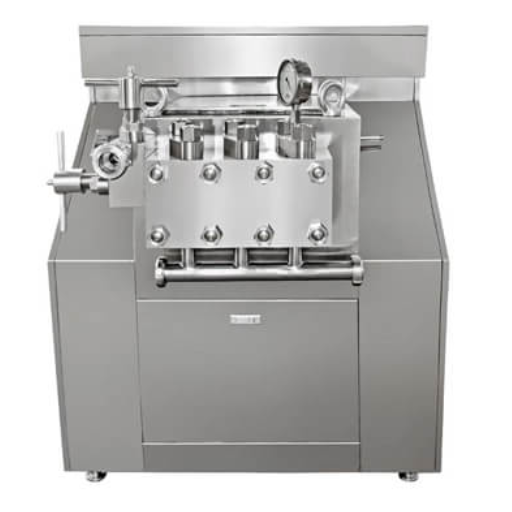
What is a Homogenizer?
A Homogenizer is an apparatus that is intended to homogenize a mixture uniformly by reducing the size of the particles within a mixture to ensure uniform texture, consistency and distribution. Homogenizers are a must-have when it comes to the drink manufacture since they have the potential of applying forces such as pressure or shear to help dissolve other ingredients e.g. emulsions, flours and colloidal solutions in the liquid. For better quality assurance purposes and for better enjoyment, manufacturers should enjoy this form of processing especially in the production of drinks. This is because, homogenization is also known to prevent phase separation of constituents enabling the product to last longer. Thanks to the versatile design and features, this piece of machinery is able to perform exceptionally well in delivering the desired product making it the most recognized and mandatory tool.
The Significance of Homogenization in Beverage Industry
Homogenization is considered as a method for making homogeneous and stable beverages enabling the facilitation of the even product along with the same ingredients in different batches. By breaking fats and specific particles into smaller and more equally sized pieces, this technique avoids phase separation which is a very common issue in products like the milk, plant-based beverages, and fruits beverages. Besides making the beverage more visually appealing and texturally structured, homogenization also ups the taste value and thus results in an improved experience for the consumer. Moreover, by debugging the system, homogenisation enables the use of stable products and this is done by avoiding any sediments or microorganisms that cause spoilage during storage for a particular period after production, which is necessary when producing or handling products in extreme conditions.
Homogenizers and maintenance of shelf life.
Homogenizers are so indispensable pregnant a role in extending the shelf life of various liquid products, helping in getting adequate reduction in the size of the particular and ensuring that ingredients are well distributed. This action tends to overcome the problem of separation of product components and increases the stability of the product reducing the risk of microbial spoilage. In the case of dairy products, for instance, the Homogenization process opposes the uniform distribution of fat in any product thereby keeping cream uniformly mixed in milk when in storage. Last but not least, smaller particle size in the homr raises the level1. growth and risk of contamination because the available substrates or food to them are less to what the microorganisms can consume. This enables the manufacturer to put technical requirements in place with the manufacture and storage of beverages, liquid foods, and confectionaries that remain palatable in terms of texture and flavor even after long periods of storage in less than ideal conditions.
Types of Homogenizers Used in Beverage Production
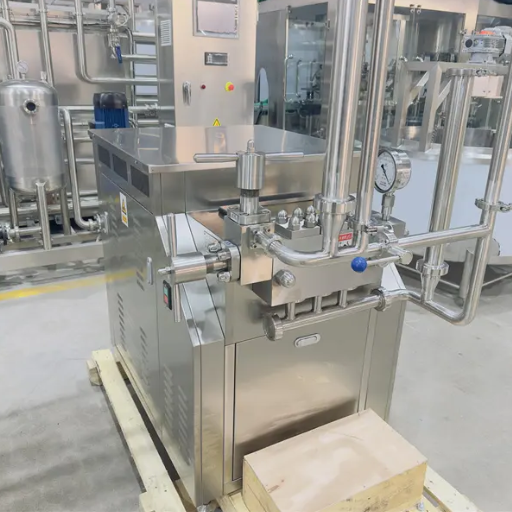
Overview of Various Homogenizers
Homogenizers offer efficiency and convenience for clean and lean supply. Use of different homogenizers is a necessity in beverage industry as each is suitable for different operations and results, due to which I was able to find out that high pressure, ultrasonic and rotor-stator homogenizers are majorly used. The high-pressure homogenizer is one of the most extensively applied homogenizing processes owing to the fact that it allows the application of unimaginably high pressures leading to the liquid breaking down into a consistent size when forced through a tiny orifice. Emulsions and suspensions find this kind particularly useful since it enables consistency in beverages which include milk, juices, and other more liquids that serve as alternatives to the lactate products.
Using a concept of high frequency sound waves, ultrasonic homogenizers process work by producing very small cavities in liquids. Energy is transferred when those cavities implode, as it helps disintegrate the structures and holistically homogenizes the contents. This type of unit is common for exquisite beverages or anytime that a person needs to utilize chemicals in minute quantities. The ultrasonic system is also commended for its capability to fundamentally reduce particle size as well as to resist spoilage of liquid foods.
Contrary to the principle of air-based homogenizers discussed in the above clarification, rotor-stator type homogenizers work by means of mechanical shear in order to mix and homogenize liquids. By driving a rotor at a highest speed while it being enclosed in a stator, the device exerts lord fluid dynamics. These homogenizers are particularly effective at processing and homogenizing low-viscosity liquids and are widely used in beverage production processes as the first homogenization stage. Each of the method has its own advantages depending on the needed characteristics of the drink, whether it is the texture, the amount and content of the components, or the lack of the preservation aspect, and without any doubts, homogenizers will be the main tool to obtain a precise quality of a drink in the process of its manufacturing.
Differences of mechanical vs ultrasonic homogenizers
it is convenient to explain that the operational principle, the range of use and capabilities, of mechanical and ultrasonic homogenisers – their performance is so different. Mechanical homogenisers, for example, the rotor-stator system, operate by a high-speed rotation which creates a very intense shear that is able to break down quite effectively particles and blends. These systems handle large volume processes and are even more beneficial for situations for liquid processes where particle size needs to be uniform within a given viscos medium. The Ultrasonic homogenizers utilizes acoustic cavitation that occurs due to the high-frequency sound waves that is produced from the ultrasonic horns. This method is more effective in homogenization in the case of an accute pressure variation which facilitates cells breaking, particle dispersing, and liquid emulsifying. Most of the time ultrasonic homogenizers are used for laboratory scale applications since it is possible to change the water bath temperature to conveniently switch the flow-through system and coat the sample as the case may be. Moreover, these homogenizers will be cost-effective when it comes to lysis of very hard cells as well as production of nanoscale ceramic emulsions. With such factors in mind, generally, the productuon of mechanical and ultrasonic homogenizers is based on the needs of the production in question such as size of the batch, nature of the materials and what is struggled to be achieved. Both these technologically advanced equipments are elements in the homogenization field playing different roles at various engineering or research environments.
Batch and Continuous Homogenizers: How to Choose
Some of the factors necessary for making a decision about batch or continuous homogenizers are such things as the performance expected from the process, scaling up of activities and, also the homogeneity of the product. Therefore, the batch homogenizers should be used where there is a need to work on small quantities of materials and where the treatment of samples requires careful regulation. They can be designed in versatile forms, and can work with materials of different viscosities making them very useful for small and medium levels of production. Quality is also quite good with batch systems most likely to be the reason being the ability to work with conservative settings. Having said that, continuous homogenizers’ advantages come to the fore whenever mass production is envisioned. Such systems are in place when material is always in motion thereby hastening the production speed which in other words improves the effectiveness of homogenization of the materials. They are mostly suitable particularly for industrial use where there are many projects in industries such as food, pharmacy and beverage and one will be expected to produce products that are more or less the same in every aspect. What is more, they can help reduce production interruptions since they do not always have to be taken down in order to be reloaded. In such cases operation becomes easier especially for economics of scale and time consideration. Selecting the appropriate method is influenced by the capacity of production, physical and chemical properties of the material, and the kind of product to be fabricated. Both the techniques of batch and continuous processing play a vital role in the industries making them very effective in satisfying the requirements for the available processes and advanced thinking in the equipment.
Key Factors in Choosing the Right Homogenizer
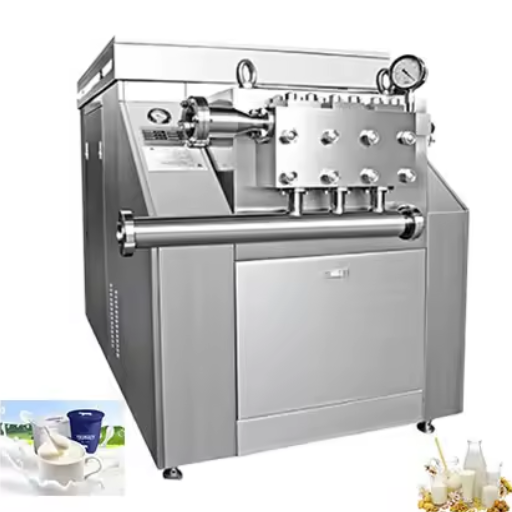
Production Volume and Scale Review
In the process of evaluating production volume and the extent, it is important to match the requirements of the immediate requirement and the long-term operational objective. In continuous homogenizers, high volume production is enhanced by the creation of consistent output and low downtime. In contrast batch homogenizers are more common in smaller runs of production or processes that need some level of control and adjustment especially in contrast to larger runs of production where batch homogenizers are generally utilized. Increasing production means examining in detail issues like material characteristics, excellence in converting the material or processing and ability to respond to fluctuations in demand. Over and above this, the application of technology has met expansion in different areas with penetration in the homogenizers technology allowing users to tailor their tools for niche markets.
How to assess the required homogenization level
To define the progress in terms of the required homogenization level, which represents a crucial system of facilitating interconnecting mingled ingredients, it is vital to focus on overall particle fragmentation, distribution and compression of the product produced for other utilizations as well. For instance industries such as food processing, pharmaceutical, and cosmetic industries demand very strict requirement in terms of stability and consistency in the produced emulsions which can only be achieved under the specific homogenization levels. The recent technological advances in the process technologies have enabled these parameters to be more controlled so that the product quality and shelf life is enhanced. Proper analysis of such factors, for instance, through compliance with standard operating procedures ensures that homogenization processes in particular achieves specific results on the physical size of the droplets being reduced and the thickness. In doing so, several related objectives are achieved – production efficiency is increased and the production will be in line with the regulations rules.
Cost implications and budgeting issues
Before initiating and compleating the homogenization wisely, it is wise to do the cost analysis of some of the elements of the process. The cost analysis mainly includes investment in equipment, energy costs, maintenance costs among others. Although in some instances new technologies come with higher setup costs, they are often cost effective by enabling ongoing saving through the operational efficiency and reduced power usage. Additionally, by monitoring and evaluating operations, such as output per hour and bundle formation loss, it becomes easy to identify cost cutting measures. This impetus of gaining the extra insight on the market with the KPIs ensures that resources are put into good use and highreturns while still retaining the production quality and complying by the regulations.
Benefits of Ultrasonic Homogenizers
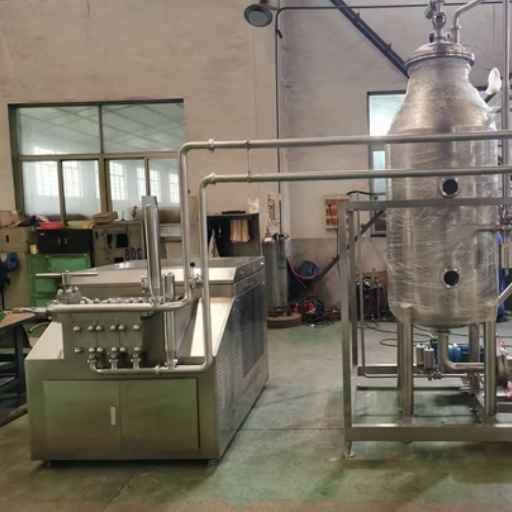
Benefits of using the Sonicators
This is a big advantage when it comes to working at the molecular level or breaking down and combining substances – the pros of the ultrasonic homogenizer, an acoustic-wavelength transducer which is an efficient material processor. It is appreciated in such industries as pharmacology, cosmetics and also food biotechnology due to the generation of acoustic waves at the ninetieth 9th or higher harmonics of vibrations which allows for improved control of the destructive paint. It provides the possibility of three phase even mixing of two immiscible liquid phases, formation of fine gas bubbles in water etc. This method is not only effective but also fast as it saves time compared to other methods, which is achieved by its advantage of the ultrasonic generator. The effectiveness of dissolution of difficult samples has also been achieved due to the ultrasonic cavitation effect. This technique is a very sophisticated one and has numerous applications in different fields signifying just how practical it is. As a result, it enables the industries to provide both a quality and environmentally friendly product in the market.
Applications of Ultrasonic Homogenization for the Production of Beverage Products
There is an expansion of use of ultrasonic homogenizers for beverage processing in the food sector because they help in the improvement of product quality and production goals. For example, one of the key areas is the production of emulsions for use in beverages or vitamin bearing drinks. Here, the ultrasonic process is capable of supporting a high quality emulsion without any change in appearance. That is because it makes use of energy to tear apart droplets into minute particles therefore improving not only its feel but also its taste. In addition, ultrasonic homogenization helps incorporate loose particles such as powders, additives and particles. The type of mixing makes the particles evenly spread no lumps or deposition in the flow. This technology is also helpful in the pasteurization of beverages through non-thermal methods such that nutrients and flavors can be retained while extending the product shelf life. Additionally, ultrasonic homogenizers can be used to separate bio-diversion from natural resources such as vegetables, fruits and herbs, and sices. These help improve the nutritional quality of beverages and enhance the sensory properties of the beverages. The use of ultrasonics in homogenizing in such ways that the ‘design serve silver’ includes, is being adopted today, to serve the technology in the current challenging field of beverages.
Efficiency and Energy Use in Ultrasonic Homogenization
Ultrasonic homogenization is recognized for its remarkable energy efficiency compared to traditional methods of emulsification and particle size reduction due to high intensity mixing principles. The excellent energy conversion of ultrasonic homogenizers makes them competitive in terms of high efficiency over any other homogenizing or dispersing machinery including bead mills, high pressure homogenizers etc. This means that ultrasonic homogenization is suitable for beverage manufacturers where it is a cost-effective solution with lower energy expenditure and greenhouse gas emissions. The process put up for discussion also generates lesser heat unlike other mechanical homogenizing devices which is harmful to heat sensitive component. Moreover, efficiency improvement is done with bulky advances as construction of ultrasonic equipment allows to adjust amplitude and realize monitoring in real time, enabling users to manage energy use per given function. Mainly, ultrasonic homogenization is useful because it is possible to achieve working with low use of energy to combat the problems and in the process of improvement it is friendly to the environment.
Maintenance and Optimization of Industrial Homogenizers
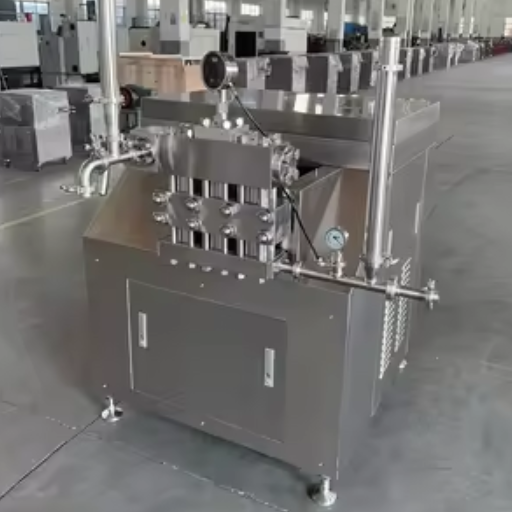
Long-Lasting Upkeep of an Industrial Homogenizer
Preservation and efficient work performance of the equipment maintenance involves a set of activities which must be performed on a regular basis with the adherence to the manufacturer’s requirements and practice. I strive to maintain this industrial equipment in good condition hence regular inspection of wear tear on the critical rotating components namely the rotor stator assemblies, seals, and valves is one activity I prioritize. In the worst case scenario where my actions result in wear tear on the equipment performance parts, I have been maintenance proactive by using my spare parts in stock. The actions undertaken have repaired many part which saved the risk of the most expensive repairs. Also, moving elements are well lubricated before the equipment is put back in service. This precaution aids in overcoming wear and tear. I take special interest in washing and sterilizing of the homogenizer after every use, particularly in areas that handle foods and drugs. Correct cleaning cannot only improve operational efficiency, but it can also protect the product being processed from excess material residue. In addition, I perform regular checks on all the filters and cooling devices. Removal or cleaning of filters blocked by dirt is necessary in order to prevent overheating and to maintain constant performance of the equipment. Furthermore, I have been utilizing digital solutions for the purpose of optimizing and have integrated advanced performance monitoring that is used to monitor the operational parameters of the homogenizer in real-time. Such monitoring helps in cases of vibrations, temperature changes, and deviation of pressures from what is acceptable among others that may have the effect of averting such failures before they latently progress. Given that and notwithstanding the benefits of using the regular maintenance of such devices, I have been able to achieve set objectives, that is, increase the productivity of my industrial homogenizer and reduce operating costs.
Employing Strategies to Enhance Efficiency in Doing Tasks
To make sure all the tasks are performed within the shortest time possible, it is important to consider mechanical maintenance proactively and more specifically, to use the help of data. This can be done with the help of sophisticated diagnosis and predictive maintenance techniques which would help detect even minor shifts in performance and findings out corrective actions. Analysis on performance data on a regular basis makes it easy to fine-tune operations so that the output quality remains at par and only as much energy as needed is used. There is the aspect of using advanced materials and cost effective designs that are custom-made for the use offered in the host equipment to prevent the expected wear and tear promoting the strength of the system. Such enhancement measures, as these, help to ensure high performance, reliability as well as the most ‘aggressive’ use in the efficient targeted resource utilization.
常見問題和故障排除提示
In order to avoid disruptions and downtime among clients, it is crucial to focus on the common sources of trouble to a system. Among the numerous problems that users face is the issue of overheating which is more often than not due to lack of proper ventilation or due to non-stop long hours. In this case, even up to date cooling apparatus should never be ruled out and where possible, there is always need to get rid of the conduits particles so as to make it fully functional. Another issue that troubles people a lot due to its unpredictable nature is the low level capacity to the activities of the system or the intermediary hardware components, this can be because of the current manufacturer’s updates or the necessary software products having become outdated. System upgrades and patches are a must in order to maintain the system’s operational functioning. Also, it is important to note that corrective and preventive maintain improve reliability within the system; this is because power failurity is a case of shortcomings. Use of a surge protector or backup power source which a UPS is especilly of importance to curb disturbances caused byn power breakages or instabilities. Lastly, regular maintenance check ups can help with early detection of wearing and tearing at avoiding other catastrophes and contains the failures to keep operating for as long as possible. In reference to system specific troubleshooting, please do not forget to make a stop at the manual.
參考來源
- Engineering Process Characterization of High-Pressure Homogenization—From Laboratory to Industrial Scale
- An Overview of Different Homogenizers, Their Working Mechanisms and Impact on Processing of Fruits and Vegetables
- Ultra‐High‐Pressure Homogenization (UHPH) System for Producing High‐Quality Vegetable‐Based Beverages
常見問題 (FAQ)
How does reducing the particle size determine the suitable homogenizer for the preparation of the beverages?
It is important to mention that controlling the particle size is of great importance as it affects the mouth feel, the longevity of the suspension (stability) and the esthetic aspect (aspect) of the drink as the smaller particle sizes result in a narrower size distribution. There is a choice between a high-pressure homogenizer and a rotor stator homogenizer depending on the extent to which the particle size has to be further reduced and super fine particle sizes are required for stable emulsions or colloidal suspension. The homogenizing valve in addition to the high-pressure operation creates very intense turbulence and shear forces which enhance the breaking down of globule and solid particles. This process technology option is appropriate with regard to energy consumption and also ease of heat regulation during the homogenization of products that are done on such process technology which is thermolabile. Finally, the selection of an appropriate homogenizer also supports the wholesomeness of the goods and does not foul the production it is intended for, against the backdrop of the experimentation being carried out in the labs and the actual factory.
How do high-pressure homogenizers compare with bead mill and rotor-stator homogenizers?
Homogenizers with High Pressure preInteresting indication of the availability of fluid path, by means of a narrow device of a particular geometrical shape, vales, or engineering construction, with pressure applied, the turbulence created is surreal, and the shear within the system is high for purposes of cell rupture as well as gas-liquid mixing and other processes. Practical examples include emulsification, and impingement homogenizing for uniform dispersal of particles aiming at a much finer presentation of particle size preference to the injected suspension. Colloidal mill disintegrates particles using the rotor-stator mechanisms and these can work well with high internal viscosity formulations or with high speed homogenization that uses shear as the principal mode of energy. This decision can be based on a number of reasons, such as the available uses, the target dispersion rate, the viscosity of the liquid, and the inclusion of performing lyses on biological tissues or preparing adhesives. In this hypothetical situation, one would also question the relations between process pressures, flow and pressure needs and power spent… more so than knowing whether HPH might be more beneficial than bead mill as opposed to rotor array already in use.
What are the most important factors to be considered when deciding on a homogenizer for the production of drinks?
Critical process parameters are the pressure level and the flow rate, earthing on the number of passes, the rotor stator gap and the homogenizing valve settings (especially for high-pressure homogenizers). Envelope pressure is largely a function of the pressure drop of the milligrams (mgs) of oil that are passed through the restrictor. Shear forces, high shear capability and the intensity/uniformity of turbulence will define whether an emulsion or dispersion will be formed effectively and if large particles or cell debris will be subject to this effect. Apart from all these, thermal degradation of sensitive ingredients ought to be avoided at all costs so it is therefore crucial to track energy usage that allows firms to reduce the expenses incurred when operating these equipments. On the other hand, review the required particle size distribution for your designed product and evaluate the potential presence of a need for consistent, predictable particle sizes for implementation of regulations and for product acceptability. Also, factor in the steps needed to prepare the samples and if there is any chance to use the bench top homogenizers while preparing an R&D before the industrial size equipment is brought into scale.
均質器類型如何影響飲料配方的乳化和穩定?
值得注意的是,在製造乳液時,選擇起作用的均質劑類型可以透過可製造的液滴或小球的尺寸和數量極大地影響乳液的乳化和穩定性。高壓均質劑通常會產生小得多的液滴,從而使乳液更穩定。轉子-定子或膠體研磨系統能夠產生強烈的機械剪切力,並且可用於沙拉醬等黏性產品中的初始分散或高速乳化。珠磨系統旨在協助分解固體附聚物和/或產生膠體分散體,而膠體分散體是製備多組分系統不可或缺的一部分。雖然眾所周知,乳液和分散體一樣,要有效,需要機械力、界面活性劑和受控條件,而沒有任何聚結和相分離的可能性。在製藥或化妝品行業中,這種擔憂變得更加重要,因為所需的破碎和均質顆粒的尺寸在視覺上比原材料的實際抽吸或光柵小得多;保證這種能力的廢均質器是最佳選擇。.
商業均質機的維護和永續性要求是什麼?
當涉及食品,特別是飲料衛生時,這是關鍵。這是因為一些食品加工業和飲料生產機器(例如均質機)需要就地清潔(CIP)操作,並且應使用符合食品工業標準設定的材料進行設計。工業規模均質機實驗室桌上型均質機所獲得的結果在製程壓力、流量、壓力和能耗方面的可重複性,在此條件下,粒徑減小和產品品質保持不變。您還應該考慮產品的目標最終用途,其中一些均質器類型更適合化妝品行業中使用的一系列配方,例如從簡單的飲料到濃稠的懸浮液。顯然,製程技術有必要能夠維持/嚴格控制溫度,因為其中一些製程包含一些非常熱不穩定的材料,並且需要在很長一段時間內生產某種產品。具有精確定位的自動化系統,例如閥門的氣動或電動執行器,在更換轉子和定子磨損部件方面具有高度靈活性,提供各種製程控制選擇,保證了規模上的技術成功水準。.
高壓均質機何時成為飲料製造商的首選?
當製造商需要小尺寸的顆粒以及高水平的均勻性或乳液以及更長的保質期和更好的飲料生產飲用體驗時,有必要採用更有效的均質方法,特別是對於這種類型的高壓設備。 HPH 型均質機對於永久傷害或完全破壞飲料中的生物樣品或細胞特別有幫助,這些飲料被製成“功能性”或“增強型”,以及生產非常細的分散體。這些小型化能力對於製藥或高品質食品加工業來說也是理想的選擇,這些工業旨在生產含有盡可能均勻粒徑範圍內的細顆粒的食品。由於在大多數情況下設備的功率需求,能源使用和溫度支援的評估應包含在要使用的 HPH 設備的選擇過程中。用於加工管道或儲罐消毒、滅菌或罐裝操作以及其他線上應用,具有精密設計的泵浦和/或閥門材料均質裝置的均質設備使這些產品成為包括食品加工和製藥應用在內的各種製造領域的流行選擇。.